
Deadly flash floods affect more than 15 000 families in Central Philippines

Image credit: Talisay City CDRRMO
Torrential rains triggered flash floods in Central Philippines, leaving more than 15 000 families affected, at least three fatalities, and more than 400 homes damaged or destroyed, officials reported Sunday, January 3, 2021. Flooding incidents have been affecting parts of the region since December 31, 2020.
More than 15 000 residents were forced to evacuate as heavy rains unleashed floods in Bicol and Negros, according to the National Disaster Risk Reduction and Management Council (NDRRMC).
More than 9 000 people were affected in MIMAROPA, Bicol, and Central Luzon.
In Bicol, two fatalities were reported after a boat capsized in the waters off Canaman town in Camarines Sur. Two fishermen were also reported missing in the incident.
In Sorsogon, a search and rescue operation was launched after a 13-year-old boy was swept away by floods.
At least 106 flood incidents were reported in three cities in the region, mostly in the Camarines Sur and Sorsogon area. Naz added that 24 landslides were reported in 15 towns.
In Negros, a man lost his life as flash floods engulfed three cities since New Year's Eve. The victim, aged 26, was found dead along the shores of Victorias City.

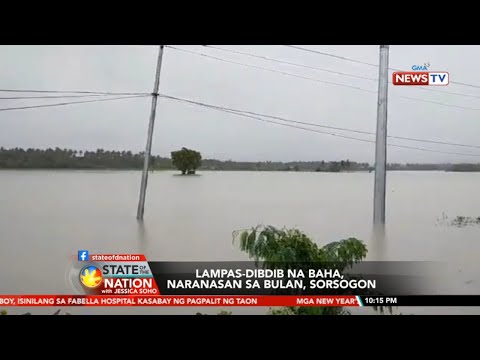

More than 15 000 families have been affected by the severe weather, according to the Philippine News Agency. About 75 houses were destroyed, while 379 others sustained damage.
The incidents of flooding were caused by heavy rains since December 31.
"We are expecting more reports from areas that experienced flooding due to continuous, moderate to heavy rains induced by the prevailing tail-end of a frontal system over Bicol," said Gremil Alexis Naz, spokesperson for the OCD-Bicol.

Published in the last 24 hours
- In September 1859, a solar storm lit up the night sky so brightly that gold miners in the Rocky Mountains woke up after midnight and started cooking breakfast, convinced the aurora glowing over their camp was the sunrise Epicenter
- A patch of warm Pacific water that could become the strongest El Niño in more than 70 years sits thousands of miles from any American town, yet it is already the main reason NOAA expects a wetter winter across the South and a milder one across the North
- A 19-year-old Nebraska teacher reportedly tied her pupils together with twine and led them to safety through a blizzard in January 1888 Epicenter
- NASA built the Opportunity rover to last 90 days on Mars, and Martian winds helped keep it alive for nearly 15 years by blowing dust off its solar panels, until a planet-wide dust storm in 2018 blocked sunlight and silenced the rover Epicenter
