
Lull in activity at Kilauea volcano continues, sulfur dioxide emissions drastically reduced

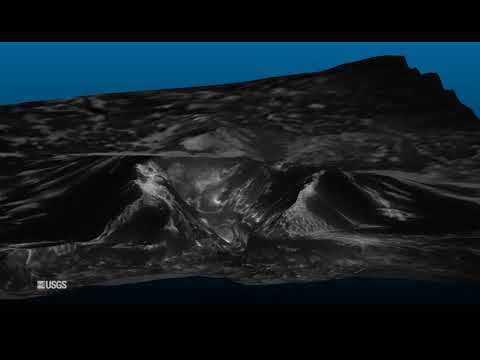
Featured image: Kīlauea Volcano's summit, seen here from the northeast rim of the caldera, has remained quiet, with no collapse events since August 2. Credit: USGS/HVO
The lull in activity at Kīlauea Volcano continues. HVO lowered the Alert Level for ground-based hazards from WARNING to WATCH, on August 17, but the Aviation Color Code remains at Orange. The summit has been quiet since the last collapse event on August 2.
This change indicates that the hazards posed by crater collapse events (at the Kīlauea summit) and lava flows (Lower East Rift Zone; LERZ) are diminished, HVO said.
However, the change does not mean with absolute certainty that the LERZ eruption or summit collapses are over. It remains possible that eruption and collapse activity could resume.
At the summit, seismicity and deformation are negligible. On the lower East Rift Zone, the only incandescence is at the coast near Ahalanui where a few ocean entries are oozing lava.
Sulfur dioxide emission rates at both the summit and LERZ are drastically reduced. The combined rate is lower than at any time since late 2007.
Earthquake and deformation data show no net accumulation, withdrawal, or significant movement of subsurface magma or pressurization as would be expected if the system was building toward a resumption of activity.
The Hawaiian Volcano Observatory (HVO) will continue to closely monitor Kīlauea's seismicity, deformation, and gas emissions for any sign of reactivation, and maintain visual surveillance of the summit and LERZ.
The Hawaii Volcanoes National Park has been closed for 102 days, as of August 20, due to unsafe conditions from seismic and explosive activity from the summit of Kilauea and there’s still no decision when the park will fully reopen as the roads are impassable due to sinkholes and cracks, and water lines broken by earthquakes.
However, HVNP officials said they are really anxious and eager to reopen at least part of the part. It will happen in phases, not all at once, they said.
Park officials expect visitors to be amazed by the changes to Kilauea’s caldera, where dozens of collapse events have quadrupled the size of Halema‘uma‘u crater and created a chasm 470 m (1 500 feet) deep.
Reopening portions of the main park area will depend on damage assessments and U.S. Geological Survey giving the park confirmation that the collapse events, associated with the lower East Rift Zone eruption, are done.

Teo Blašković founded The Watchers in 2011 and edited it until 2026, covering seismic and volcanic activity, extreme weather, space weather and near-Earth objects. Articles on this page are his archive.
Published in the last 24 hours
- Helicopters plucked almost 100 people from the Cornish village of Boscastle when a flash flood hit in 2004, and not one person died Epicenter
- A Kansas farmer looked straight up into a tornado in 1928 and saw a hollow tube at least half a mile tall, its walls lit by constant flashes of lightning Epicenter
- New Mexico’s Navajo Reservoir rose nearly 60 feet in seven weeks this fall, after a winter with almost no snow, as storms flooded the San Juan River Epicenter
- The storms drenching California this week are fed by a river in the sky, a band of water vapor that can carry up to 15 times the flow of the Mississippi River, and this winter’s near-record El Niño could keep aiming more of them at the West Coast

This is just the classic cool down before the big one is going to hit! So don’t get to comfy! Act 7:5-7