
Huge plume of Saharan dust over the Atlantic Ocean

Featured image: Saharan dust over the Atlantic Ocean, May 9, 2017. Credit: ISS/NASA Earth Observatory
This week's strong winds lofted a huge dust plume from western Africa and carried it toward the northeast into Europe and west toward Cabo Verde Islands. The event is ongoing, reaching far into eastern Europe and over the Atlantic Ocean.
While very high load of dust is expected to affect the entire southern Italy at least until Saturday night, May 13, models suggest the event will continue affecting the region until Tuesday, May 16, when the sky over southern Italy should be completely clear.
At the same time, for the fourth day in a row, large amounts of dust are being pushed over the Atlantic Ocean toward Cabo Verde, the Carribean and South America.
NASA's MODIS instrument aboard Terra satellite acquired this natural-color image of airborne sand and other aerosols at 12:10 UTC on May 9.

Image credit: NASA Terra/MODIS. Acquired 12:10 UTC, May 9, 2017. Edit: Jeff Schmaltz, LANCE/EOSDIS Rapid Response
About 30 minutes after MODIS captured this image, astronauts on the International Space Station (ISS) passed over the region and recorded the event with their High Definition Earth Viewing (HDEV) video camera. Part of the plume is apparent throughout the duration of the video. By about three minutes in, nearly the entire visible sky area takes on a rusty hue.
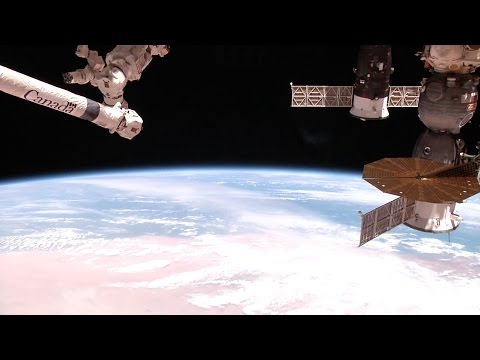
The plume is still visible, stretching across the Atlantic and delivering nutrients to the land and ocean, and affecting the atmosphere and climate.

Teo Blašković founded The Watchers in 2011 and edited it until 2026, covering seismic and volcanic activity, extreme weather, space weather and near-Earth objects. Articles on this page are his archive.
Published in the last 24 hours
- A 19-year-old Nebraska teacher reportedly tied her pupils together with twine and led them to safety through a blizzard in January 1888 Epicenter
- NASA built the Opportunity rover to last 90 days on Mars, and Martian winds helped keep it alive for nearly 15 years by blowing dust off its solar panels, until a planet-wide dust storm in 2018 blocked sunlight and silenced the rover Epicenter
- In the winter of 1811–12, earthquakes near New Madrid, Missouri, shook so hard that witnesses saw the Mississippi River flow backward, and the shaking left a brand-new lake in Tennessee Epicenter
- On 28 August 1859 a solar storm shocked telegraph operators and threw sparks on other lines, and on 2 September Boston to Portland clerks unhooked their batteries and kept sending for more than two hours on the aurora's current alone. Epicenter

Commenting rules and guidelines
We value the thoughts and opinions of our readers and welcome healthy discussions on our website. In order to maintain a respectful and positive community, we ask that all commenters follow these rules.