
A satellite revolution in oceanography
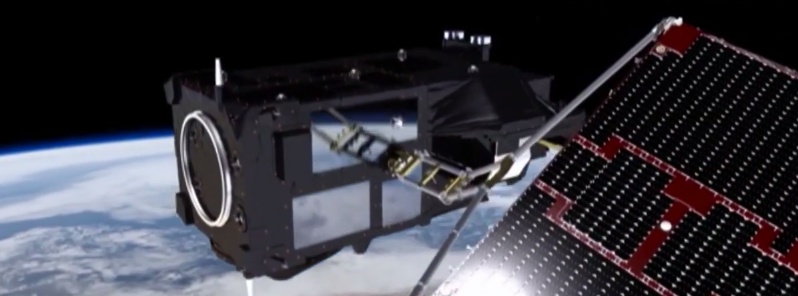
Image credit: ESA
Plymouth is one of England’s historic port cities, a place from which sailors, soldiers and scientists have set off to sea for centuries. Today there’s a new twist to the tale though, as oceanographers now have a huge fleet of satellites in space to add to their list of high quality data sources in order to study and understand our seas.
The field of satellite ocean observation is due to get a boost later this year as ESA’s Sentinel-3 will join the fleet of Earth observers already in orbit. It’s part of Europe’s Copernicus programme, and heralds a new era in ocean observation by offering an uninterrupted flow of data from its speedy polar orbit, now and well into the future.


The Watchers team and our contributors bring the latest on extreme weather, earthquakes, volcanic eruptions, space weather, and all things science. We're all about making sense of the natural world and keeping you informed on what’s happening. Got a tip or a question? Hit us up using the form at newstips!
Published in the last 24 hours
- High Risk of excessive rainfall covers Florida’s Space Coast as St. Johns River near Cocoa reaches 5.67 m
- Asteroid 2026 WJ to pass Earth at 1.7 lunar distances at 04:20 UTC on November 22, with 2026 WD following at 4.4 lunar distances on November 23
- Cyclone Akvan weakens after landfall near Gopalpur; more than 300 000 evacuated in Odisha, India
- A broad low over southeastern Florida and the northwestern Bahamas has a 30 percent chance of subtropical or tropical development within 48 hours and a 50 percent chance within 7 days, the National Hurricane Center says
