
The Storm of the Century – 20th anniversary of most devastating storm ever recorded
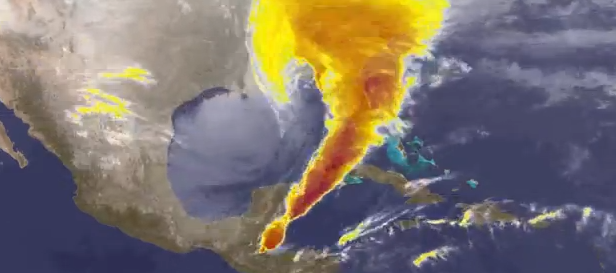
Image credit: NOAA, GOES-7 March 13, 1993
The storm that started as an area of low pressure off the coast of Texas on March 12, 1993 turned into what now is called as The Storm of the Century or Blizzard of ’93, the most devastating storm to have ever been recorded in human history.
This storm spawned 11 tornadoes in Florida and dumped up to 83 cm (33 inches) of snow in The Carolinas. Moving North, the conditions worsened furthermore. The storm had a central pressure of 960 millibars, seen usually in Category 3 hurricanes. Some areas had more than 1 m (3.5 feet) of snowfall and whiteout conditions.
The storm left an estimated 208 to 310 fatalities and $6.6 billion (USD 2009) worth, in damages. It is ranked as the most impactful winter storm to hit the Northeast in recorded history. Even though storms such the Ash Wednesday Storm of 1962 and the New England Blizzard of 1978 may have been worse, this one, for its size and strength, may truly sit on the top of the heap in terms of population affected (over 140 million).
The evolution of this winter superstorm can be seen in imagery from the GOES-7 satellite, using both visible and colorized infrared data:

In today’s world, this storm would have stormed the damages to be up to about $7 billion. The storm took the lives of over 300 people from Cuba to the U.S. and Canada and included four dozen lives lost at sea due to massive waves and squalls. Waves as high as 65 feet occurred in the Atlantic Ocean off the coast of Nova Scotia, Canada.
The wind speeds had gone up to 162 kmh (101 miles) an hour in many areas, tearing up North America and Canada. In the Southern regions, electricity was knocked out in 1.5 million homes and thousands were stranded in airports, shelters, and traffic jams, according to a New York Times article published March 15, 1993.
The damage caused by it to life, limb and property was an unmitigated disaster. With lesser technology back then, the prediction of such a storm was impossible.
Learn more: AccuWeather
Video courtesy of NOAA Visualizations

Published in the last 24 hours
- High Risk of excessive rainfall covers Florida’s Space Coast as St. Johns River near Cocoa reaches 5.67 m
- Asteroid 2026 WJ to pass Earth at 1.7 lunar distances at 04:20 UTC on November 22, with 2026 WD following at 4.4 lunar distances on November 23
- Cyclone Akvan crossed the north Andhra Pradesh and south Odisha coasts close to Gopalpur on November 20 with 70-80 km/h winds gusting to 90, and has weakened into a deep depression
- A broad low over southeastern Florida and the northwestern Bahamas has a 30 percent chance of subtropical or tropical development within 48 hours and a 50 percent chance within 7 days, the National Hurricane Center says
