
October 5 CME hits Earth – Geomagnetic storm in progress
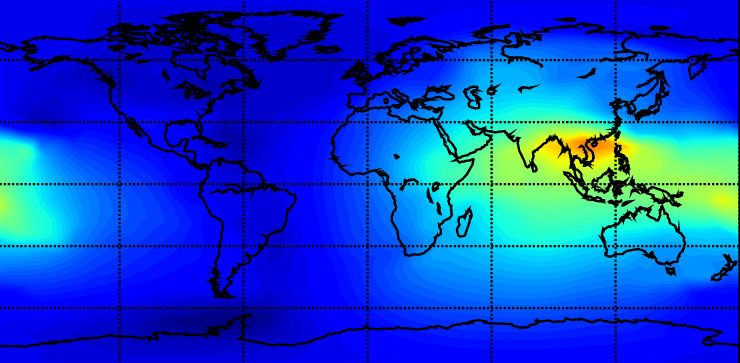
Image credit: TW
The ACE Spacecraft detected a sudden solar wind increase to over 400 km/s at 04:30 UTC. A weak coronal mass ejection (CME) hit Earth’s magnetic field on Oct. 8th at approximately 05:00 UTC. 15 minutes after A Geomagnetic Sudden Impulse (21 nT) was registered.
Low energy particles, measured at ACE, indicated a steady rise associated with the approaching October 5 CME. High-latitude sky watchers should be alert for auroras, especially during the hours around local midnight.
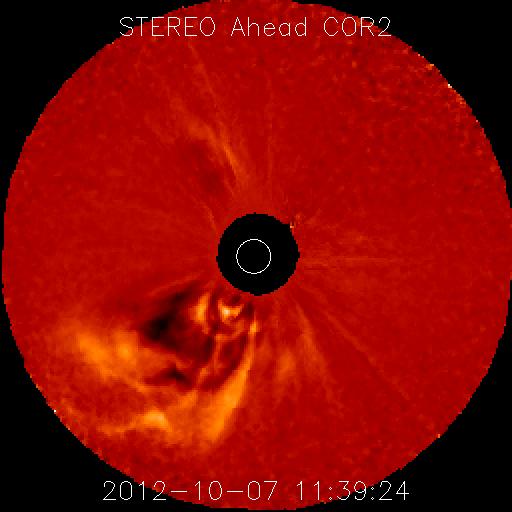
New Region 1586 rotated yesterday onto the disk as an H-type spot group. A 30 degree long filament, centered near S65W15, erupted during the period. SDO imagery first observed movement along the filament channel on October 6 with ejecta visible off the SW limb on October 7.
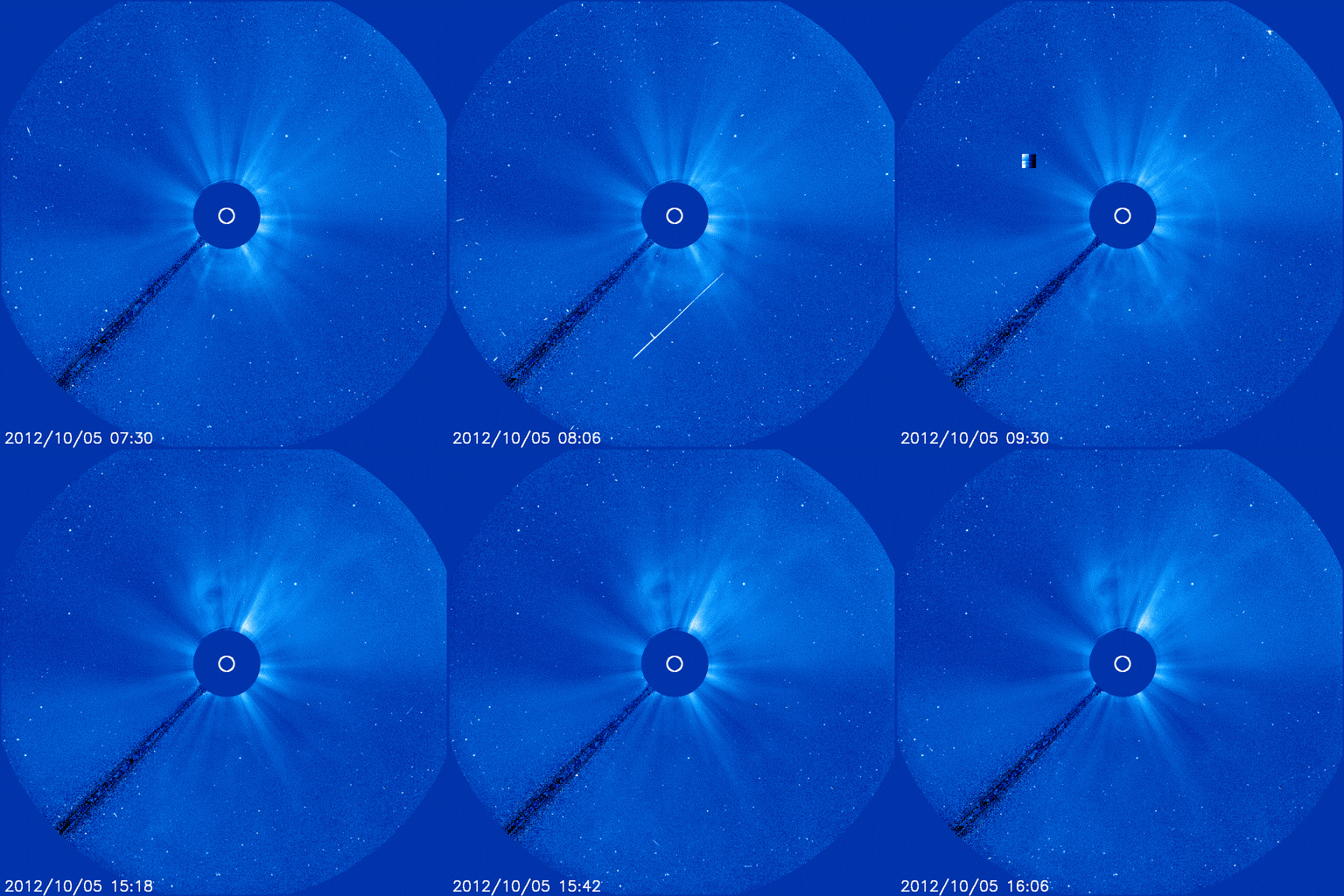
LASCO C2 imagery observed a partial-halo CME lifting off the SW limb first visible at 08:12 UTC on October 7. WSA-Enlil model forecast a possible weak Earth-directed component of this CME.
Continued minor storm conditions are expected early on October 9, decreasing to mostly quiet to unsettled levels
with a chance for isolated active periods as effects from the CME wane. Quiet to unsettled conditions with a chance for isolated active periods are expected on October 10 due to effects from a recurrent coronal hole high-speed stream coupled with a possible glancing blow from the October 7 CME.
This video bellow is showing October 5 CME leaving the Sun.
CURRENT CONDITIONS:
Solar wind
speed: 362.7 km/sec
density: 10.8 protons/cm3
The Radio Sun
10.7 cm flux: 99 sfu
Planetary K-index
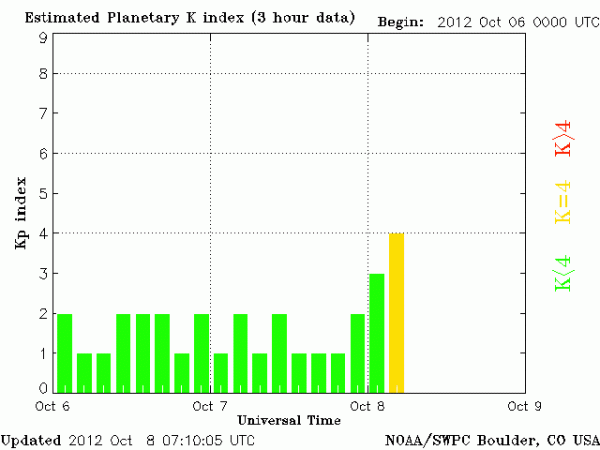
Now: Kp= 4 unsettled
24-hr max: Kp= 4 unsettled
Interplanetary Mag. Field
Btotal: 14.6 nT
Bz: 12.5 nT south
Space Weather Message Code: ALTK06
Serial Number: 295
Issue Time: 2012 Oct 08 0836 UTC
ALERT: Geomagnetic K-index of 6
Threshold Reached: 2012 Oct 08 0834 UTC
Synoptic Period: 0600-0900 UTC
Active Warning: Yes
NOAA Scale: G2 – Moderate
NOAA Space Weather Scale descriptions can be found at
Potential Impacts: Area of impact primarily poleward of 55 degrees Geomagnetic Latitude.
Induced Currents – Power grid fluctuations can occur. High-latitude power systems may experience voltage alarms.
Spacecraft – Satellite orientation irregularities may occur; increased drag on low Earth-orbit satellites is possible.
Radio – HF (high frequency) radio propagation can fade at higher latitudes.
Aurora – Aurora may be seen as low as New York to Wisconsin to Washington state.


Commenting rules and guidelines
We value the thoughts and opinions of our readers and welcome healthy discussions on our website. In order to maintain a respectful and positive community, we ask that all commenters follow these rules.