
Subsiding geomagnetic storm
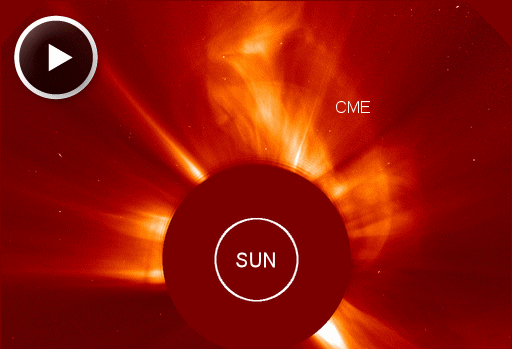
Image credit: TW
The intense geomagnetic storm of Oct. 24-25 (described below) has subsided and US skies are returning to normal. If you missed the show, don’t worry. The Northern Lights will be back. For much of the past few years, the sun has been in a quiet state; but solar activity is cyclical and the sun appears to be waking up again. Forecasters expect new Solar Cycle 24 to peak in 2012-2013 with many more chances to see auroras in unfamiliar places.

Solar wind
speed: 417.6 km/sec
density: 0.2 protons/cm3
The Radio Sun
10.7 cm flux: 139 sfu
Planetary K-index
Now: Kp= 1 quiet
24-hr max: Kp= 1 quiet
The CME that hit Earth’s magnetic field on Oct. 24th left the sun almost two days earlier. It was propelled in our direction by an unstable magnetic filament, which erupted around 0100 UT on Oct. 22nd. This movie from the Solar and Heliospheric Observatory shows the cloud expanding toward Earth in the first hours after the explosion:
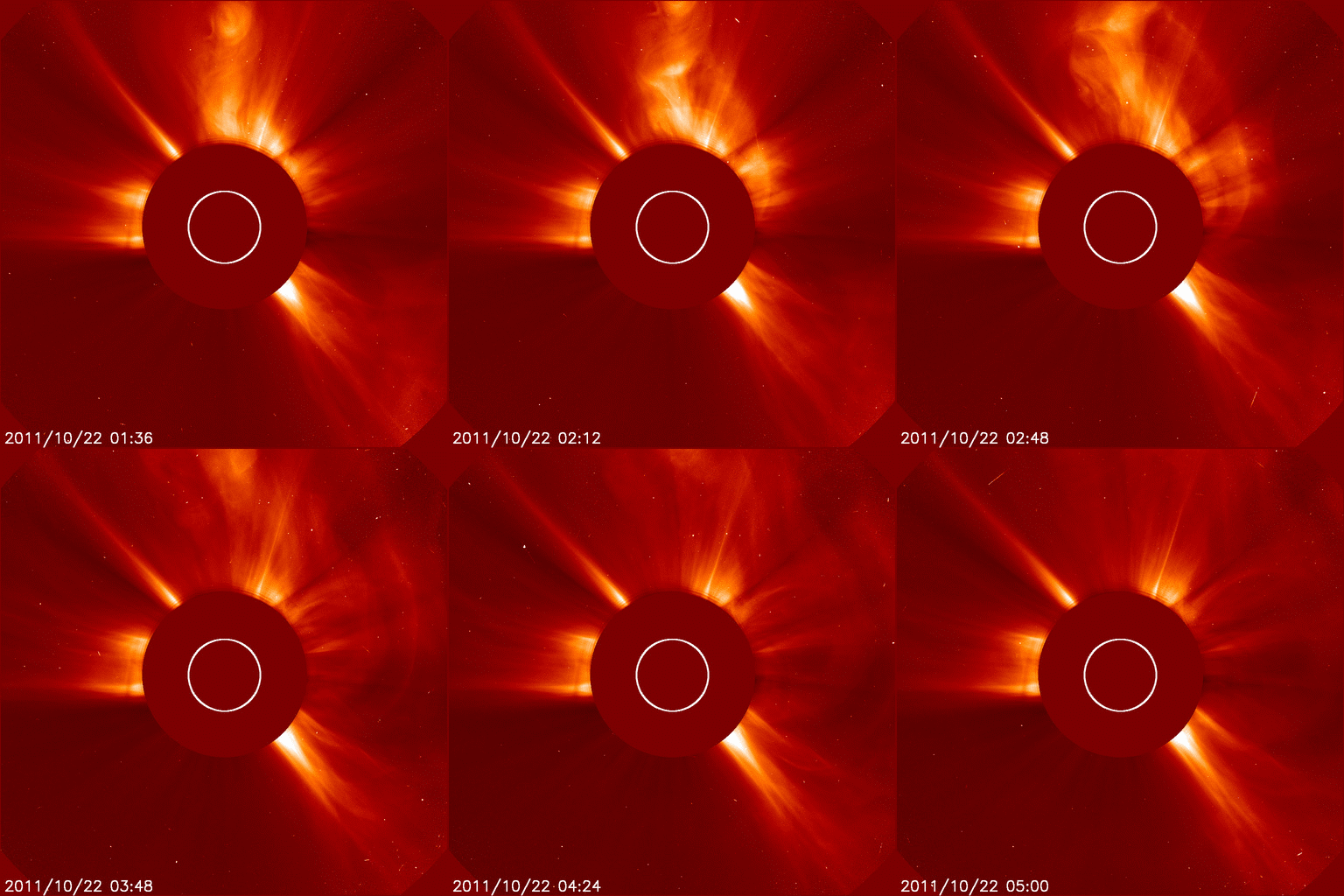
Traveling faster than two million mph, the cloud took about 41 hours to cross the sun-Earth divide. The CME was so geoeffective because it contained a knot of south-pointing magnetic fields. These fields partially cancelled Earth’s north-pointing magnetic field at the equator, allowing solar wind plasma to penetrate deeply into Earth’s magnetosphere. (SpaceWeather)


Published in the last 24 hours
- High Risk of excessive rainfall covers Florida’s Space Coast as St. Johns River near Cocoa reaches 5.67 m
- Four small asteroids will pass close to Earth from November 21 to 23
- Cyclone Akvan weakens after landfall near Gopalpur; more than 300 000 evacuated in Odisha, India
- A broad low over southeastern Florida and the northwestern Bahamas has a 30 percent chance of subtropical or tropical development within 48 hours and a 50 percent chance within 7 days, the National Hurricane Center says
