• NOAA gives El Niño an 83% chance of reaching historic strength in late 2026

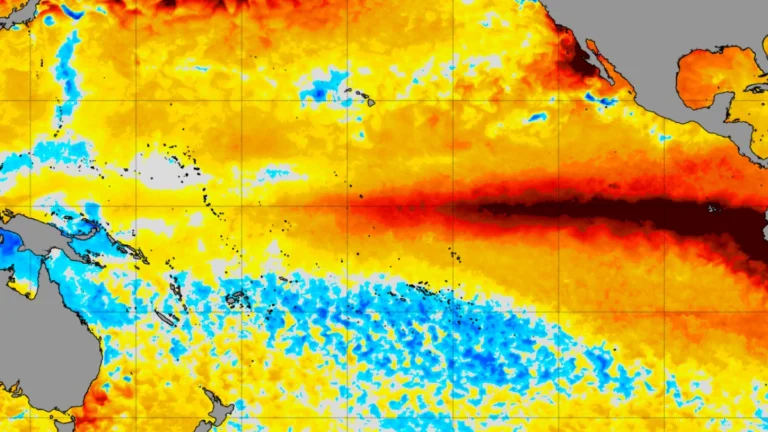
    El Niño strengthened further across the equatorial Pacific in September 2026, and NOAA’s Climate Prediction Center (CPC) said on October 8 that the October–December Relative Oceanic Niño Index (RONI) has an 83% chance of reaching at least +2.5°C (+4.5°F)—a level that would exceed previous El Niño events in its record dating to 1950. The World Meteorological Organization (WMO) separately forecast a Niño-3.4 anomaly of approximately +3.7°C (+6.7°F) for the same period.
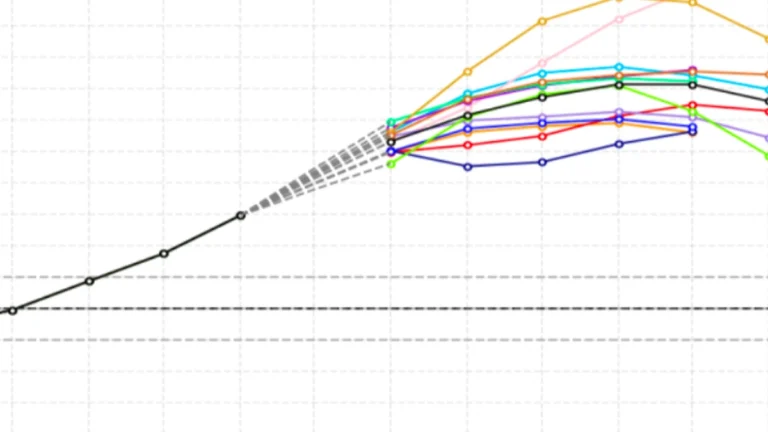
  • El Niño forecast to become very strong by late 2026, raising extreme weather risks into 2027

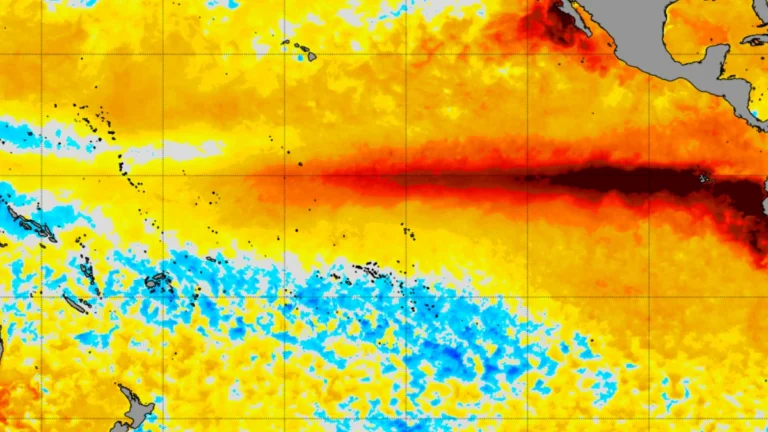
    El Niño is forecast to strengthen to very strong intensity during late 2026, with the World Meteorological Organization (WMO) indicating an exceptionally high likelihood of nearly 100% that El Niño conditions will persist through February 2027. NOAA’s Climate Prediction Center (CPC) separately gives a greater than 90% chance of a very strong event during Northern Hemisphere fall and winter 2026–27. A very strong El Niño increases the likelihood of major shifts in rainfall and temperature patterns across many regions, although the severity of impacts varies by location and season.

  • NOAA confirms strengthening El Niño, with 81% chance of very strong conditions in October–December 2026

    El Niño is present and strengthening across the central and eastern equatorial Pacific, the National Oceanic and Atmospheric Administration (NOAA) confirmed on August 3, 2027.Meanwhile its July strength outlook gives an 81% chance of very strong conditions during October–December 2026. WMO’s August–October 2026 outlook also shows associated shifts in seasonal temperature and rainfall probabilities across multiple regions.NOAA maintains an El Niño Advisory.

  • El Niño chances rise as La Niña fades, WMO says neutral phase to persist until mid-2026

    The World Meteorological Organization (WMO) reported on March 3, 2026, that the recent weak La Niña is fading, with ENSO-neutral conditions expected to prevail until at least July 2026. Forecast models show about a 40% chance of El Niño emerging by mid-year, although confidence remains limited because of the boreal-spring predictability barrier.

  • WMO declares 2023 as the hottest year on record ahead of the Copenhagen Climate Ministerial

    The World Meteorological Organization (WMO) released its “State of the Global Climate 2023” report on March 19, 2024, confirming 2023 as the warmest year on record. The report is published ahead of the Copenhagen Climate Ministerial on March 21 and 22, where climate leaders and ministers from around the world will gather to push for accelerated climate action.

  • WMO announces all-time deadliest extreme weather events

    On Thursday, May 18, 2017, the World Meteorological Organization (WMO) has announced "world records" for the highest reported historical death tolls from tropical cyclones, tornadoes, lightning and hailstorms. It marks the first time the official WMO…

  • WMO confirms 2016 hottest year on record

    According to a consolidated analysis by the World Meteorological Organization (WMO), the year 2016 has been confirmed as the hottest year on record, surpassing the exceptionally high temperatures of 2015. The globally averaged temperature in 2016 was about 1.1°C…

  • New insights on changes in the ozone layer

    German Aerospace Center researchers have been instrumental in the preparation of a report on the changes in the Ozone Layer for the World Meteorological Organization (WMO). The report was published online by the Geneva-based WMO in January. Recent estimates suggest