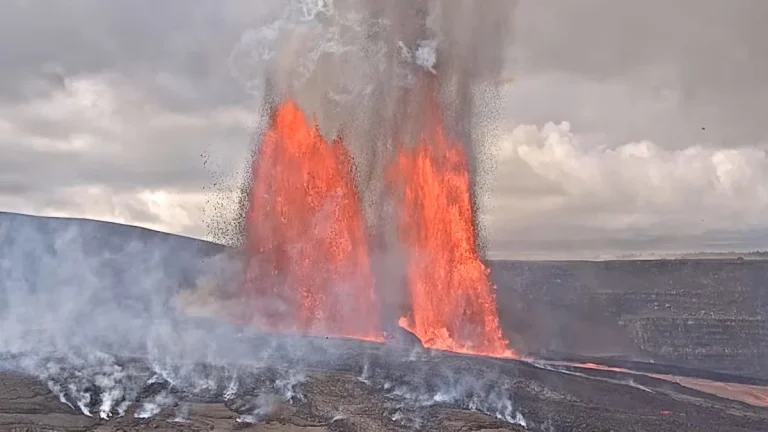
• Episode 42 shows high-intensity magma discharge and dual-vent activity at Kīlauea volcano

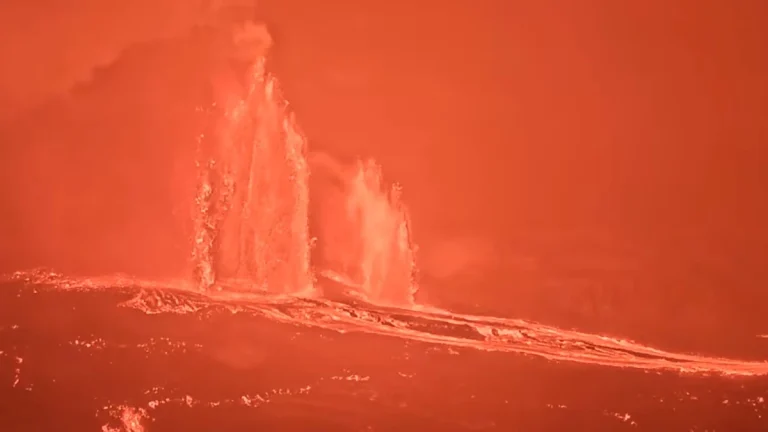
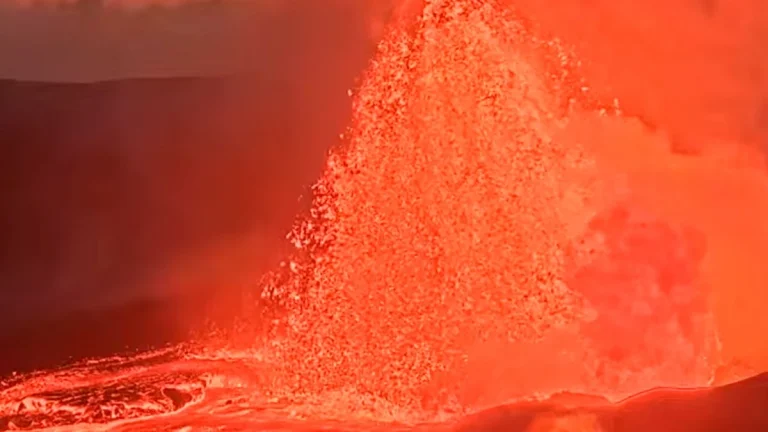
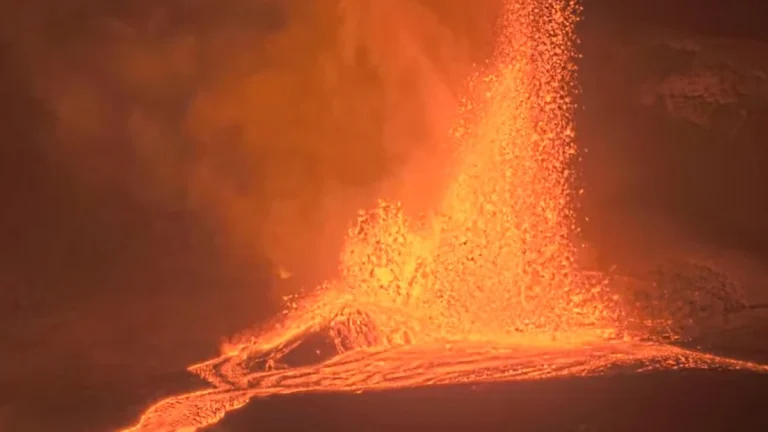
    Kīlauea volcano’s Halemaʻumaʻu crater produced one of its most intense eruptive episodes in months on February 15, 2026, when dual vents discharged lava at rates up to 780 m³/s (1 000 yd³/s) and fountains rose 400 m (1 300 feet) high before the activity paused at 23:38 HST. The episode released an estimated 11.4 million m³ (15 million yd³) of lava and covered about half of the crater floor.

  • Episode 41 eruption at Kīlauea produces 480 m (1 575 feet) fountains, tephra reaches Hilo and Puna, Hawaii

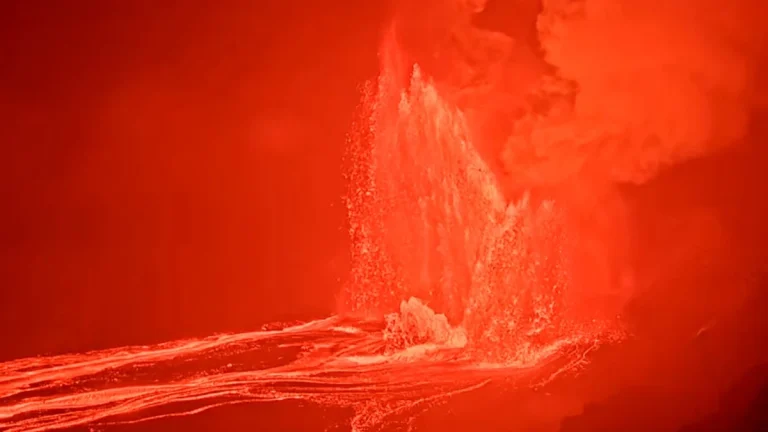
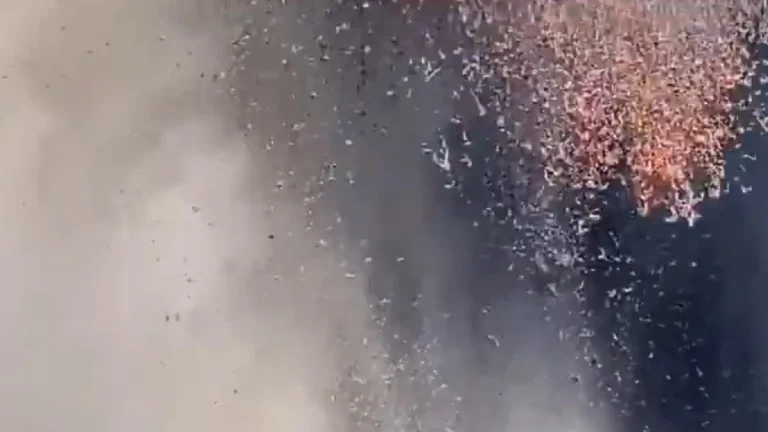
    Episode 41 of Kīlauea’s ongoing Halemaʻumaʻu eruption began at 11:10 HST (21:10 UTC) on January 24, 2026, producing lava fountains up to 480 m (1 575 feet) high and the broadest verified tephra dispersal of the current summit eruption sequence. Fine ash and Pele’s hair were carried by easterly winds to communities as far as Hilo and coastal Puna, while coarse fragments up to 30 cm (1 foot) fell near the vent. The eruption ended abruptly after about eight hours of activity.

  • Pavlof volcano alert raised after rise in long-period earthquakes, Alaska

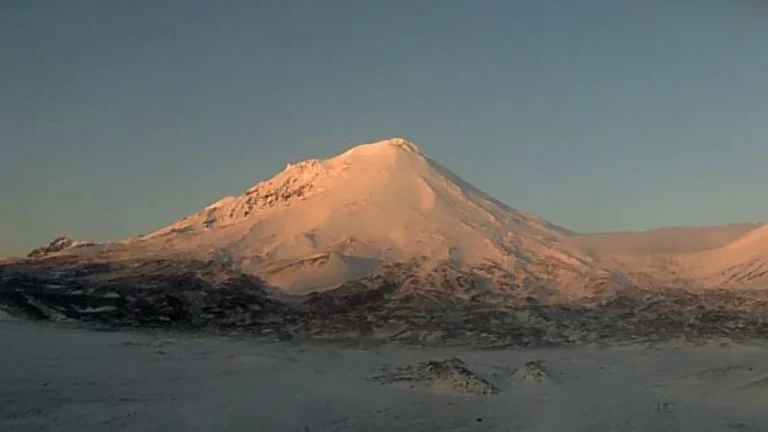
    A notable increase in seismic activity was detected at Pavlof volcano on the Alaska Peninsula on January 14, 2026, prompting the Alaska Volcano Observatory (AVO) to raise the alert level to Advisory and the Aviation Color Code to Yellow. No surface activity or eruptive changes were observed, and seismicity has since declined to background levels.

  • HVO reports increased earthquake activity beneath Halemaʻumaʻu, first notable summit unrest since December 2024

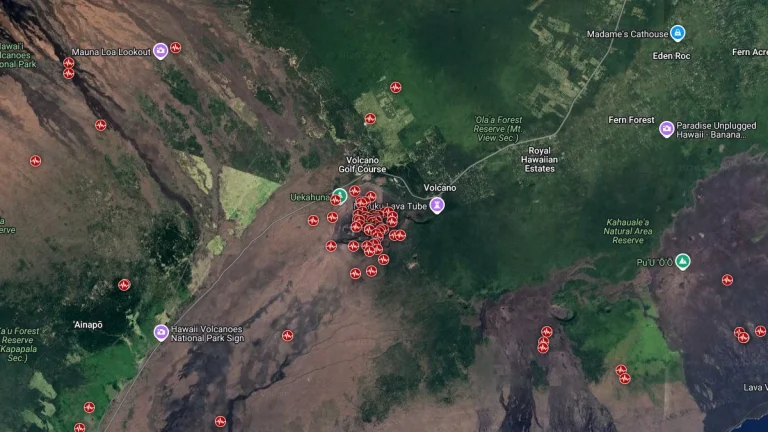
    A series of three small earthquake swarms occurred beneath Halemaʻumaʻu crater at the summit of Kīlauea Volcano, Hawaii, between January 13 and 14, 2026, marking the most notable shallow seismic unrest since the eruption’s onset in December 2024. The U.S. Geological Survey’s Hawaiian Volcano Observatory (HVO) reports all events were below magnitude 2 and located 1.5–4 km (0.9–2.5 miles) beneath the surface. The activity follows the high fountain eruption of episode 40 on January 12, which produced 5.5 million m³ (7.2 million yd³) of lava within less than 10 hours.

  • Kīlauea enters eruptive episode 39 exactly one year into ongoing summit eruption, with lava fountains rising over 420 m (1 400 feet)

    Kīlauea entered eruptive episode 39 at 20:10 HST on December 23, 2025 (06:10 UTC on December 24) as lava fountains rose from twin vents on the floor of Halemaʻumaʻu crater. Within about 95 minutes, fountain heights increased from 10 m (30 feet) to more than 420 m (1 400 feet), with lava flows covering 10–20% of the crater floor by 21:14 HST and a plume reaching 6 000 m (20 000 feet).

  • USGS V3 camera destroyed by lava fountain during Kīlauea’s Episode 38, Hawaiʻi

    A powerful lava fountain from Kīlauea’s Halemaʻumaʻu crater, Hawaiʻi, destroyed the USGS Hawaiian Volcano Observatory’s V3 streaming camera at around 10:00 HST (20:00 UTC) on December 6, 2025. The camera was recording live when an inclined fountain from the south vent buried it in hot pumice and tephra during Episode 38 of the ongoing summit eruption.

  • Episode 38 at Kīlauea produces extremely rare triple-fountain event and destroys USGS camera, Hawaiʻi

    Kīlauea’s Halemaʻumaʻu crater, Hawaiʻi, began erupting at 08:45 HST (18:45 UTC) on December 6, 2025, when fountains emerged from the north vent, marking the start of Episode 38 of the ongoing summit eruption. Within minutes, a south vent opened, and by 09:15 HST a rare triple-vent lava fountain was active, producing jets up to 370 m (1 200 ft) high and a 6 km (20 000 feet) plume above the summit. The eruption lasted 12.1 hours, covered more than half of Halemaʻumaʻu crater with new lava, destroyed the USGS V3 streaming camera, and ended abruptly at 20:52 HST on the same day (06:52 UTC on December 7).

  • New eruptive episode at Kīlauea produces strong lava fountaining and high sulfur dioxide emissions

    Episode 37 of the ongoing Kīlauea eruption began at 14:30 HST on November 25, 2025 (00:30 UTC, November 26), producing sustained lava fountains about 120 m (400 feet) high from the north vent inside Halemaʻumaʻu crater. The eruption remains confined within Hawaiʻi Volcanoes National Park, with no impacts beyond the summit area. Seismic tremor intensified at the onset, and sulfur dioxide (SO2) emissions rose to around 50 000 tonnes per day, generating volcanic gas plumes and vog drifting southwest under light northeast winds.

  • Media claims of Mount Rainier tremor proven false by USGS and PNSN

    Contrary to recent media coverage suggesting Mount Rainier had entered an unprecedented tremor phase, the U.S. Geological Survey (USGS) confirmed that no volcanic tremor is occurring at the volcano. The abnormal seismic signal detected over several days in mid-November 2025 originated from ice buildup and communication interference at the STAR station on Rainier’s west flank. Monitoring data from the Pacific Northwest Seismic Network (PNSN) show no signs of volcanic unrest, and the Alert Level remains at Normal.

  • Record-high effusion rate measured during episode 36 of Kīlauea’s Halemaʻumaʻu eruption

    Episode 36 of the ongoing Halemaʻumaʻu eruption at Kīlauea volcano, Hawaiʻi, ended at 16:16 LT on November 9 (02:16 UTC, November 10), 2025, after just under 5 hours of continuous fountaining. The event produced record-high lava effusion rates of around 500 m³/s (650 yd³/s) and built fountains up to 330 m (1 100 feet) high, covering 60–80% of the Halemaʻumaʻu crater floor.