Slow-slip earthquake in progress near Hawke’s Bay, New Zealand
A slow-slip earthquake (SSE) event has been occurring near New Zealand’s Hawke’s Bay, along the Hikurangi Subduction Zone since early December.


A slow-slip earthquake (SSE) event has been occurring near New Zealand’s Hawke’s Bay, along the Hikurangi Subduction Zone since early December.
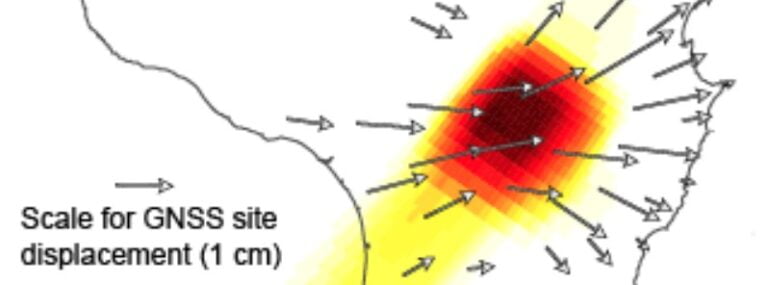
Two slow-motion earthquakes have been taking place so far in 2022 under the central and eastern North Island, New Zealand. These events are like earthquakes in slow motion, unfolding over weeks to months and cannot be felt by humans.
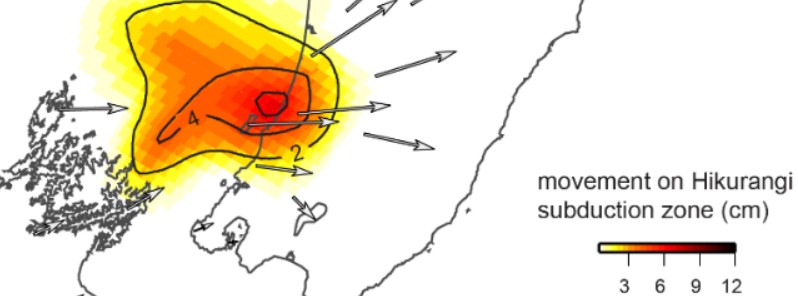
A slow-slip event began under the Kāpiti-Horowhenua area, New Zealand in mid-September 2021, and is expected to continue for several more months. The part of the subducting Pacific Plate 30 – 50 km (18 – 31 miles) beneath Kāpiti has started moving slowly again…
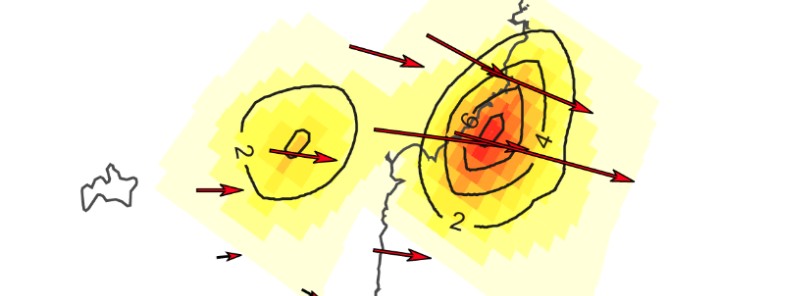
A slow-slip event started around June 14, 2021, near Gisborne, New Zealand and models suggest several cm of movement has occurred at the plate boundary so far. This is the second slow-slip event off the coast of North Island since the May 2021 event near Porangahau….
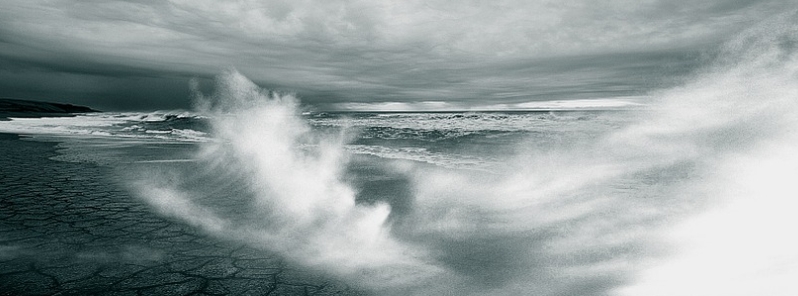
The devastating M8.5 earthquake that shook Sumatra, Indonesia, in 1861 was long believed to be a sudden rupture on a previously quiescent fault. However, new research showed that tectonic plates below the island had been slowly crashing against each other for 32…
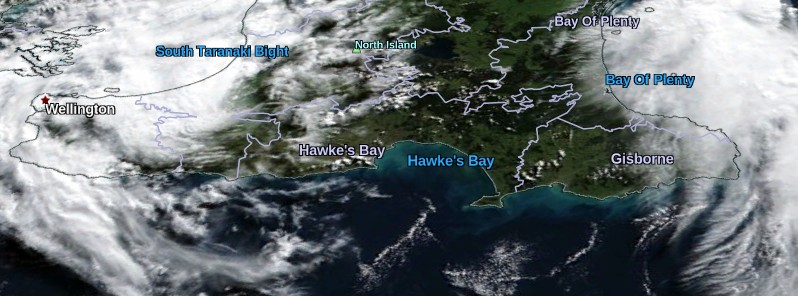
A large, slow-slip earthquake is occurring off the east coast of North Island, New Zealand. The event began off the coast of Porangahau last week in the same area as the one that occurred shortly after the massive M7.8 Kaikoura Earthquake of November 2016. Based on…
Slow-slip earthquakes have been detected at many earthquake hotspots in the world, including areas around the Pacific Ring of Fire, but it remains unclear as to how they are linked to the damaging quakes that take place there. In a new study, researchers at The…
Seismologists at Caltech analyzed 10 years' worth of slow-slip events that result from episodic fault slip, like regular earthquakes, but only produce barely perceptible quakes in the Cascadia region of the Pacific Northwest. They found that this particular type…
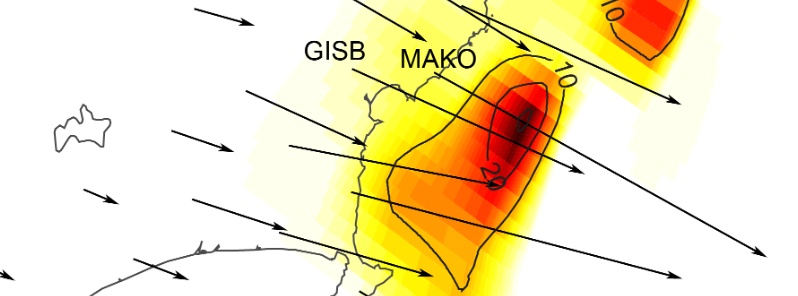
GNS scientists are monitoring a slow-slip event near Gisborne, off the east coast of North Island, New Zealand. This is an update on this event since it started registering in late March 2019. Slow-slip events are also known as "silent" earthquake. These…
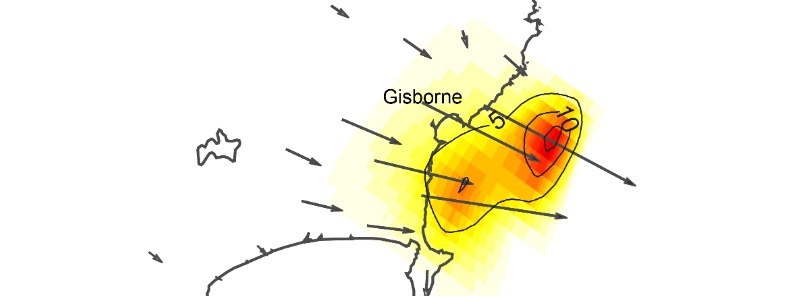
GNS scientists are monitoring a slow-slip event that started at the end of March 2019 near Gisborne, off the east coast of North Island, New Zealand. Slow-slip events are linked to an increase in localized earthquake activity. A similar sequence of earthquakes was…
