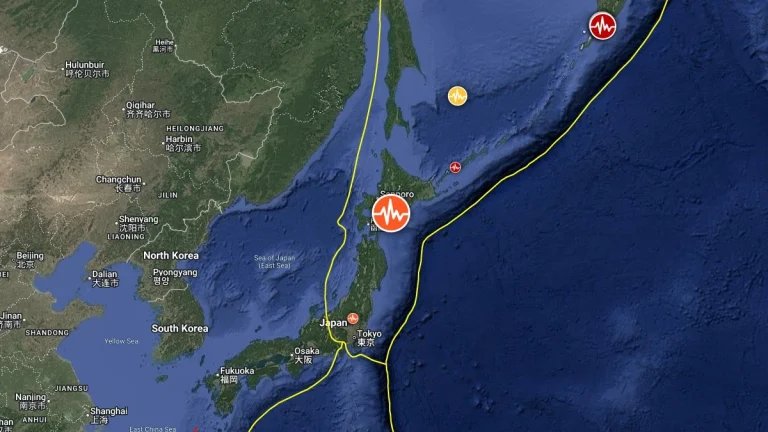
• Major M7.6 earthquake hits near the coast of Hokkaido, Japan, hazardous tsunami waves possible

    A major earthquake registered by the Japan Meteorological Agency (JMA) and USGS as M7.6 struck off the east coast of Aomori Prefecture, Japan, at 14:15 UTC (23:15 JST) on December 8, 2025. Both agencies are reporting a depth of 50 km (31 miles). According to the Pacific Tsunami Warning Center (PTWC), hazardous tsunami waves are possible within 1 000 km (620 miles) of the epicenter.

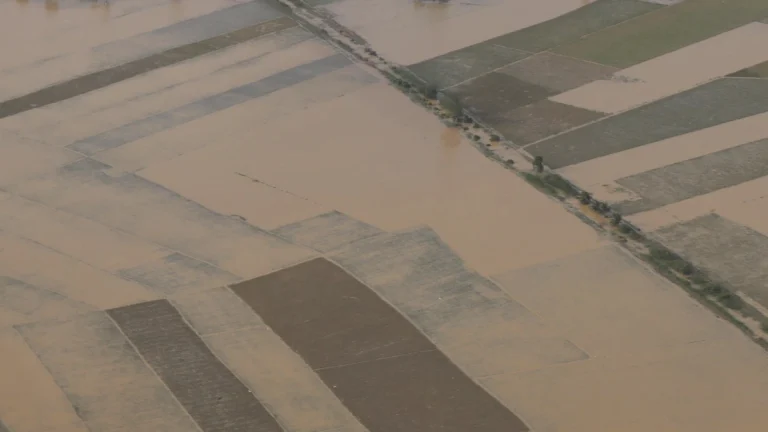
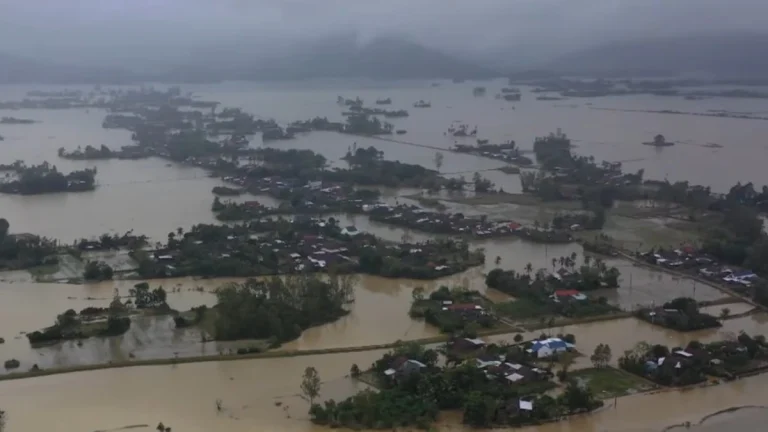
  • Exceptionally rare Tropical Cyclone Senyar kills more than 300 across Indonesia, Malaysia and Thailand

    A low-pressure area developed over the Strait of Malacca on November 22, 2025, and gradually organized into Cyclonic Storm Senyar on November 26. The rare low-latitude system made landfalls in northern Sumatra and Peninsular Malaysia, producing extreme rainfall and catastrophic flooding across Indonesia, Malaysia, and southern Thailand. At least 316 people were killed and thousands displaced before Senyar weakened into a low-pressure remnant on November 28.

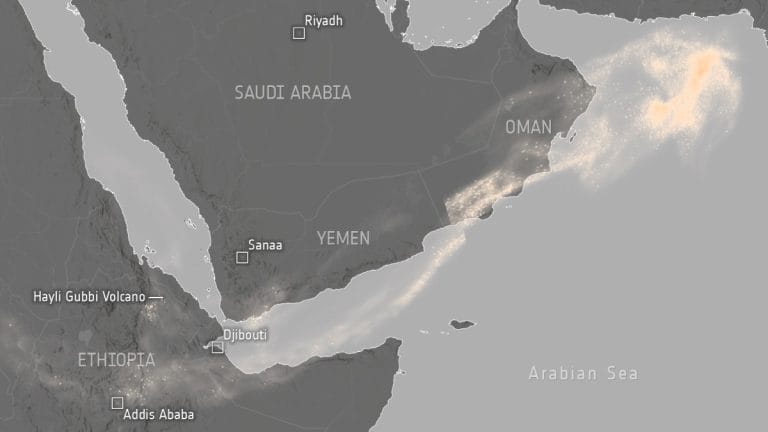
  • Hayli Gubbi’s first eruption in at least 12 000 years grounds flights across India and the Middle East

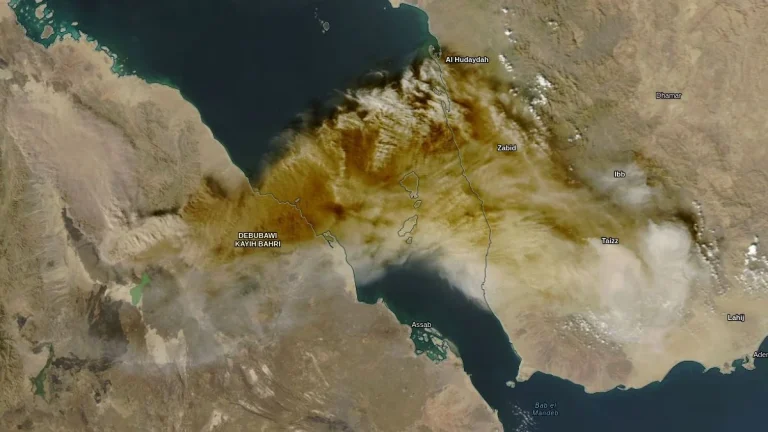
    Ash and sulfur dioxide released by Ethiopia’s Hayli Gubbi volcano, erupting for the first time in at least 12 000 years, disrupted regional air travel between November 24 and 25, 2025. The eruption produced a high-altitude plume reaching about 14 km (46 000 feet) above sea level, spreading eastward across the Arabian Peninsula and India, where aviation authorities issued advisories, rerouted long-haul flights, and temporarily suspended operations on affected routes.

  • Hayli Gubbi volcano erupts for the first time in recorded history, Ethiopia

    Hayli Gubbi volcano in Ethiopia erupted for the first time in at least 12 000 years on November 23, 2025, marking its first confirmed Holocene activity. The eruption generated a plume rising to about 14 km (46 000 feet) above sea level before drifting toward the Arabian Peninsula. Updated satellite data from IASI-C on November 24 detected a large SO2 plume between 5 km (16 400 feet) and 17 km (55 800 feet), with a centre-of-mass height near 16 km (52 500 feet) and a total mass loading of 58.4 kt.

  • Rio Bonito do Iguaçu tornado upgraded to EF-4, placing Brazil among sites of 2025’s most violent tornadoes worldwide

    A new assessment by MetSul Meteorologia confirms that the deadly tornado that struck Rio Bonito do Iguaçu, Paraná, Brazil, on November 7, 2025, reached EF-4 intensity on the Enhanced Fujita Scale, with estimated wind speeds between 250 km/h and 300 km/h (155 mph to 186 mph). The event killed six people, injured more than 400, and destroyed much of the city’s urban area, making it one of the most intense tornadoes recorded globally in 2025.

  • Super Typhoon Fung-wong (Uwan) makes nighttime landfall in northern Luzon, Philippines

    Super Typhoon Fung-wong (known locally as Uwan) made landfall over Dinalungan, Aurora, northern Luzon, at about 21:10 LT (13:10 UTC) on November 9, 2025, with maximum sustained winds near 185 km/h (115 mph) and gusts up to 230 km/h (143 mph). More than 1.1 million people were pre-emptively evacuated across 12 regions, and at least two fatalities and two injuries have already been confirmed.