• Grindavik faces significant risk of ground collapse due to fissures, Iceland

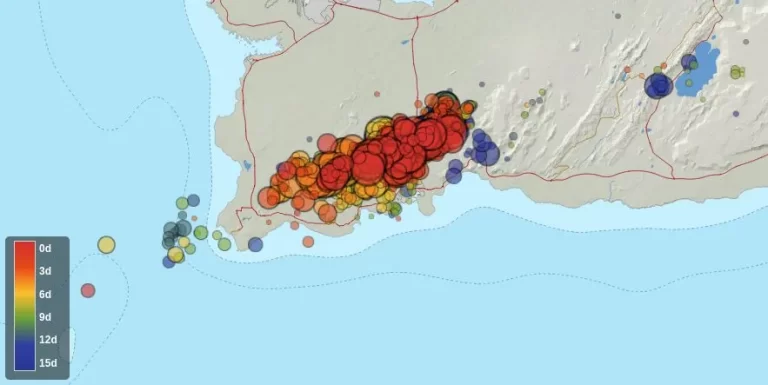
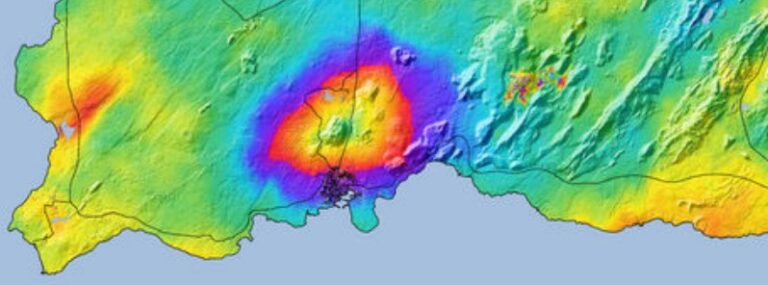
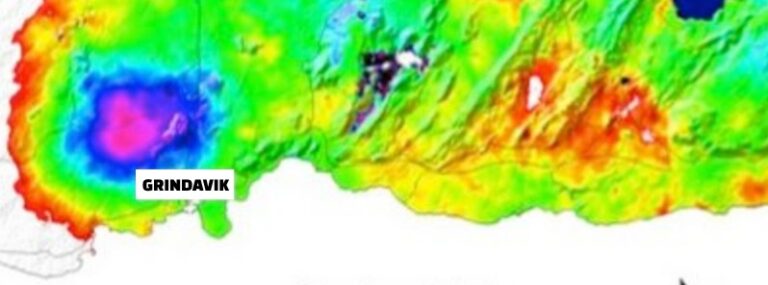
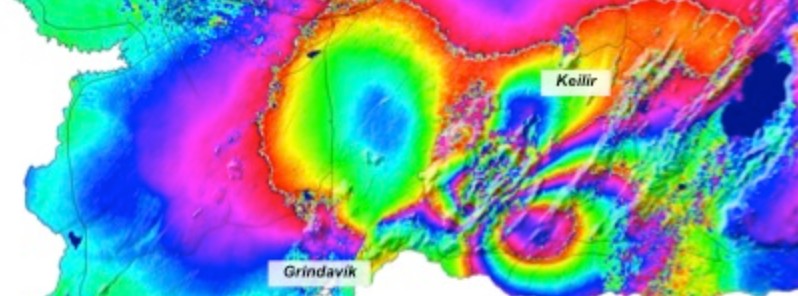
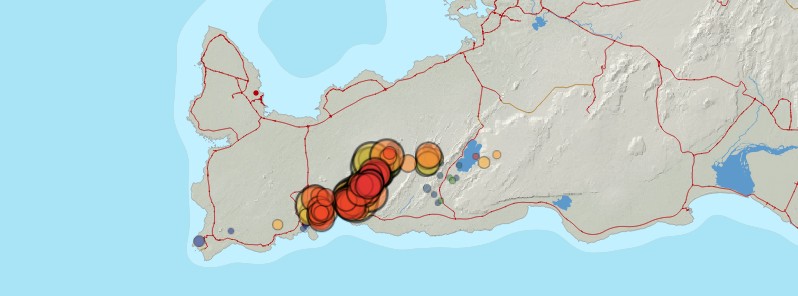
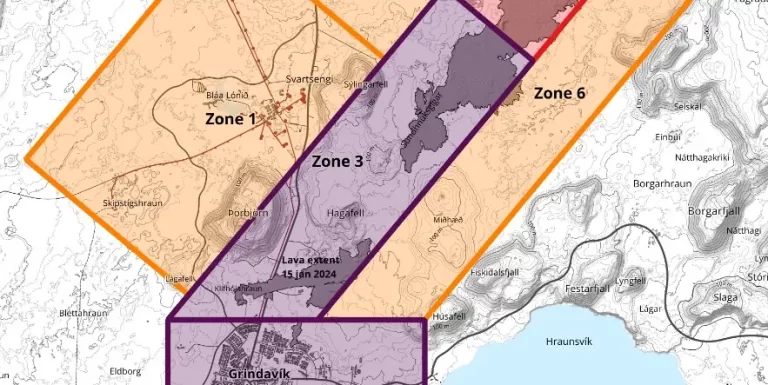
    Recent volcanic activity in the Svartsengi area has led to continuous land uplift, although the exact rate is still being determined through GNSS measurements. Around 200 earthquakes, the largest measuring M1.4, have been recorded near the magma conduit since yesterday. Despite a reduction in earthquake frequency, significant risks, including ground collapse, remain for the nearby Grindavík area.
  • Volcanic eruption starts near Grindavik, Reykjanes Peninsula, Iceland

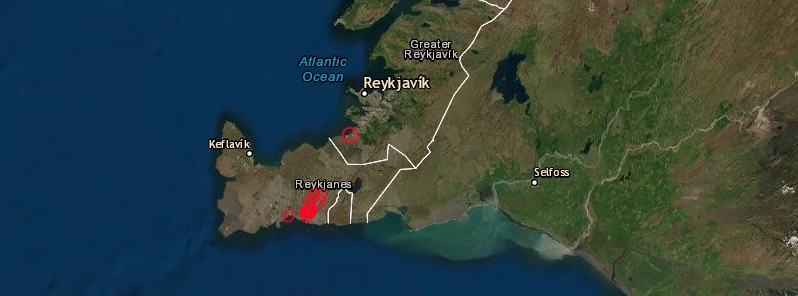
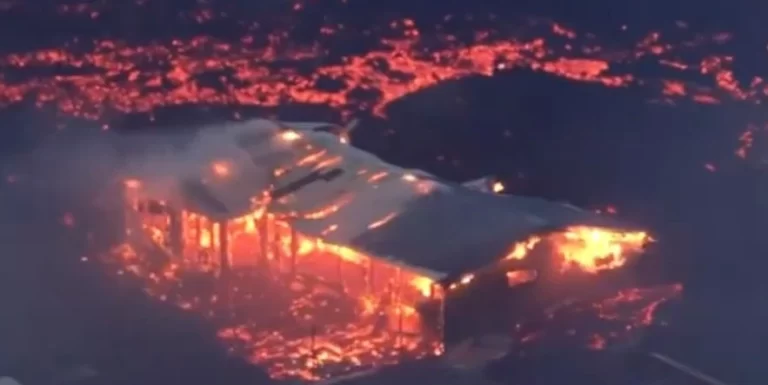
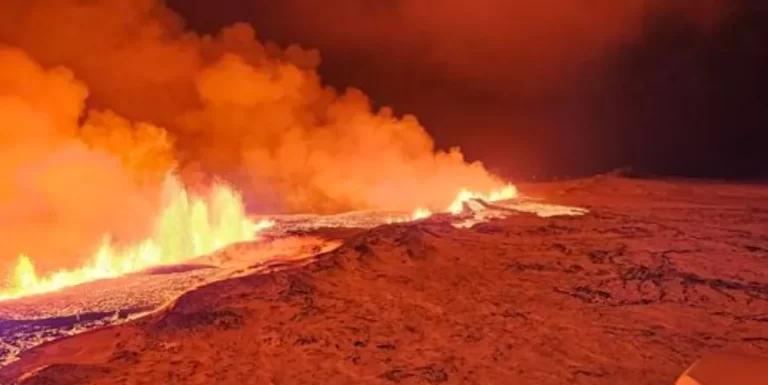
    A new volcanic fissure eruption started at 22:17 UTC on December 18, 2023, about 4 km (2.5 miles) NE of the town of Grindavik, Reykjanes, Iceland. The eruptive fissure is about 4 km long, with the northern end just east of Stóra-Skógfell and the southern end just east of Sundhnúk.

  • IMO confirms continued inflation, seismic unrest at Mt. Þorbjörn, Iceland

    The Icelandic Met Office (IMO) has issued an update on the seismic and volcanic activity at Mt. Þorbjörn on the Reykjanes Peninsula, providing new data on the ongoing seismic unrest that began in late October. The uplift at the GNSS station has seen additional enlargements since the 7 cm rise previously reported over a 10-day period, reflecting continued subterranean pressure changes. The IMO, alongside the Civil Protection Agency, remains on high alert for signs of magma ascent, which could indicate a new phase in the volcanic activity of the area.

  • Intense earthquake swarm near Fagradalsfjall, Iceland

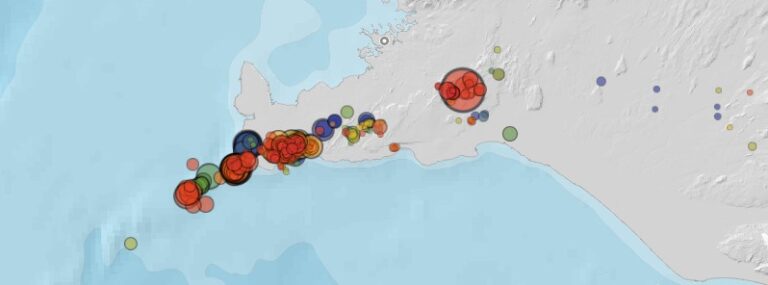
    An intense earthquake swarm started near Fagradalsfjall, Reykjanes Peninsula, Iceland at 17:00 UTC on December 21, 2021 — just one day after the official end of the eruption in the area, the longest in the country in more than 50 years. The Aviation Color Code was…