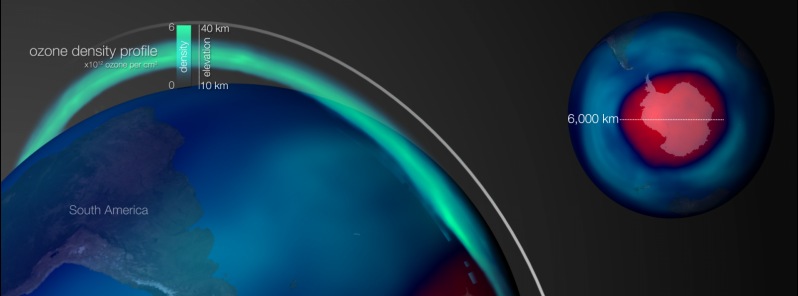
• The 2015 ozone hole over Antarctic larger than usual and late

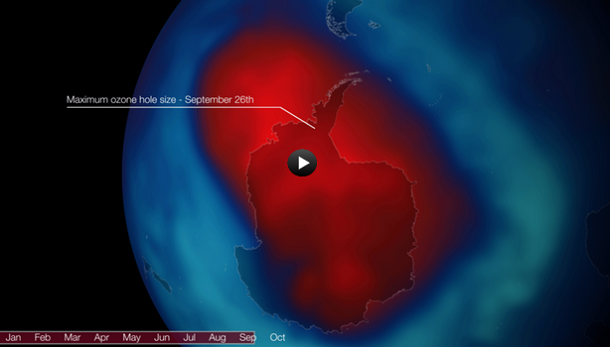
    The annual Antarctic ozone hole was larger than usual this year and formed later than in recent years, according to the scientists from NASA and the National Oceanic and Atmospheric Administration (NOAA). The ozone hole reached its maximum on October 2, 2015,…
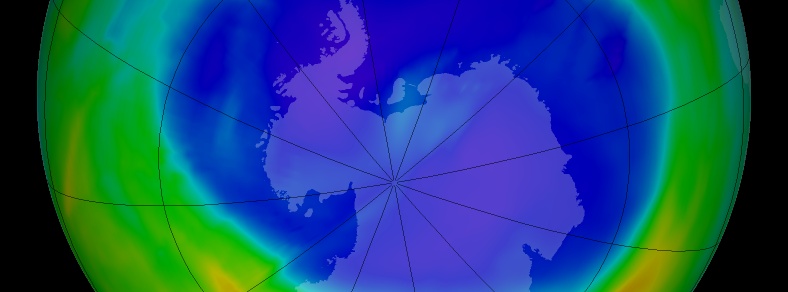
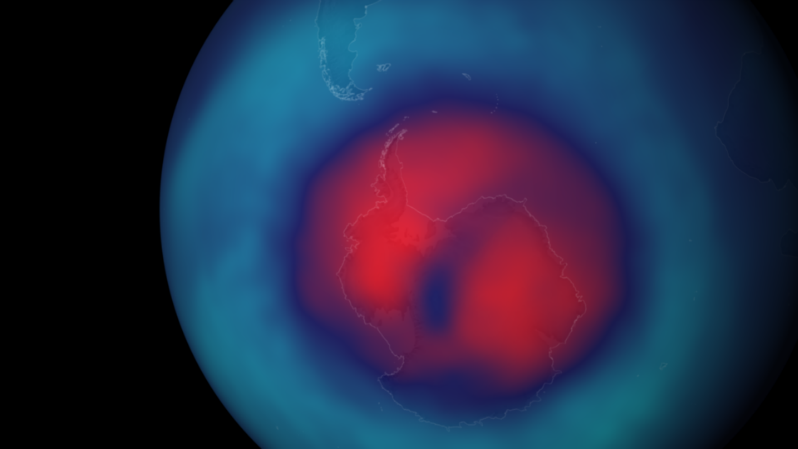
  • 2014 ozone hole update

    According to scientists from NASA and NOAA, the Antarctic ozone hole reached its annual peak on September 11 with the size of 24.1 million square kilometers (93 million square miles). Overall, the 2014 ozone hole is smaller than the large holes of the 1998–2006 pe

  • World Ozone Day 2014

    September 16, 2014 – The World Ozone Day, is meant to commemorate the success that has been achieved in ameliorating ozone depletion since the enactment of the Montreal Protocol, but also to bring attention to the work ahead. In their first review in four years on

  • Antarctic ozone hole reaches maximum size for 2013

    Each year for the past few decades during the Southern Hemisphere spring, chemical reactions involving chlorine and bromine cause ozone in the southern polar region to be destroyed rapidly and severely. This depleted region is known as the “ozone

  • Extending the Ozone monitoring record

    The Ozone Mapper and Profiler Suite (OMPS) is one of five new satellite instruments on the Suomi National Polar-orbiting Partnership (NPP) satellite. OMPS  is sending back detailed information about the atmospheric gas that shields life from harmful levels of the

  • Study links ozone hole to climate change all the way to the equator

    In a study to be published in the April 21st issue of Science magazine, researchers at Columbia University’s School of Engineering and Applied Science report their findings that the ozone hole, which is located over the South Pole, has affected the entire circulation

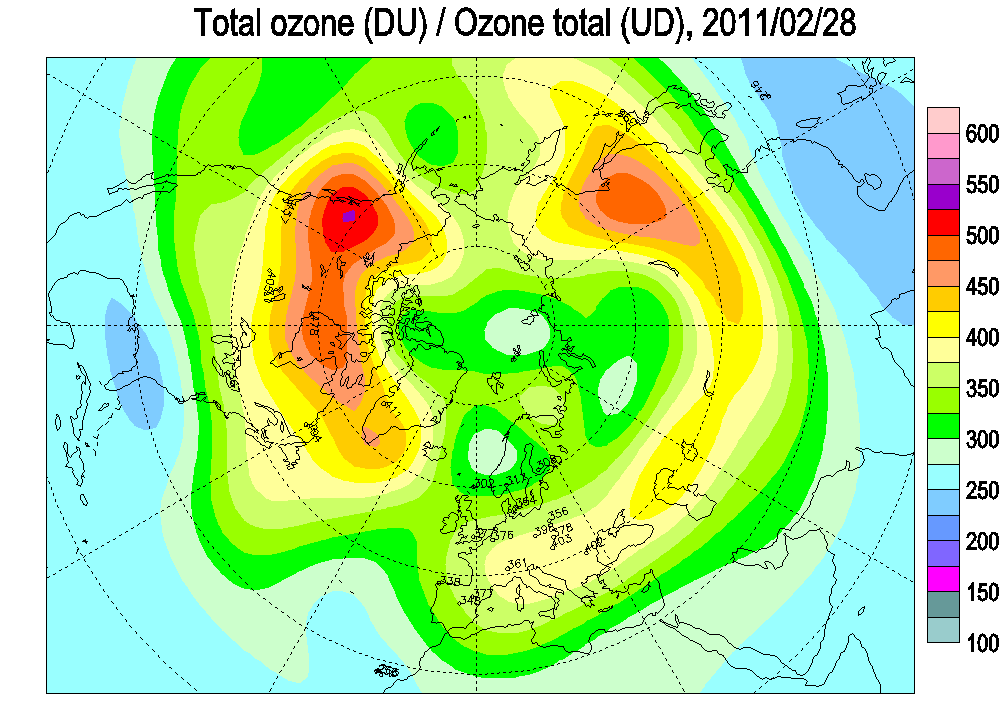
  • Developing ozone hole approaches Scandinavia and Eastern Europe right now

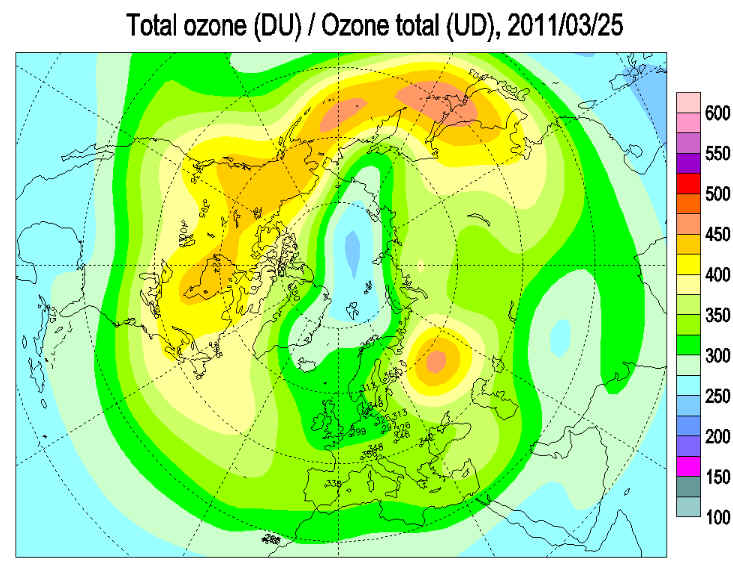
    An exceptionally large area of depleted ozone has formed over the North Pole, and scientists warn that it could settle over Scandinavia and Eastern Europe on 30-31 March.The fast-thinning Arctic ozone layer was first detected by an international network of over 30

  • New insights on changes in the ozone layer

    German Aerospace Center researchers have been instrumental in the preparation of a report on the changes in the Ozone Layer for the World Meteorological Organization (WMO). The report was published online by the Geneva-based WMO in January. Recent estimates suggest