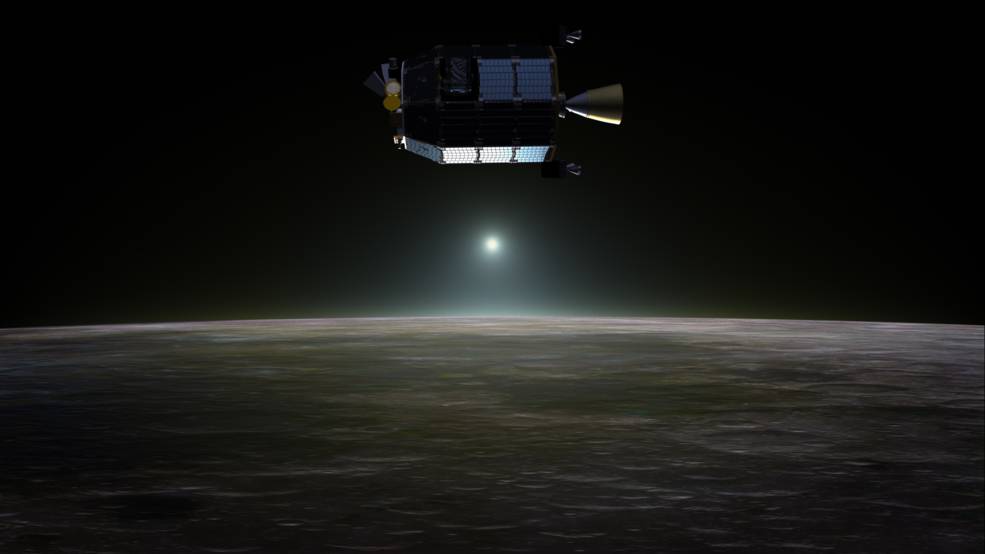
• LADEE spacecraft confirms Moon’s exosphere contains neon

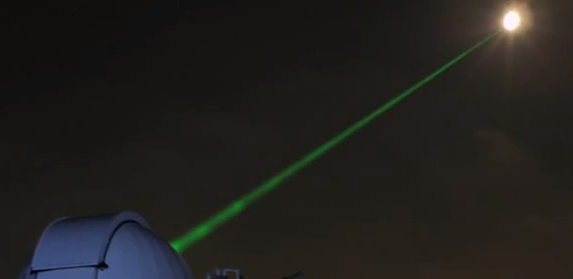
    Lunar Atmosphere and Dust Environment Explorer (LADEE) spacecraft for the first time confirmed the long-speculated assumption, the Moon's atmosphere might contain neon, a gas known for it's intense glow, and commonly used in electric signs on Earth, NASA reporte

  • NASA's unmanned aircraft surveys volcano

    To improve understanding of volcanoes, researchers need to gather data about volcanic ash and gases. However, volcanic airspace contains noxious gases that can be dangerous for researchers as well as conventional combustion engines. Considering the nature and magnitude

  • MAVEN gets magnetometers to study the Red planet's magnetic field

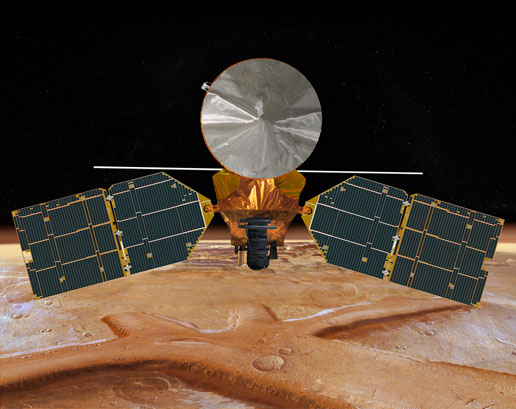
    Could Mars have supported life? Many scientists think that long ago it had a denser atmosphere, cloudy skies that supported liquid water flowing over the surface. They propose the red planet lost its atmosphere due to sputtering as it eroded by

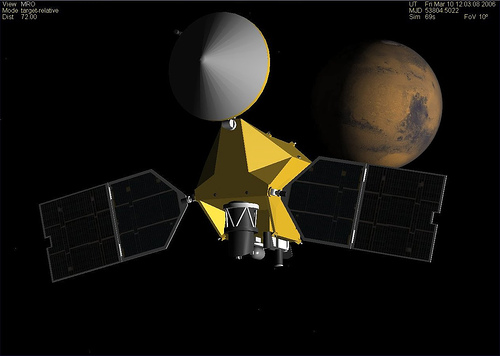
  • Scientists create 3-D view of ancient flood channels beneath Martian surface

    While Curiosity is drilling Martian rocks, NASA’s Mars reconnaissance orbiter is continuing its observations to demystify the Red planet. Recently, scientists created 3-D reconstruction of ancient water channels beneath martian surface using images taken by the

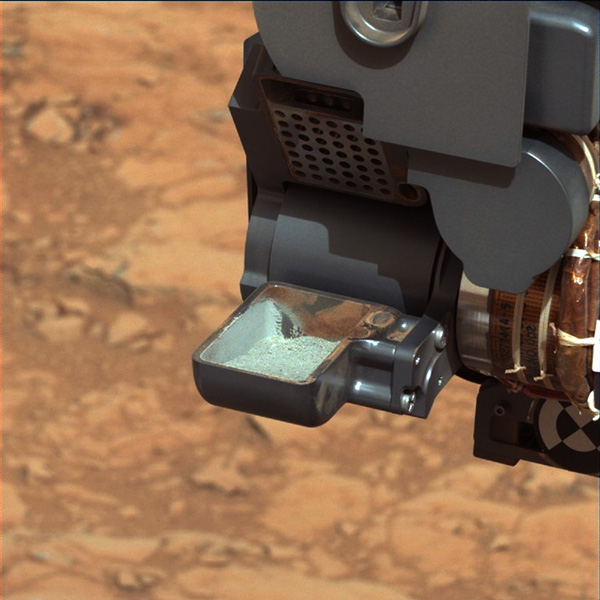
  • Curiosity becomes first rover ever to drill Martian rock

    Adding another milestone to its achievements, Curiosity has successfully drilled a Martian rock, thereby obtaining sample from its interior. Curiosity is the first rover ever to perform such drilling on a rock beyond Earth, NASA reported on February 20, 2013. Powdered

  • Spitzer space telescope observations reveal unusual infant binary star

    NASA’s Spitzer space telescope observed a rare phenomenon – an infant binary star behind a dense disk and envelope of dust 950 light-years away from Earth flashes at regular intervals. NASA report published on February 7, 2013 says such phenomenon has been observed

  • Astronomers explore NGC 6872, declare it largest known spiral galaxy

    NGC 6872 is a barred spiral galaxy 212 million light years away from Earth in the southern constellation Pavo. With its exceptionally large spiral arms, it spans more than 522,000 light-years, making it more than five times the size of our Milky Way galaxy. For