• Extremely rare gigantic jet captured from the International Space Station over Mexico and U.S. Southwest

    An extremely rare gigantic jet, powerful bolt of upward lightning, was captured from the International Space Station as it soared above a thunderstorm over northern Mexico and the U.S. Southwest on July 3, 2025. The striking image, taken by NASA astronaut Nichole Vapor Ayers, shows the jet piercing into the ionosphere, offering a rare glimpse of one of Earth’s most elusive atmospheric phenomena.

  • Atomic clocks enter orbit to test relativity and redefine time standards

    The newly launched Atomic Clock Ensemble in Space (ACES) mission will advance our understanding of how gravity affects the passage of time. By comparing highly accurate clocks aboard the International Space Station with those on Earth, ACES aims to test key concepts in Einstein’s theory of relativity and explore fundamental physics.

  • NASA astronauts stranded in orbit set for long-awaited return after nine months on ISS

    After an extended mission due to technical issues with their return spacecraft, two NASA astronauts are set to return to Earth aboard SpaceX’s Crew-9 capsule. Originally scheduled for a short stay, Sunita Williams and Barry Wilmore have spent nearly nine months aboard the International Space Station (ISS) after their Boeing Starliner capsule encountered propulsion problems. With the successful arrival of Crew-10 on March 16, 2025, the long-delayed crew rotation is now underway, paving the way for their return no earlier than March 20, 2025.

  • ISS astronaut captures bright green meteor exploding over Cairo, Egypt

    On September 2, 2024, at 20:12 UTC, NASA astronaut Matthew Dominick, commander of the SpaceX Crew-8 mission, recorded a beautiful timelapse footage of a dazzling green meteor explosion. The event was captured from the International Space Station (ISS) as it entered Earth’s atmosphere over Cairo, Egypt.

  • Russian RESURS-P1 satellite breaks in orbit, releasing over 180 pieces of trackable debris and forcing ISS astronauts to take shelter

    Russian decommissioned satellite Resurs-P1 broke up in orbit on June 26, 2024, releasing roughly 100 pieces of trackable debris. The number rose to 180 by the end of June 27 and is expected to keep rising, according to Leo Labs. Following the breakup, NASA instructed the 9 astronauts aboard the International Space Station (ISS) to take shelter in their respective spacecraft as a standard precautionary measure.

  • Piece of largest object ever jettisoned from ISS crashes into Florida home, U.S.

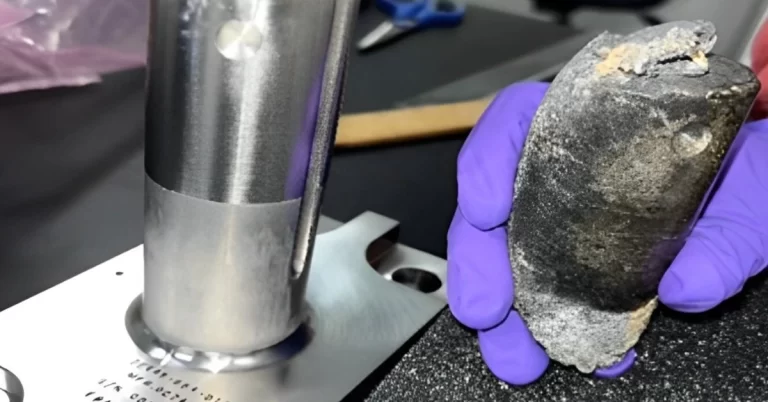
    In March 2021, NASA ground controllers deployed the International Space Station’s (ISS) robotic arm to discard a cargo pallet (EP-9) containing obsolete nickel hydride batteries, following upgrades to lithium-ion units. This operation set a record for the heaviest item jettisoned from the ISS. While the entire pallet was expected to disintegrate before reaching Earth’s surface, a fragment of this hardware survived atmospheric re-entry and struck a residence in Naples, Florida, in March 2024.

  • Largest object ever jettisoned from ISS to make uncontrolled re-entry this week

    The International Space Station’s (ISS) largest-ever discarded object, a hefty equipment pallet weighing 2.9 tons, is anticipated to make an uncontrolled descent back to Earth between March 8 and 9, 2024. Launched into space for a critical ISS power system upgrade, this pallet, loaded with nine old station batteries, will not fully disintegrate upon reentry, with predictions indicating about half a ton of debris could survive the descent and impact the planet’s surface.

  • Roscosmos reports air leak on International Space Station

    A 'more than standard' air leak was found in the working compartment of the Zvezda Service Module on the International Space Station (ISS), Russian Roscosmos State Corporation for Space Activities reported on Tuesday, September 29, 2020. "After a…