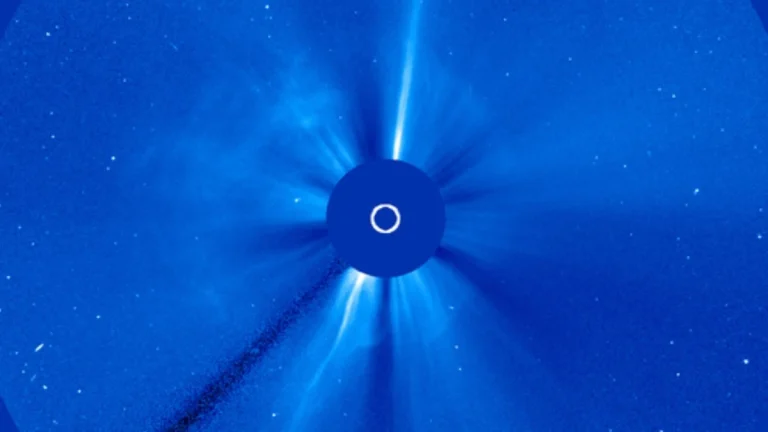
• CME impact forecast early January 20 with G4 – Severe or higher storm risk and aurora as low as California

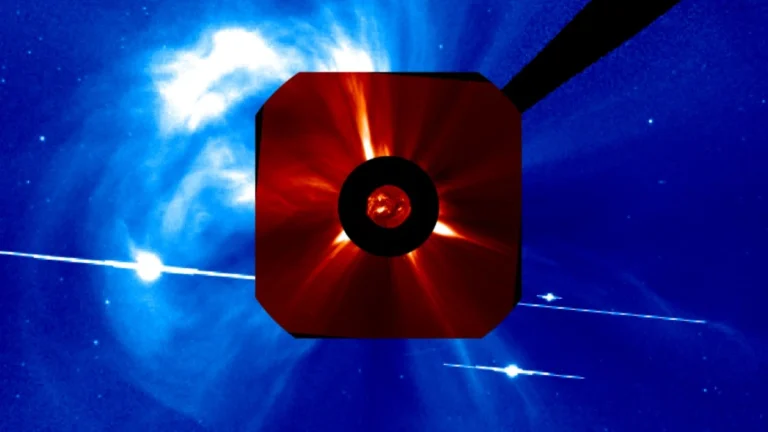
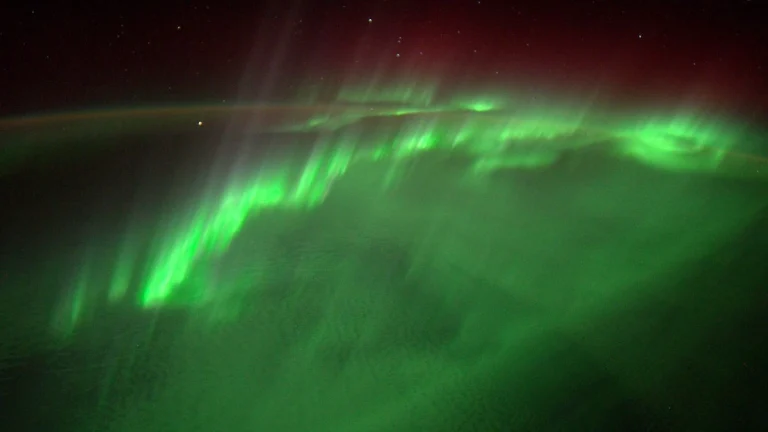
    A G4 – Severe or greater geomagnetic storm is forecast for early January 20, 2026, as a full-halo coronal mass ejection from the January 18 X1.9 solar flare approaches Earth. If G4 conditions materialize, auroral activity is expected to expand significantly equatorward, with visibility possible as far south as Alabama and northern California.

  • CME and coronal hole influences cause G1-G2 geomagnetic storming, M3.3 flare erupts beyond solar limb

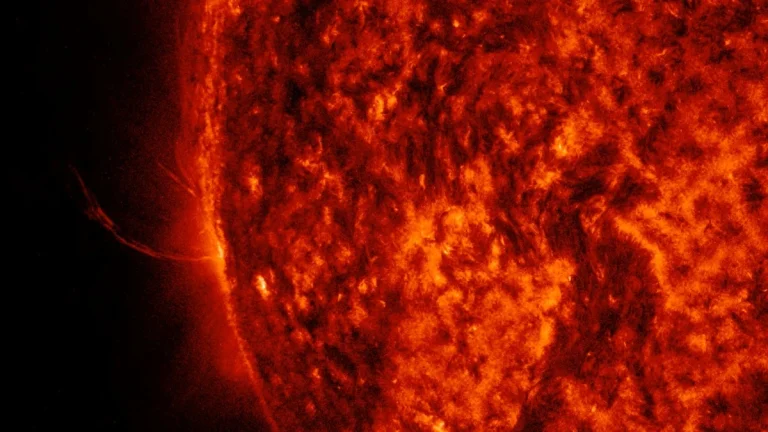
    A long-duration M3.3 flare erupted from just beyond the east-southeast limb at 11:00 UTC on January 11, 2026, as CME and coronal hole influences continued to disturb the solar wind environment. The geomagnetic field reached G1 – Minor to G2 – Moderate storm levels on January 10–11 under combined CME and coronal hole high-speed stream effects. Elevated solar wind parameters and unsettled-to-active geomagnetic conditions are expected to persist through January 14.

  • Two CMEs impact Earth, sparking G4 – Severe geomagnetic storming and aurora as far south as Mexico

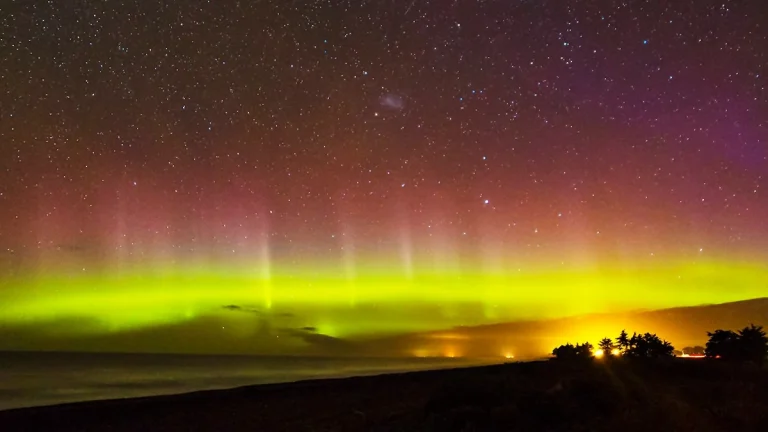
    Coronal mass ejections produced by a long-duration X1.7 on November 9 and X1.2 on November 10 appear to have merged on their way to Earth and impacted our planet at 23:00 UTC on November 11, sparking G4 – Severe geomagnetic storming. Another CME, produced by a major X5.1 flare on November 11, is expected to impact Earth by the end of November 12, causing another round of severe geomagnetic storming. Aurora watchers have already reported impressive sightings as far south as Zacatecas, Mexico.

  • G4 – Severe or greater geomagnetic storm forecast, aurora likely as low as Alabama and California

    A major X5.1 solar flare erupted from Active Region 4274 at 10:04 UTC on November 11, 2025, producing a large Earth-directed coronal mass ejection (CME). NOAA SWPC issued a geomagnetic storm watch predicting G4 – Severe or greater conditions for November 12, G3 – Strong for November 13, and G1 – Minor for November 14. On November 12 and 13, aurora may be visible as far south as Alabama and northern California.

  • Earth-directed CME produced by M7.4 solar flare, strong geomagnetic storm forecast

    Solar activity reached high levels on November 5, 2025, as Region 4274 (N24E40) produced two powerful M-class flares – an M7.4 at 11:19 UTC and an M8.6 at 22:07 UTC. The full-halo CME from the first event is expected to reach Earth late November 6 to early November 7, likely producing G3 – Strong geomagnetic storm conditions and visible auroras across Canada and the northern United States.

  • G3 – Strong geomagnetic storm forecast for November 6-7, aurora as low as Pennsylvania to Iowa and Oregon

    A G3 – Strong geomagnetic storm is forecast for November 6 and 7, 2025. The disturbance originates from X-class solar flares and associated coronal mass ejections (CMEs) recorded on November 4, combined with a coronal-hole high-speed stream. Aurora is expected to become visible across much of Canada and the northern United States, possibly reaching as far south as Pennsylvania, Iowa, and Oregon.

  • Positive polarity CH HSS sparks G3 – Strong geomagnetic storm

    A G3 (Strong) geomagnetic storm is in progress on October 2, 2025, driven by a positive-polarity coronal hole high-speed stream (CH HSS). The U.S. Space Weather Prediction Center (SWPC) issued an active warning valid until 12:00 UTC, with aurora sightings possible as far south as Pennsylvania, Iowa, and Oregon.

  • G3 – Strong geomagnetic storm on September 30

    Earth’s magnetic field reached G3 – Strong storm levels on September 30, driven by CME impacts and sustained southward IMF. The event was enhanced by seasonal Russell–McPherron geometry near equinox, increasing coupling efficiency. Storm strength has since eased to G2 and G1 as IMF weakened and Bz returned closer to neutral.