
On December 26, 2004, a 10-year-old British girl on a Phuket beach recognized the frothing sea from a recent geography lesson, and her warning helped clear the beach before the tsunami struck
“My mum didn’t realise what was happening”
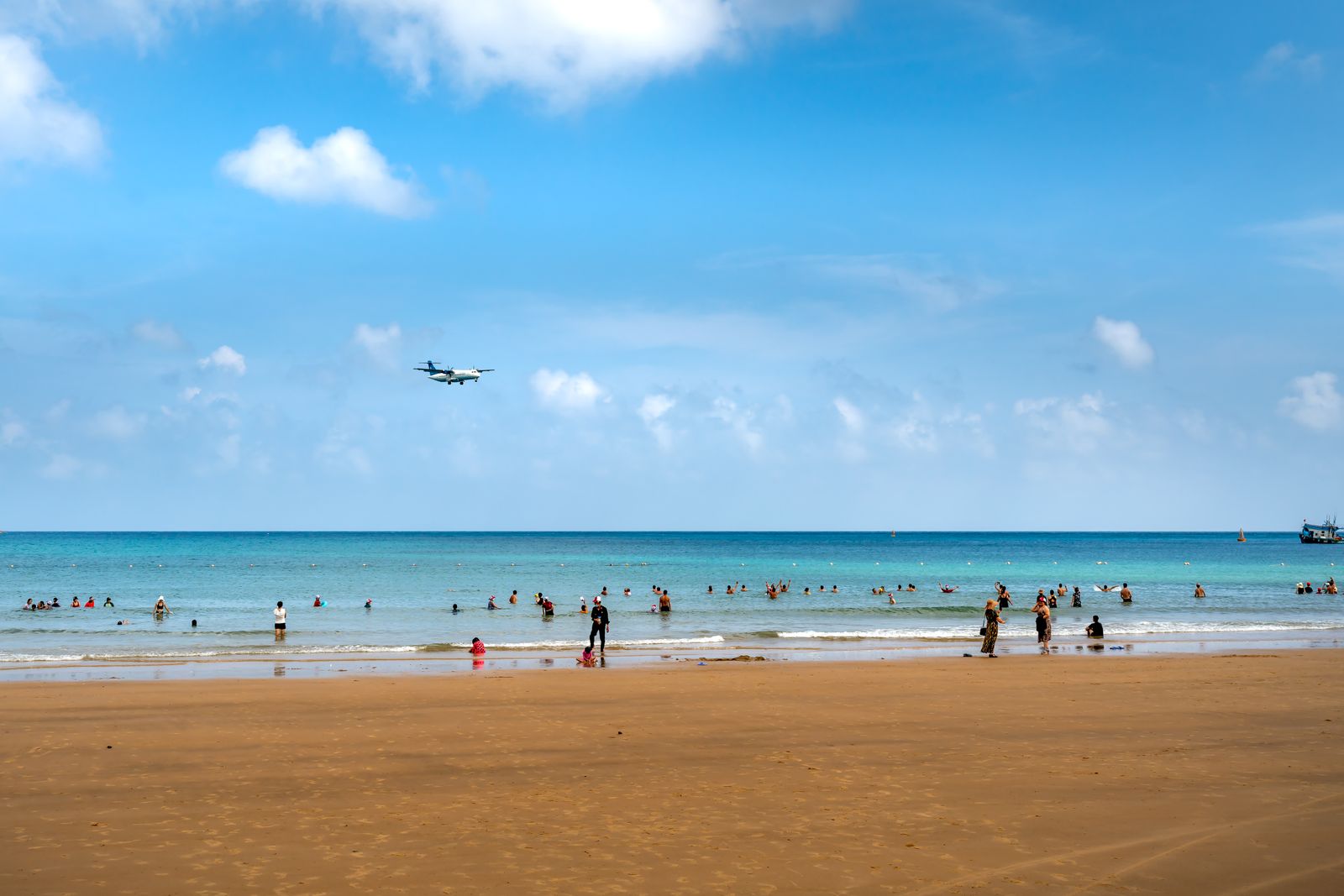
Tilly Smith understood what she was looking at before her parents did. On the morning of December 26, 2004, the 10-year-old was walking on Mai Khao Beach, on Phuket’s northwest coast, with her parents, Colin and Penny, and her seven-year-old sister, Holly. The family had been in Thailand for a week and had just celebrated Christmas on the beach.
The sea had stopped behaving the way the sea does. “The water was really, really frothy. It wasn’t calm and it wasn’t going in and then out,” she later told ABC News. “It was just coming in and in and in.”
“There is gonna be a tsunami, listen to me,” Tilly said she told her parents. Her mother answered that it was just a day at the beach. “Tilly went hysterical,” Colin later told the Associated Press.
Penny’s reaction is easy to understand. There was no wave in sight, and the danger Tilly was describing came from a school lesson the adults had never had. “My mum didn’t realise what was happening on the beach because she wasn’t taught about tsunamis when she was younger,” Tilly told the UN Office for Disaster Risk Reduction. In her own account, published on the tenth anniversary, she wrote that she knew about this particular risk and “my mum and dad did not.”
At 7:58 that morning, an M9.1 earthquake had ruptured the seafloor off northern Sumatra. The waves began reaching Thailand at about 02:30 UTC, around 9:30 a.m. local time, according to a Jakarta Post timeline. The Indian Ocean lacked a coordinated regional tsunami warning system, as UNESCO and The Watchers have reported.
A lesson before the holiday
The picture in Tilly’s head came from a classroom in Surrey. Two weeks before the family left for Thailand, her geography teacher at Danes Hill School in Oxshott, Andrew Kearney, had taught her class about earthquakes and the waves they can generate.
The class watched black-and-white footage of the 1946 tsunami that struck Hawaii, set off by an earthquake near the Aleutian Islands. Tilly remembered Kearney shaking a polystyrene house on a tray to show how buildings come apart. “We had a discussion on earthquakes and the sea, and an earthquake in the sea creates a tsunami,” she wrote.
On the beach she noticed “a white froth on the surface of the sea” and linked it, along with the advancing water, to what she had seen in class. She described it to the AP as “bubbling on the water, right on the edge, and foam sizzling just like in a frying pan.”
Kearney told The Sun in early 2005 that she had been “particularly captivated by this force of nature and its effects.”
From one child’s warning to an empty beach
Colin decided to head back to the family’s hotel, the JW Marriott, with Tilly and Holly. Penny, still unconvinced, eventually came running after them.
At the hotel, Tilly wrote, her father told a security guard that she thought a tsunami was coming, using a word he was not familiar with. Around the same time, the guard “received a message saying there was a tsunami in Indonesia and it was on its way.” Once that news spread, people on the beach ran.
The AP’s 2005 account describes a wider relay. Tilly also told the hotel’s Japanese-born chef, who knew the word, and “the chef and a nearby hotel security agent both spread the warning.” The UN disaster agency has said her warning “led to hotel guests being rapidly cleared from the beach.”
About 100 people were cleared from the beach before the water arrived. The family took refuge in the hotel’s third-floor lobby and watched the waves come in. “Minutes later the water surged right over the beach and demolished everything in its path,” Penny told The Sun. “I dread to think what would have happened if we had stayed.”
The beach near the Marriott was “one of the few in Phuket where no one was killed or seriously hurt,” the AP reported.
What came after
Safety did not feel like relief straight away. Tilly remembered guests rushing to their rooms for their passports and wanting to leave, while local staff begged them to stay put. “We were worried that there was going to be another tsunami coming,” she wrote.
The family later moved to a hotel on higher ground, where she watched the death toll climb on television as survivors arrived from other parts of the coast. “We saw people coming in who had lost family,” she recalled.
The full scale only landed on the way home. On the Thai Airways flight back to Britain in early 2005, security staff came through the cabin and asked who had lost people in the tsunami. Many passengers raised their hands.
Across the region, the tsunami killed more than 227 000 people. By September 2005, Thai authorities had recorded 5 395 deaths, with another 2 817 people still missing, according to a UN situation report.
Why the lesson held
Tilly had been given something concrete to watch for, and she trusted it when her parents did not. That is close to how tsunami agencies still frame the problem today. The US National Weather Service lists three natural warning signs: “A strong or long earthquake,” “A sudden rise or fall of the ocean,” and “A loud roar from the ocean.” Its guidance says even one may mean a tsunami is coming, and that people near the water should head to high ground or inland without waiting for an official warning.
Tilly saw one of those signs, plus the froth from a black-and-white film, and acted on it. The harder part was what she could not control: whether her parents would turn around, and whether a guard would listen to a father repeating a word he barely knew.
On Mai Khao, they did. Within a year, Tilly was meeting Bill Clinton to make the case that all children should be taught about tsunamis. The Indian Ocean has since built the warning system it lacked in 2004.
But the story still starts where it did, in a geography classroom in Surrey, with a polystyrene house on a shaking tray and a 10-year-old who was paying attention.

Browser alert
Get notified when something big happens
Allow push notifications to get notified when we report big, high-impact events.
On an iPhone or iPad, browser alerts need this site saved to the Home Screen and opened from that icon, on iOS 16.4 or later. A normal Safari tab cannot show the permission prompt.
Notifications are blocked for this site in the browser settings. This page will not ask again.
Newsletter
Subscribe to our newsletter
Published in the last 24 hours
- Global rainfall is becoming concentrated into fewer event-days, study find Epicenter
- A volcano in Tonga exploded so loudly in 2022 that people in Alaska, 6,000 miles away, were woken by the booms. Hawaii, at half that distance, heard nothing at all
- In 2001, red rain fell on parts of Kerala, India, on and off for about two months. Scientists traced the color to algae spores, but one physicist argued the cells came from space.
- In 2002 a magnitude 7.9 quake on the Denali Fault shoved the ground about 14 feet sideways under the Trans-Alaska Pipeline, but engineers had designed Teflon sliders for the pipe nearly 30 years earlier, and no oil spilled.
