
JPL builds alternate Goldstone radar path to keep orbital debris measurements running during DSS-14 outage
NASA’s Jet Propulsion Laboratory has put an alternate bistatic radar configuration into operational service at Goldstone, using two 34 m (112 feet) Deep Space Network antennas to preserve orbital debris measurements while the complex’s 70 m (230 feet) DSS-14 antenna remains unavailable. The system has detected orbital debris and is designed to sustain part of NASA’s small-debris measurement program through an approximately 31-month service gap extending from March 2026 to October 2028.
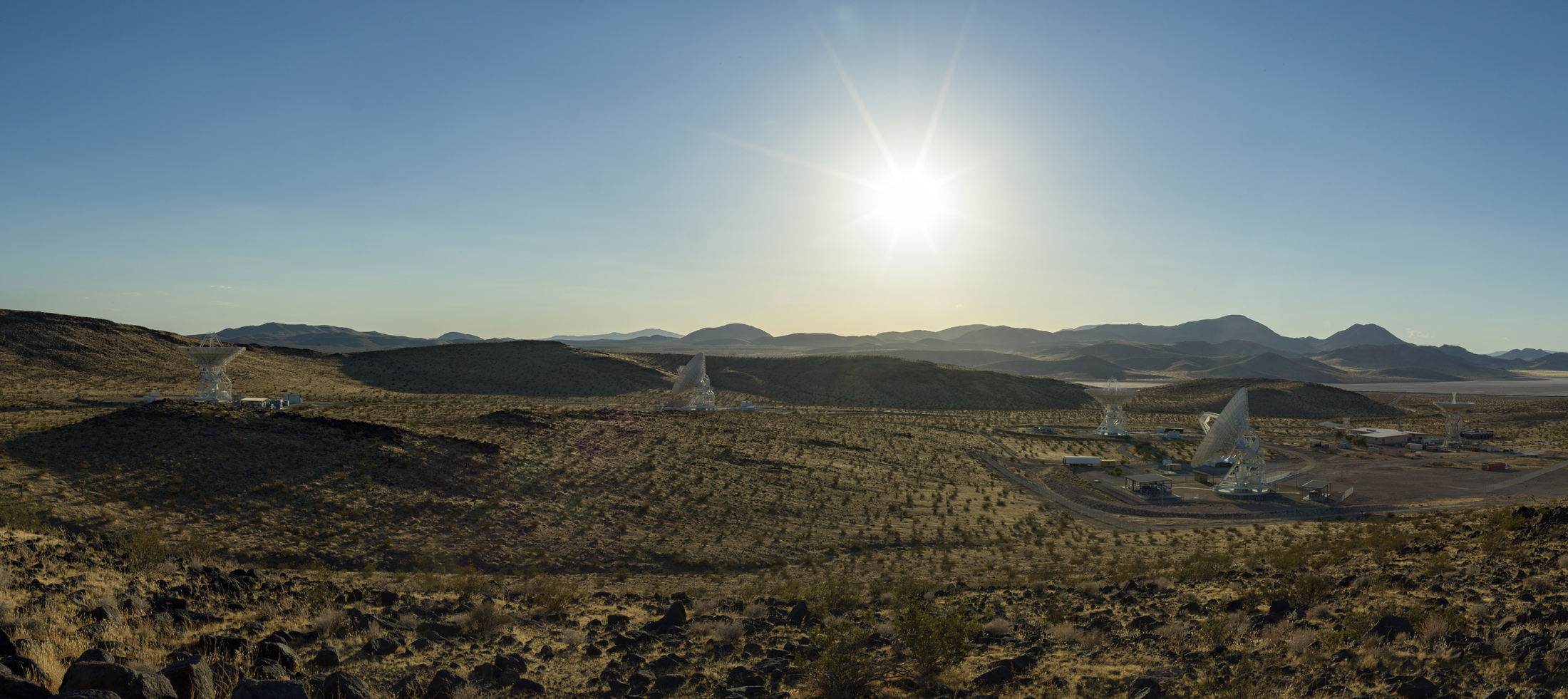
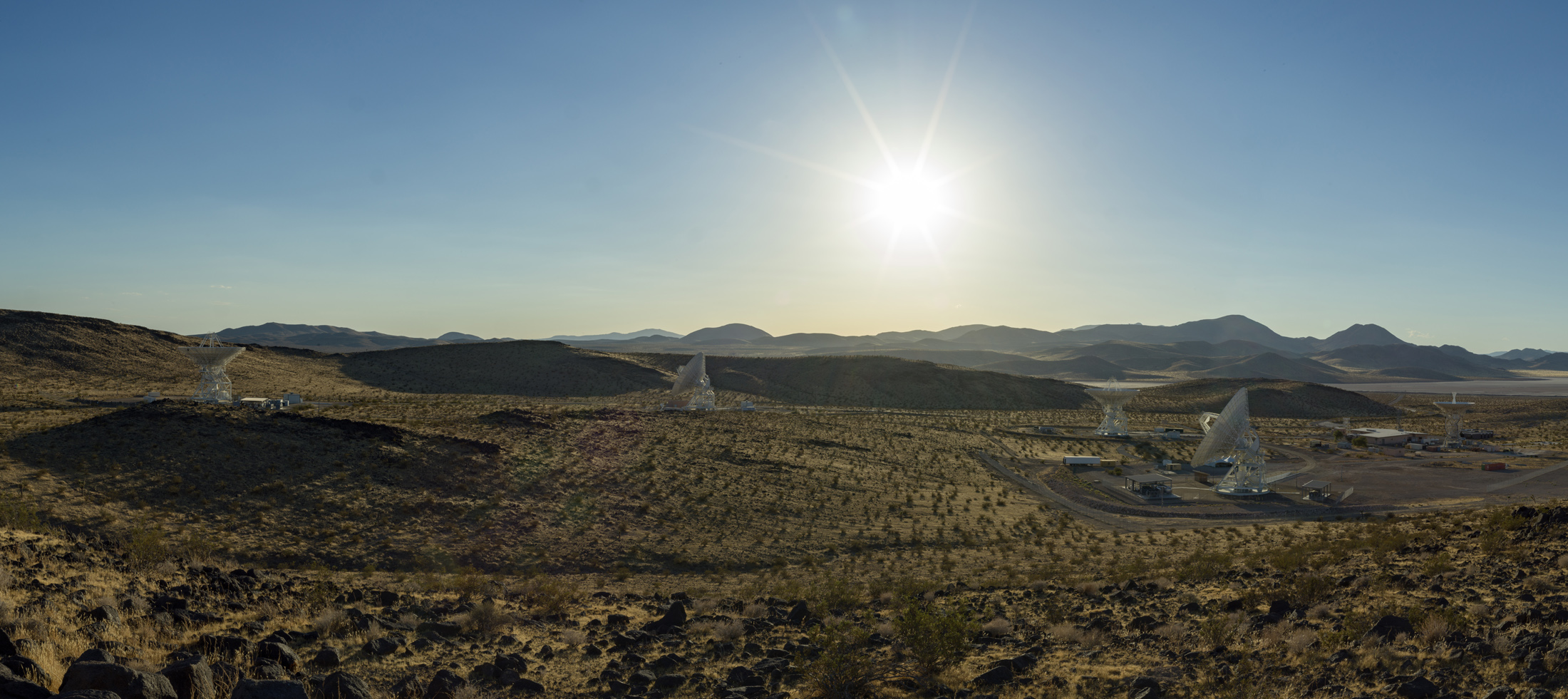
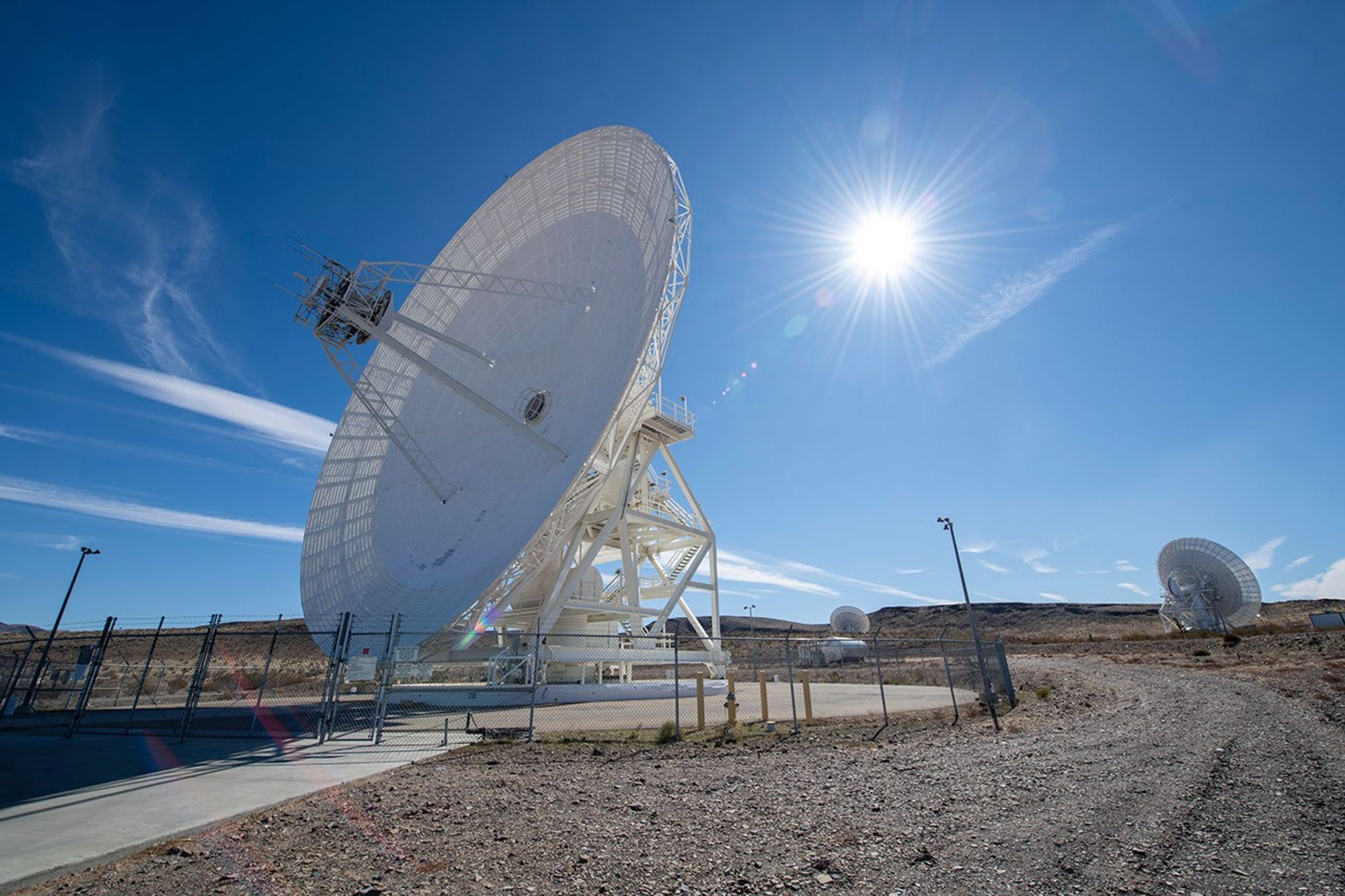
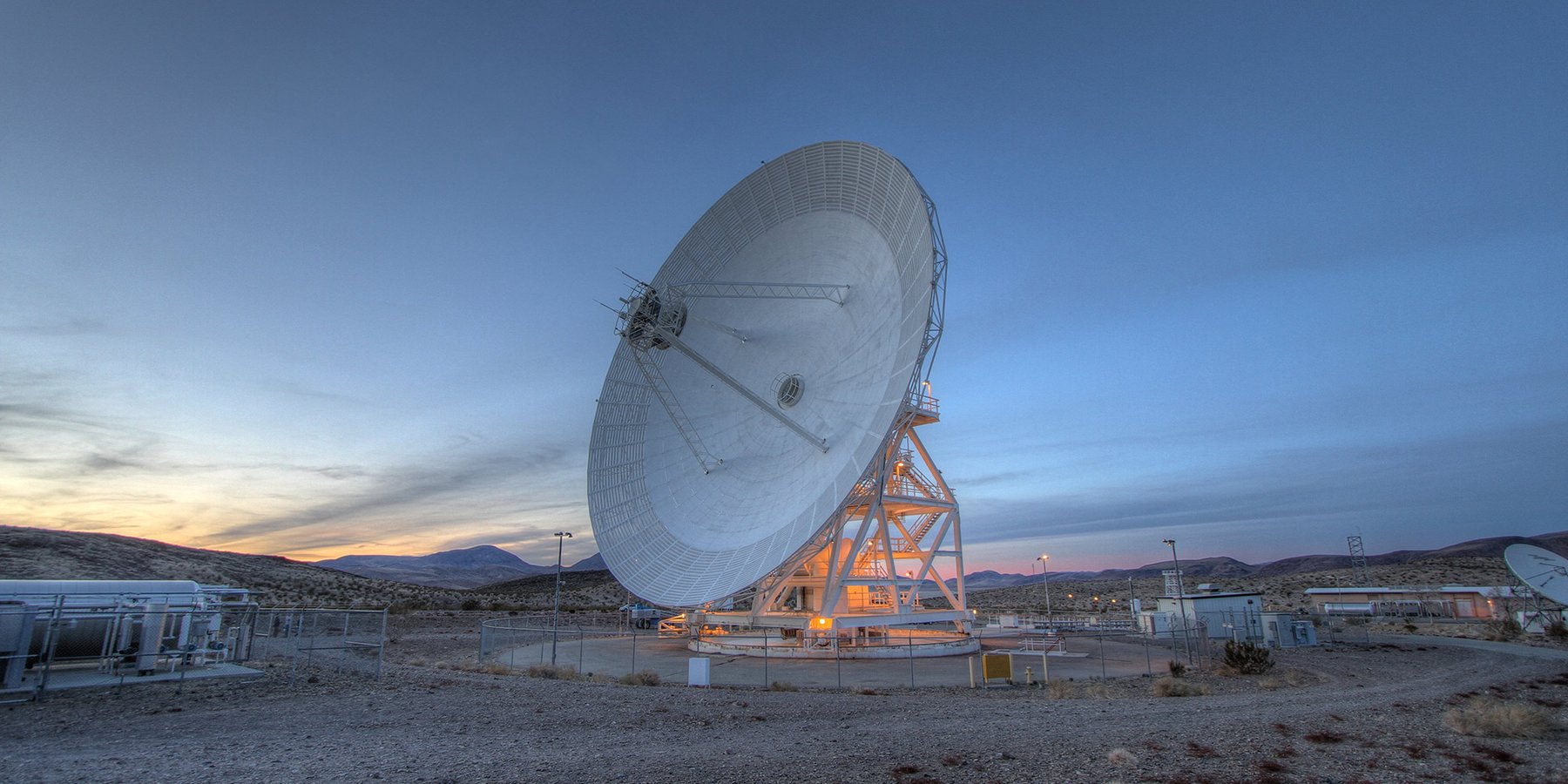
Antennas at NASA’s Goldstone Deep Space Communications Complex near Barstow, California, in August 2026. The three established 34 m antennas visible toward the right side of the panorama are, from left, DSS-26, DSS-25 and DSS-24. DSS-26 serves as the transmitting station in the alternate bistatic radar configuration described by JPL. Credit: NASA/JPL-Caltech
The change matters because the smallest hazardous objects in low Earth orbit cannot generally be followed one by one. NASA instead uses powerful ground-based radars to sample fragments passing through fixed beams, turning short radar detections into statistical measurements of a debris population extending below the routine object-tracking threshold.
Goldstone has long provided one of NASA’s deepest ground-based views into the small-particle environment. NASA’s 2026 review places the established sensitivity of Goldstone orbital debris observations at approximately 2 to 3 mm (0.08 to 0.12 inches) below 1 000 km (620 miles), while the Haystack Ultrawideband Satellite Imaging Radar (HUSIR) can detect objects approximately 5 to 7 mm (0.20 to 0.28 inches) across at comparable altitudes and approximately 2 to 3 cm (0.8 to 1.2 inches) throughout low Earth orbit.
Those figures describe NASA’s established HUSIR and Goldstone measurement capabilities. JPL has not published evidence in its November 2026 report showing that the new DSS-26/DSS-13 arrangement independently reproduces the full 2 to 3 mm Goldstone sensitivity, so that historical capability should not be treated as a measured detection threshold for the alternate configuration.
| Radar parameter | Verified value | What it means |
|---|---|---|
| DSS-14 diameter | 70 m (230 feet) | Primary Goldstone Solar System Radar antenna unavailable during the modernization period |
| DSS-26 diameter | 34 m (112 feet) | Transmitting antenna in the alternate configuration |
| DSS-13 diameter | 34 m (112 feet) | Bistatic receiving antenna |
| DSS-26 transmit power | 80 kW | Power used for the validated radar configuration |
| Intermediate frequency | 290 MHz | Frequency at which the radar waveform originates in SPC-10 |
| X-band transmit frequency | 7.190 GHz | Radio frequency sent to DSS-26 for transmission |
| DSS-14 service gap | Approximately 31 months | March 2026 to October 2028 |
| Orbital debris support | 288 hours per year, best effort | Temporary service commitment during DSS-14 unavailability |
The alternate configuration was developed because the planned modernization and unavailability of Deep Space Station 14 (DSS-14) created an approximately 31-month gap in Goldstone Solar System Radar services from March 2026 through October 2028. JPL considered other arrangements before selecting DSS-26 for transmission and DSS-13 for reception as the best available solution using Deep Space Network assets alone.

How the DSS-26/DSS-13 bistatic radar works
A bistatic radar separates transmission and reception between different antennas. DSS-26 sends a powerful radio signal toward a target, while DSS-13 listens for the small fraction of that energy reflected back toward Earth.
JPL’s waveform generator in Signal Processing Center 10 produces the radar waveform at an intermediate frequency of 290 MHz. The system converts that signal to 7.190 GHz X-band, carries it to DSS-26 by radio frequency over fiber, amplifies it with a klystron and radiates it from the antenna. DSS-13 receives, down-converts and records the returning echoes.
Separating transmission and reception lets the two antennas operate simultaneously. The useful signal can be extraordinarily weak because only a small fraction of the transmitted energy strikes the target and returns to the receiving antenna.
Initial orbital debris testing showed that the arrangement could detect debris but also exposed transmitter instability. Some early runs produced nuisance transmitter trips when particular radar waveforms were used. JPL subsequently conditioned the klystron, calibrated the waveform path and eliminated sources of radio-frequency interference before binary phase code and linear frequency modulation tests demonstrated stable operation at 80 kW.
JPL did not identify a single confirmed hardware fault as the cause of the early transmitter trips. The investigation examined differences in signal measurements and considered several contributing conditions, including timing and amplitude behavior. Engineers reduced the operational risk through transmitter conditioning, calibration, controlled power increases and revised procedures.
Three orbital debris validation tracks conducted in December 2025 provided direct evidence that the configuration could perform its intended measurement role. Tracks on December 3, 13 and 19 used static bistatic pointing, an 80 kW DSS-26 uplink and DSS-13 reception, producing data and orbital debris detections in real time, post-processing or both.
| Date | Scheduled duration | Configuration | Validation result |
|---|---|---|---|
| December 3, 2025 | 6.3 hours | DSS-26 transmit / DSS-13 receive | Data obtained; debris detected |
| December 13, 2025 | 9.0 hours | DSS-26 transmit / DSS-13 receive | Data obtained; debris detected |
| December 19, 2025 | 8.8 hours | DSS-26 transmit / DSS-13 receive | Data obtained; debris detected |
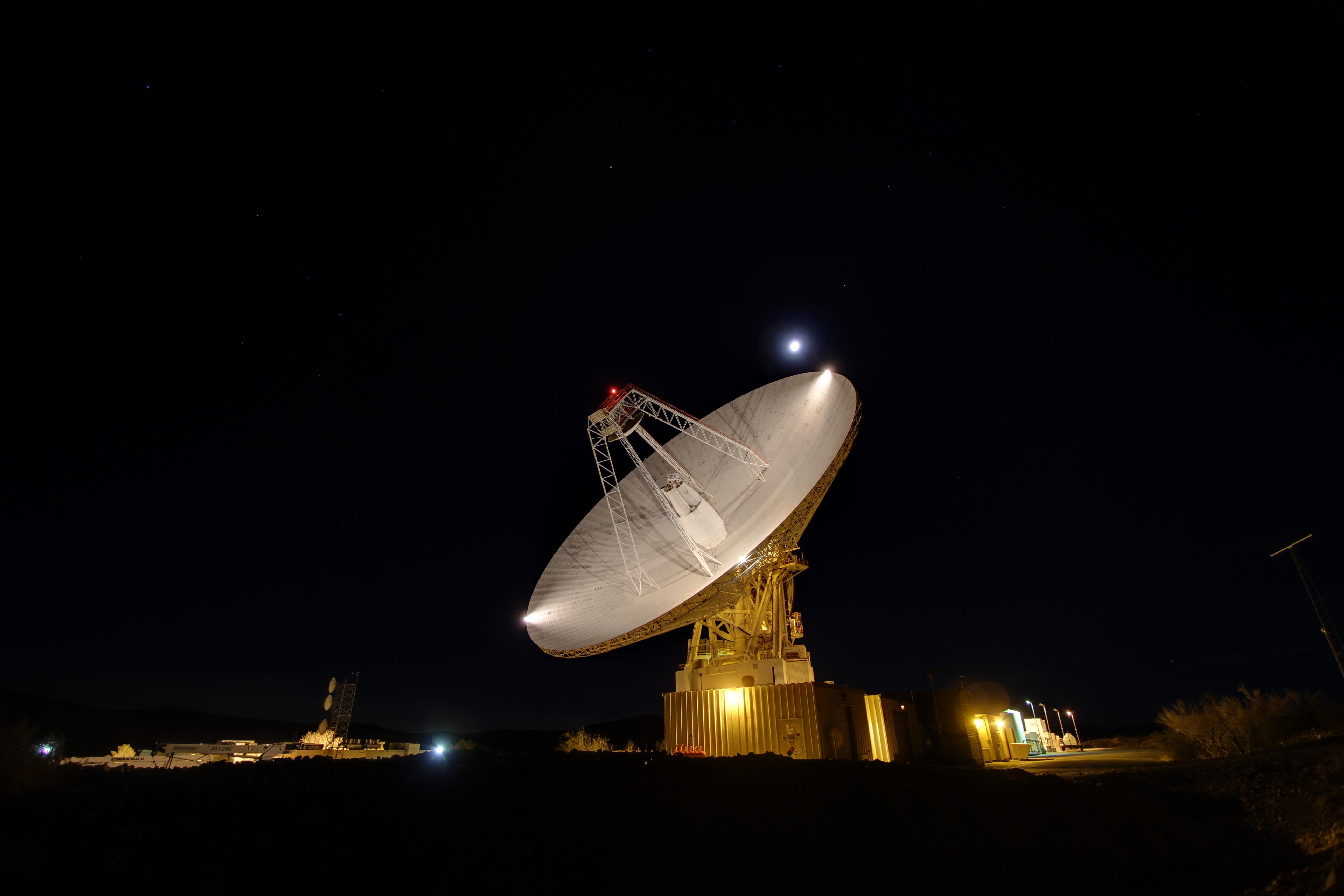
The readiness package that followed the validation campaign stated that the orbital debris service was ready for operational use and was already producing data for NASA’s Orbital Debris Program Office. A Deep Space Network Service Readiness Review completed in May 2026 examined system testing, staff training, procedures, maintenance, safety, security and readiness for customer commitments and found no critical unresolved problems.
Operational readiness did not mean perfect availability. JPL’s fiscal year 2026 track record lists six orbital debris sessions declared failures because of problems involving the DSS-26 80 kW transmitter or sub-reflector and the DSS-13 low-noise amplifier or sub-reflector. Numerous other observing sessions were completed, allowing the alternate system to continue supporting debris measurements while equipment problems were addressed.
Why small orbital debris requires a different measurement strategy
Orbital debris radar does not necessarily work like a cataloging system that follows one object continuously around Earth. For very small debris, NASA commonly uses beam-park observations: the radar remains pointed in a selected direction while fragments pass through its narrow field of view.
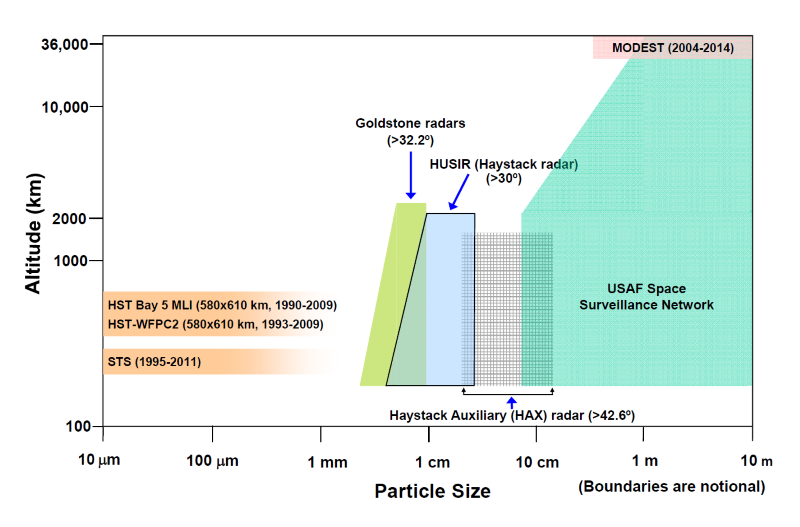
The radar can measure quantities such as range, Doppler or range rate and reflected power during the short interval in which an object crosses the beam. Because each fragment is observed only briefly, these measurements generally do not yield the complete orbital information needed for continuous individual tracking.
Keep reading
NASA instead combines many detections to describe the population statistically. Estimated debris size, altitude and orbital inclination allow researchers to measure debris fluxes, identify concentrations and compare how the environment changes with time or following fragmentation events.
HUSIR supplies the complementary radar dataset. NASA’s July 2026 review describes three principal HUSIR pointing geometries: 75° elevation toward the east, 20° elevation toward the south and 10° elevation toward the south. Most observations are collected at the 75° east pointing, where the shorter atmospheric path improves sensitivity to small debris.
Goldstone’s orbital debris work uses bistatic observing geometry, meaning transmitting and receiving beams must overlap in the volume being sampled. The arrangement differs physically from HUSIR’s monostatic operation, where transmission and reception are handled at the same radar facility.
The use of bistatic Goldstone observations predates the DSS-26/DSS-13 system. A peer-reviewed 2020 analysis described earlier Goldstone orbital debris measurements using separate transmitting and receiving antennas and documented the loss of the former DSS-15 receiver in 2018. That change reduced the instantaneous altitude range available for debris measurements and led researchers to evaluate alternative antenna configurations.
The present DSS-26/DSS-13 system addresses a different operational constraint: the current unavailability of DSS-14. It uses two 34 m (112 feet) Deep Space Network assets, with DSS-26 supplying the 80 kW X-band transmission and DSS-13 receiving the reflected signal.
What has been demonstrated, and what has not
Demonstrated: orbital debris detections with DSS-26 transmitting and DSS-13 receiving; stable 80 kW operation after conditioning and calibration; cislunar radar echo power consistent with prediction; asteroid radar imaging; operational readiness with no critical unresolved problems identified by the May 2026 review.
Not demonstrated in the published report: that DSS-26/DSS-13 reproduces every performance characteristic of DSS-14 or independently reaches the full historical 2 to 3 mm Goldstone orbital debris sensitivity.
JPL lists additional work including improved radio-frequency interference characterization at DSS-13, resolution of a system-temperature measurement issue, propagation-delay measurements needed for absolute ranging, orbital-debris processing software at DSS-13 and further comparison with the DSS-14 radar configuration.
The same radar architecture can serve other targets
The DSS-26/DSS-13 architecture has also been tested outside the orbital debris program. JPL reported cislunar experiments in which measured echo power was consistent with prediction and asteroid observations that produced radar images, extending the validation of the signal chain beyond low Earth orbit.

The asteroid video above does not show the DSS-26/DSS-13 system. It illustrates the same underlying bistatic principle: one telescope transmits the radar signal while a geographically separate instrument receives the echo.
For NASA’s Orbital Debris Program Office, the immediate significance of the new arrangement is continuity rather than evidence of a newly discovered debris population or a sudden increase in orbital hazard. Millimeter- and centimeter-scale fragments remain difficult to observe because many are below the size range that can be routinely cataloged, making repeated statistical radar measurements necessary for constraining debris-environment models.
The November 2026 JPL report establishes that the alternate Goldstone configuration can contribute orbital debris observations during the DSS-14 outage. Its remaining calibration work and direct performance comparisons with DSS-14 will determine more precisely how much of Goldstone’s previous quantitative measurement capability can be reproduced with the temporary arrangement.
References:
1 Jao, J., Rodriguez-Alvarez, N., Lee, C., Liou, R. R., Kelley, D., Snedeker, L., & Raney, T. (2026). DSS-26 to DSS-13 bistatic radar capability for Solar System Radar service. Interplanetary Network Progress Report, 42-247, 1–13. Jet Propulsion Laboratory – November 15, 2026
2 HUSIR and Goldstone Measurements of the Orbital Debris Environment: 2024–2025 – NASA Orbital Debris Program Office – July 17, 2026
3 Lee, C. G., Slade, M. A., Jao, J. S., & Rodriguez-Alvarez, N. (2020). Micro-meteoroid and orbital debris radar from Goldstone radar observations. Journal of Space Safety Engineering, 7(3), 242–248. DOI: 10.1016/j.jsse.2020.07.022
4 Radar Measurements – NASA Orbital Debris Program Office – accessed November 27, 2026

I’m a science journalist and researcher at The Watchers, contributing to the Epicenter edition, where I cover peer-reviewed scientific research and emerging discoveries across Earth and space sciences. With a background in astronomy and a passion for environmental science, I’ve worked in shark and coral conservation in Fiji, conducting reef and shark-behavior research, contributing to mangrove restoration, and earning PADI Open Water and Coral Reef Certifications. I bring a blend of scientific rigor and storytelling to illuminate the discoveries shaping our planet and beyond.
More reporting
- Researchers identify 2026 QQ8 as first observed example of long-predicted Earth-capture path
- Astronomers trace seven-year stellar inspiral inside a giant star in Andromeda
- Nearby triple-star system Welopō‘ai poses an unresolved stellar-evolution problem
- Why ESA’s Plasma Observatory needs seven spacecraft to study Earth’s magnetosphere
