
Rain intensifies before marine stratocumulus break into open cells, EarthCARE study finds
Rain and cloud water begin increasing up to about 25 hours before marine stratocumulus reorganize from bright, nearly continuous closed cells into broken open-cell patterns, according to new observations from ESA’s EarthCARE mission. The sequence provides new observational constraints on a long-standing hypothesis that precipitation helps destabilize these reflective cloud decks, whose organization affects how much incoming sunlight is reflected back to space.
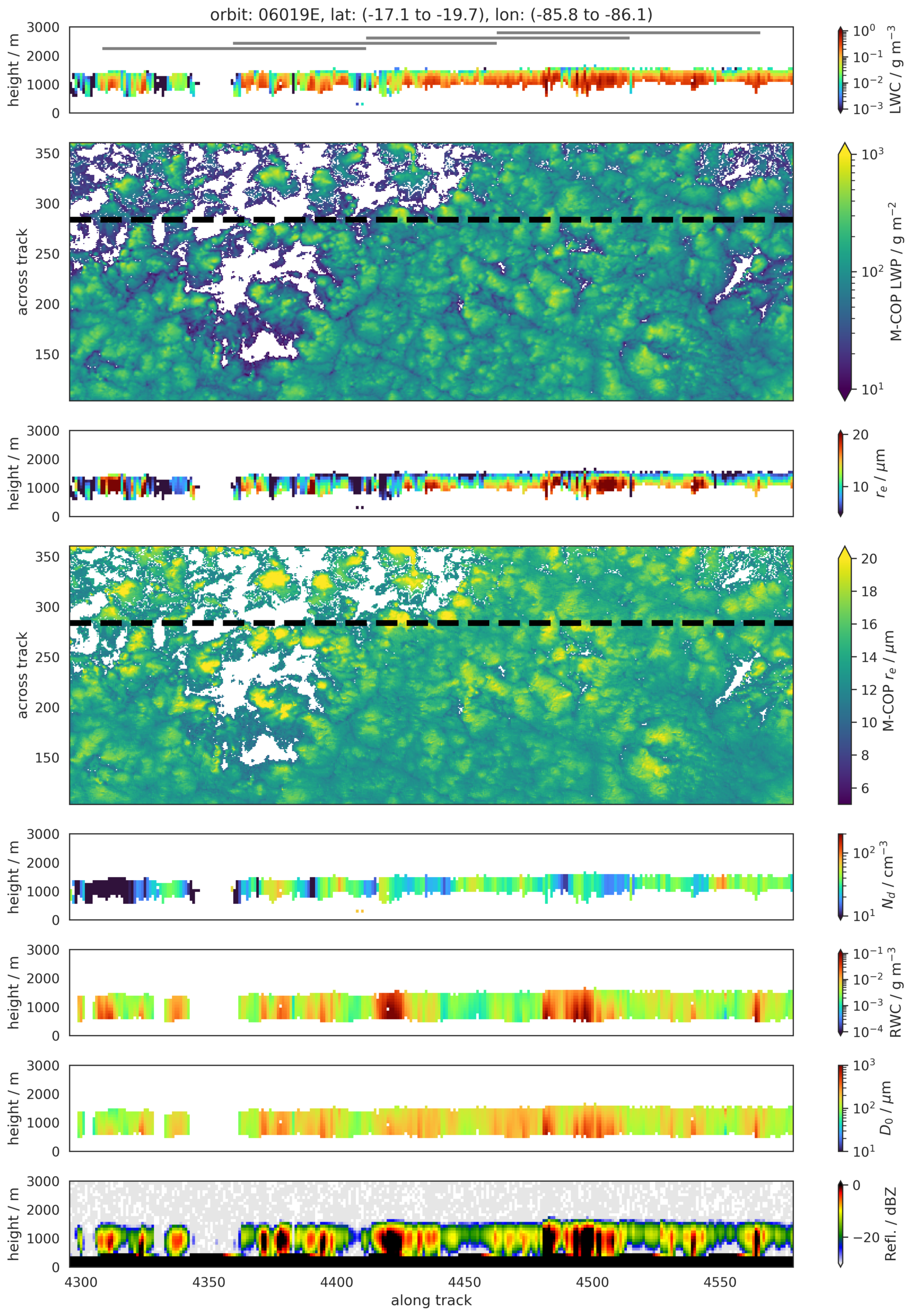
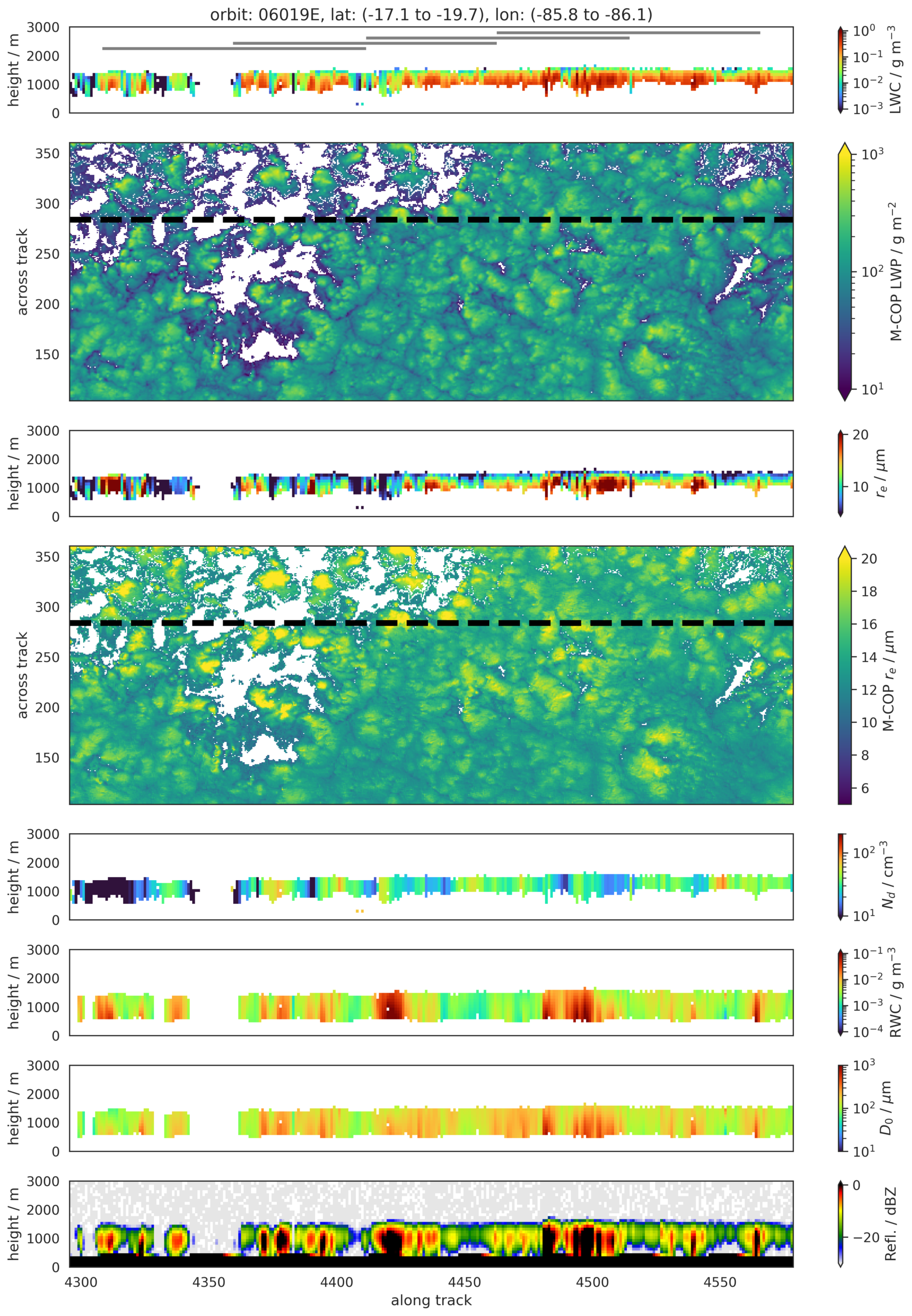
EarthCARE measurements across neighboring cloud scenes shortly before and after closed-to-open transitions, including liquid-water path, droplet size, droplet concentration, rain-water content and radar reflectivity. Credit: Mayer et al. (2026), CC BY 4.0
Marine stratocumulus clouds cover large areas of the subtropical oceans and are among the brightest low clouds in the atmosphere. When they form closed cells, clouds occupy most of the scene and reflect substantial solar radiation. Open cells contain larger gaps between cloud elements, exposing more of the darker ocean below. Scientists have long known that precipitation, aerosols, surface forcing and atmospheric circulation can influence transitions between these regimes, but the sequence leading from a closed deck to open-cell organization has remained incompletely understood.
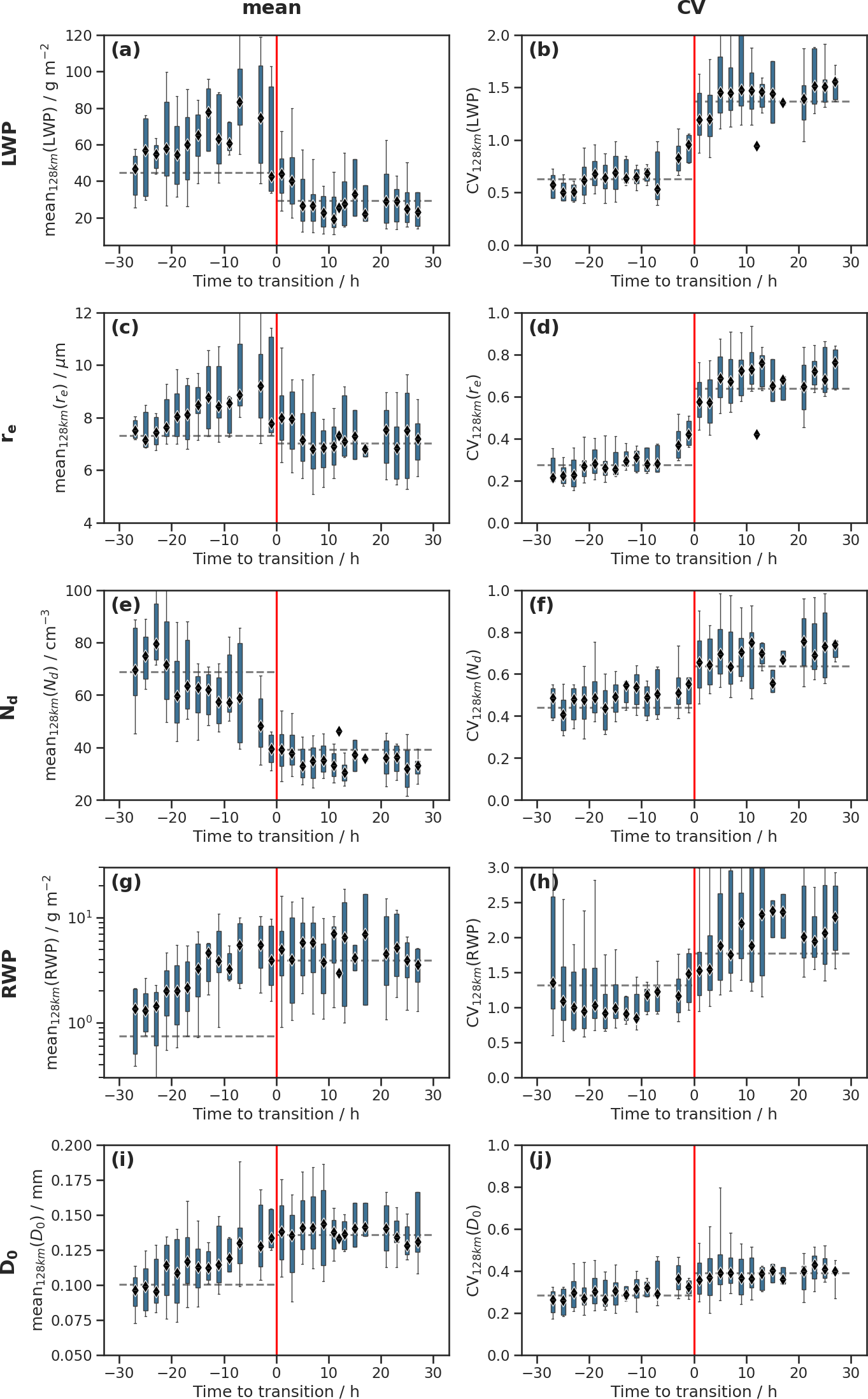
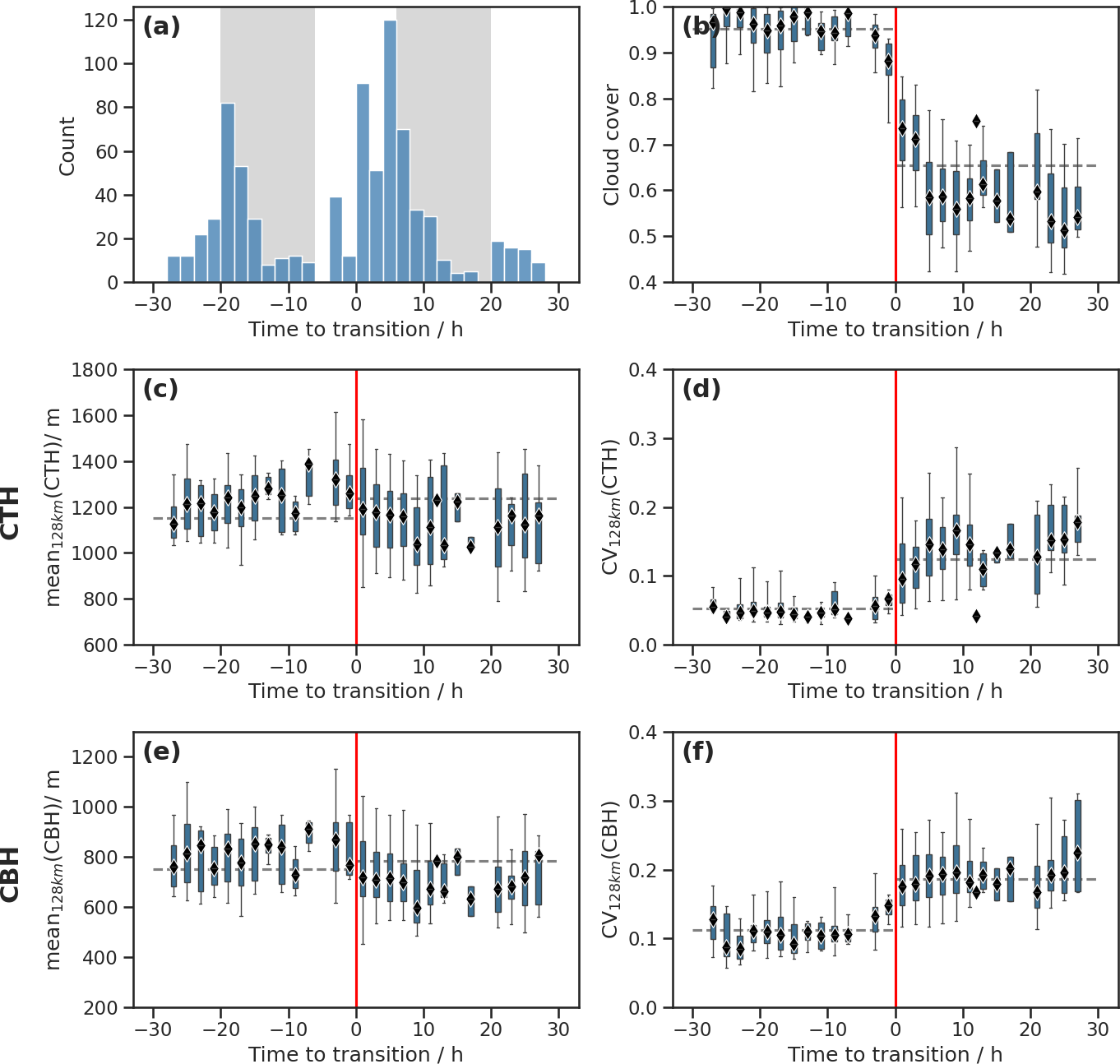
Mayer et al. (2026) add a temporal sequence to that problem. Their analysis found that liquid-water path, a measure of the amount of liquid water contained in the cloud column, began increasing roughly 25 hours before identified closed-to-open transitions. Rain-water path was already elevated at similar lead times and approached values typical of open cells about 10 hours before transition.
The transition develops over about a day
The earliest increase in rain-water path came mainly from a growing fraction of the cloud field producing rain. From about 15 hours before transition, stronger rain intensity became the larger contributor. Cloud droplets changed on a slightly later timetable: droplet number concentrations decreased while effective droplet radius and raindrop size increased, with those departures becoming apparent around 20 hours before transition.
The researchers caution that relatively few cases were available at the longest lead times, so the exact onset of the changes is less certain than the overall pattern. Cloud-top and cloud-base heights, meanwhile, remained comparatively stable through much of the transition period.
| Approximate time | Observed change | Evidence status |
|---|---|---|
| ~25 hours before transition | Liquid-water path begins increasing; rain-water path is already elevated | Observed temporal tendency |
| ~20 hours before transition | Droplet number concentration decreases; droplet and raindrop sizes increase | Observed tendency, exact onset less certain |
| ~15 hours before transition | Increasing rain intensity becomes a larger contributor to rising rain-water path | Observed decomposition of rain signal |
| ~10 hours before transition | Rain-water path approaches typical open-cell values | Observed temporal tendency |
| Transition | Cloud fraction falls as the field reorganizes into open cells | Observed morphology change |
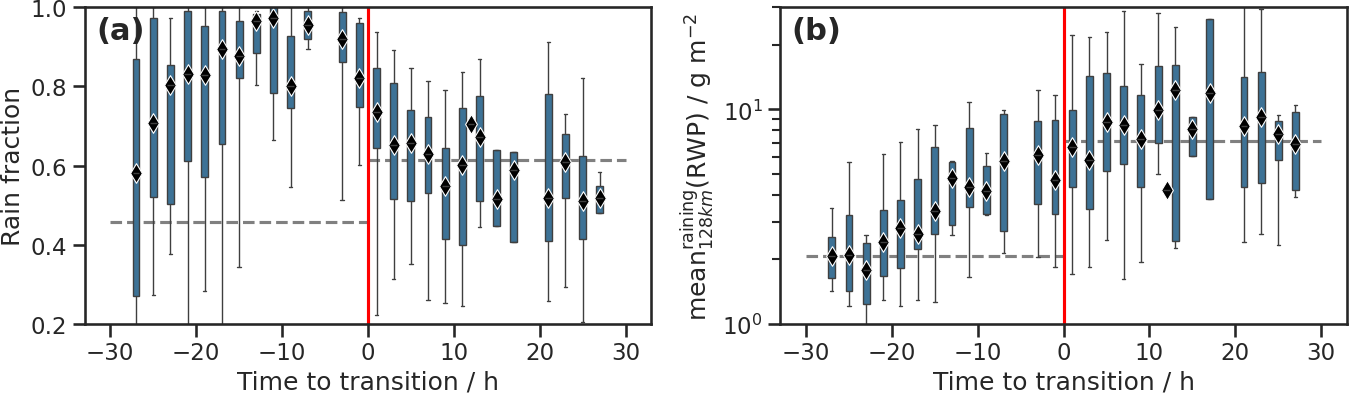
The sequence matters because it places increasing precipitation ahead of several microphysical changes associated with open-cell clouds. Mayer and colleagues interpret the observations as support for a precipitation-linked transition pathway rather than evidence that rainfall alone initiates every breakup.
Keep reading
How rain may help reorganize the cloud deck
In the authors’ proposed timeline, an initial increase in moisture within the marine boundary layer raises the amount of cloud water and precipitation. Once rain becomes stronger and reaches the surface, falling drops remove aerosol particles from the boundary layer. This process, known as aerosol scavenging, reduces the number of particles available to act as cloud-condensation nuclei.
With fewer condensation nuclei available, cloud water is distributed among fewer droplets. The remaining droplets grow larger and become more efficient at forming precipitation, reinforcing the rain-aerosol interaction. Larger raindrops are also more likely to reach the surface, strengthening aerosol scavenging.
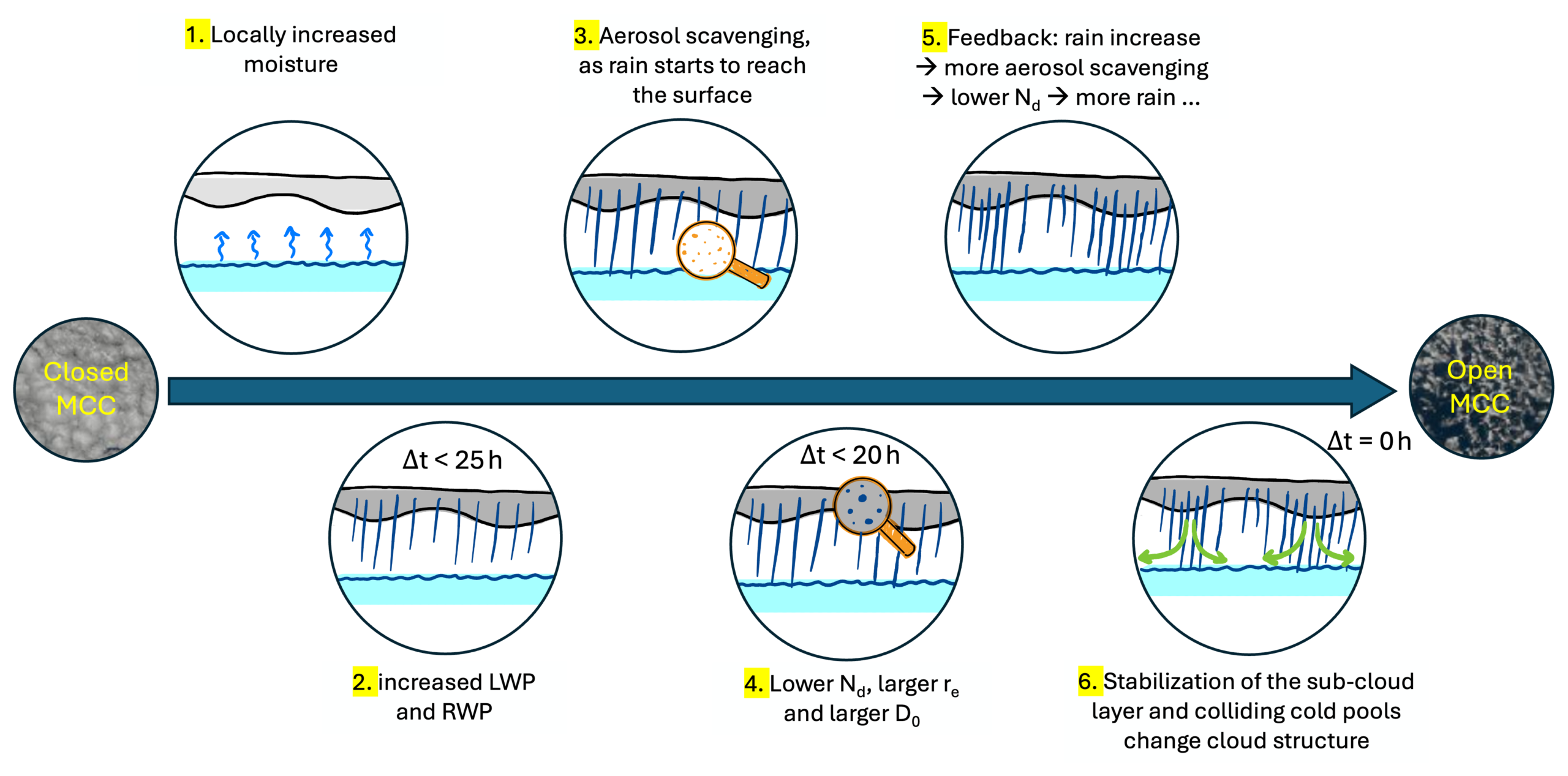
Previous large-eddy simulations describe another part of the proposed mechanism. Evaporation of falling rain cools air below cloud base and produces cold, moist outflows known as cold pools. Collisions between those outflows can generate new updrafts, while precipitation weakens the circulation characteristic of closed cells. The process provides a physical route toward open-cell organization, but the EarthCARE observations do not independently prove each step of that causal chain.
EarthCARE adds a vertical view of cloud and rain
EarthCARE gave the researchers a way to examine parts of this sequence using collocated measurements of cloud structure, droplets and precipitation. Its Atmospheric Lidar, Cloud Profiling Radar and Multi-Spectral Imager observe different components of the same cloud system, connecting the pattern seen from above with vertically resolved measurements through the cloud and rain column.
The Cloud Profiling Radar is particularly useful for shallow clouds and drizzle close to the ocean surface. EarthCARE’s radar reduces the surface-clutter problems that limited earlier spaceborne measurements and provides Doppler information related to raindrop fall speeds.

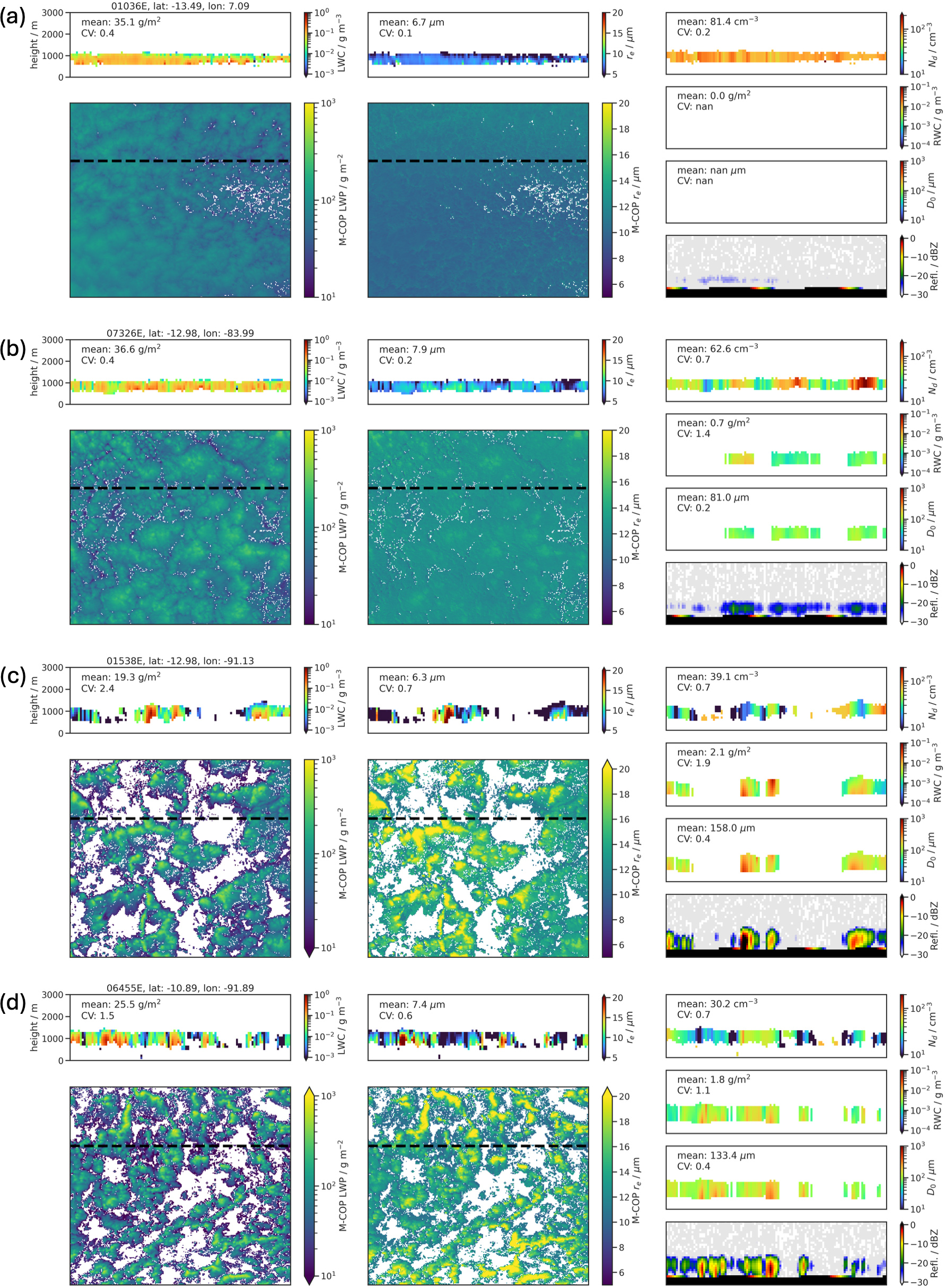
The study used EarthCARE observations collected from August 2024 through November 2025 across four subtropical stratocumulus regions: the Southeast Pacific, Northeast Pacific, Southeast Atlantic and Northeast Atlantic. A convolutional neural network classified mesoscale cloud organization in approximately 5 000 closed-cell scenes and 2 500 open-cell scenes. Each scene covered 128 × 128 km (80 × 80 miles).
Closed cells occurred more frequently nearer coastal areas, while open cells were more common farther offshore. Comparing the two regimes showed that open cells contained fewer cloud droplets, greater variability in liquid-water path and droplet size, and stronger precipitation.
Rain was not restricted to open cells. About 60% of closed-cell scenes were classified as raining under the study’s scene-based definition, meaning that at least one profile within a scene contained rain. The larger distinction was how much rain formed: for a given liquid-water path, open cells produced greater rain-water path, largely because their raindrops were bigger.
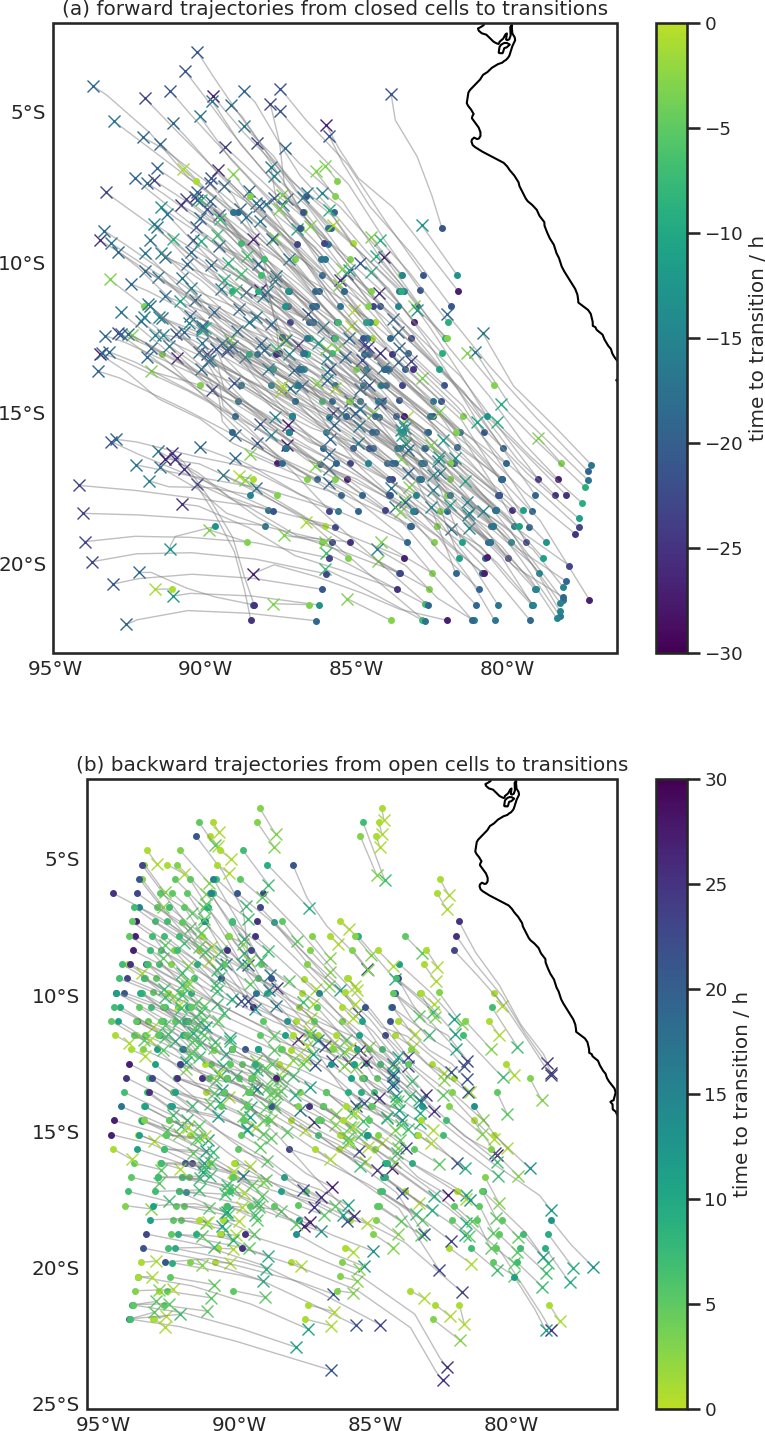
Following 803 transitions through the Southeast Pacific
EarthCARE is a polar-orbiting satellite and only provides an instantaneous view of a cloud field at overpass. To recover its evolution through time, the researchers combined those detailed snapshots with more frequent imagery from the Geostationary Operational Environmental Satellite system and wind trajectories driven by ERA5 atmospheric data.
The combined method followed cloud scenes backward and forward from the EarthCARE overpass and classified their organization at two-hour intervals. The transition analysis focused on the Southeast Pacific, where the dataset contained the largest number of open cells.
Researchers identified 803 trajectories that underwent closed-to-open transitions. Of those, 330 scenes were closed when EarthCARE passed overhead and became open later, while 473 were already open at the overpass and could be followed backward to an earlier closed state.
| Study measure | Verified value |
|---|---|
| Closed-cell scenes | About 5 000 |
| Open-cell scenes | About 2 500 |
| Scene dimensions | 128 × 128 km (80 × 80 miles) |
| Tracked closed-to-open trajectories | 803 |
| Closed at EarthCARE overpass, transitioned later | 330 |
| Open at overpass, traced back to closed state | 473 |
| Transitions occurring at night | About 60% |
| Closed-cell scenes classified as raining | About 60%, using the study’s scene-based definition |
Most identified transitions occurred at night
The timing showed a pronounced daily cycle. About 60% of identified transitions occurred during nighttime, and the distribution contained peaks around dawn. The authors connect that pattern with nighttime radiative cooling at cloud top, the main driver of circulation in closed-cell stratocumulus. Without incoming sunlight, stronger cooling can build liquid-water path through the night and support increasing precipitation toward dawn.
Whether incoming sunlight around sunrise also contributes actively to the reorganization remains unresolved. The researchers describe shortwave weakening of the closed-cell circulation as one possible process, but determining the relative roles of nighttime cooling and sunrise requires further dedicated observations.
What the observations do not establish
The study does not establish rainfall as the sole initiator of closed-to-open transitions. Mayer et al. describe increased boundary-layer moisture as a possible upstream trigger, with aerosol scavenging developing later as part of a precipitation feedback. Sea-surface temperature, surface forcing and other meteorological conditions may contribute to the initial changes in moisture and rain, but their relative roles were not quantified.
Several methodological limits also affect interpretation. Cloud structures were classified by a neural network, so classification uncertainty propagates into estimates of transition timing and differences between open and closed cells. ERA5-driven trajectories add tracking uncertainty, while the EarthCARE retrieval products used in the analysis are still maturing.
The fixed 128 × 128 km (80 × 80 miles) scene size also limits which cellular structures can be detected, and EarthCARE’s narrow ground track can pass through different parts of the same cloud regime. In one overpass it may sample the center of raining cells; in another it may cross mainly cloud edges or optically thinner areas.
The analysis was restricted to subtropical marine stratocumulus and relied on daytime cloud classification and retrievals even though many transitions occurred at night. Several time-series variables also show substantial spread, especially at long lead times. The roughly 25-hour evolution is best read as a coherent tendency across the transition sample, not a fixed countdown that applies to every cloud deck.

Why the breakup matters
Closed cells have high cloud fraction and high albedo, meaning they reflect a large share of incoming sunlight. When the cloud deck changes to open cells, cloud cover falls and more of the darker ocean surface is exposed. The transition reduces cloud albedo and weakens the cloud deck’s cooling effect.
That makes the internal organization of marine stratocumulus important to weather and climate models. Low-cloud organization and aerosol-cloud-precipitation interactions remain significant sources of uncertainty in the representation of cloud feedbacks. The EarthCARE observations provide new constraints on one pathway through which marine stratocumulus can reorganize, but the study does not quantify the magnitude of a global climate feedback.
One question remains especially important: what initiates the increase in moisture and precipitation before aerosol depletion becomes evident? Separating the roles of surface forcing, sea-surface temperature, large-scale meteorology, nocturnal radiative cooling and aerosol processes will require observations that follow individual cloud systems for longer periods while retaining the vertical detail supplied by EarthCARE.
Future work could also test whether the transition timeline changes with inversion strength, sea-surface temperature and other meteorological conditions, or differs outside the subtropical regimes examined here. Resolving those dependencies would help determine when precipitation initiates a transition, when it acts mainly as an amplifier, and when larger-scale environmental changes control the outcome.
References:
1 Mayer, J., Gasbarra, D., Hogan, R. J., Malina, E., Mason, S. L., & Piskala Gvozdikova, B. (2026). EarthCARE reveals details on the role of rain in closed-to-open cell transitions. Atmospheric Chemistry and Physics, 26, 14085–14110. DOI: 10.5194/acp-26-14085-2026
2 Rain breaks up Earth’s natural sunshades – European Space Agency – November 19, 2026
3 From rain to cloud breakup: EarthCARE sheds new light on marine stratocumulus – ESA EO Science for Society – November 24, 2026

I’m a science journalist and researcher at The Watchers, contributing to the Epicenter edition, where I cover peer-reviewed scientific research and emerging discoveries across Earth and space sciences. With a background in astronomy and a passion for environmental science, I’ve worked in shark and coral conservation in Fiji, conducting reef and shark-behavior research, contributing to mangrove restoration, and earning PADI Open Water and Coral Reef Certifications. I bring a blend of scientific rigor and storytelling to illuminate the discoveries shaping our planet and beyond.
More reporting
- Tibetan Plateau landslide susceptibility expands beyond July–August peak under warming scenarios
- Higher summer temperatures linked to increased mortality among people with cardiovascular disease in UK study
- Fault calcite reveals a missing phase in Türkiye’s Central Taurides fault history
- Data-center power demand pushes air-quality health burdens far beyond U.S. computing hubs
