
New seafloor mapping completed along Alaska-Aleutian Trench off Kodiak Island
A research team led by the U.S. Geological Survey (USGS) mapped more than 6 300 km² (2 400 mi²) of seafloor offshore Kodiak Island, Alaska, in summer 2025, using the NOAA ship Rainier.
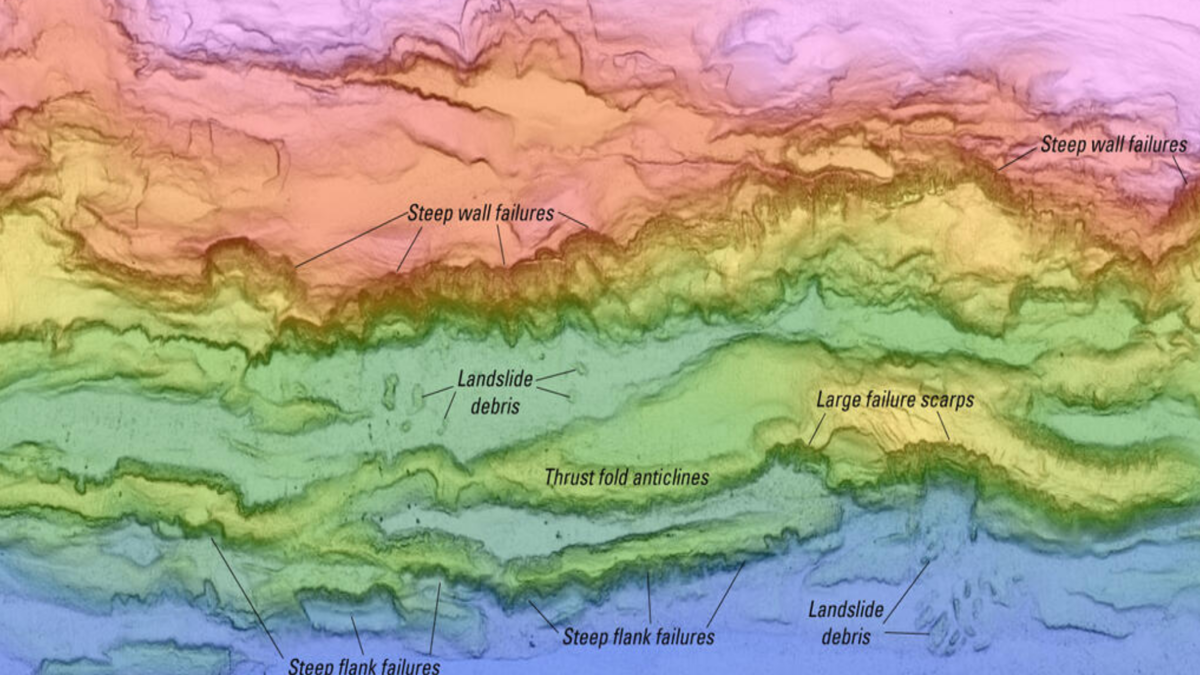
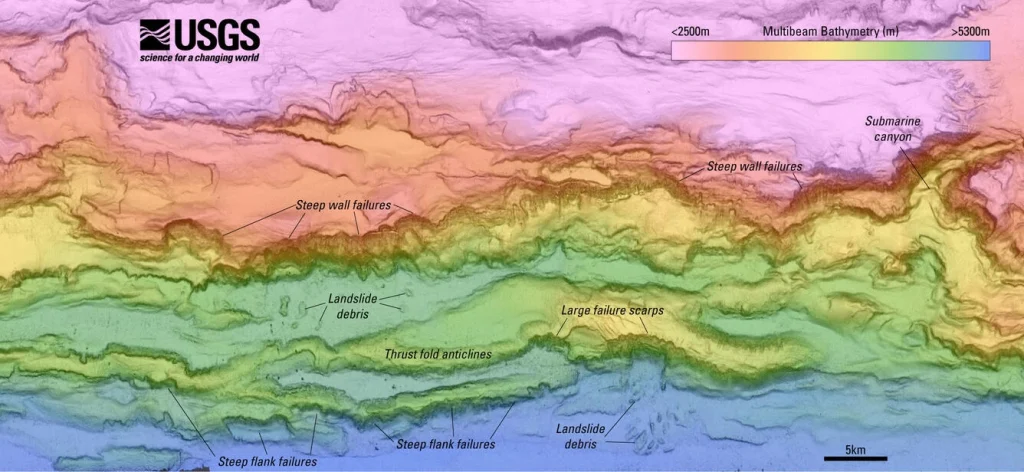
In summer 2025, the U.S. Geological Survey (USGS), in partnership with the National Oceanic and Atmospheric Administration (NOAA) ship Rainier completed mapping of a large seafloor area along the Alaska-Aleutian Trench, offshore of Kodiak Island. The survey covered more than 6 300 km² (2 400 mi²), comparable in size to the state of Delaware.
The mapping effort was part of the Seascape Alaska campaign, which aims to expand regional seafloor data coverage through collaboration between federal and state agencies.
It contributes to the USGS Coastal and Marine Hazards and Resources Program, which focuses on subduction zone hazards such as offshore earthquakes, submarine landslides, and tsunamis affecting coastal populations and infrastructure in Alaska and beyond.

“These new data will allow us to evaluate the potential for tsunamigenic landslides that pose a major threat to coastal communities in Alaska,” said USGS Research Geologist Jenna Hill, who led the survey.
She added that while the Alaska-Aleutian Trench is known for large earthquakes, cascading hazards such as submarine landslides and the tsunamis they generate can amplify risks.
The mapped region includes the rupture zone of the 1964 Great Alaska Earthquake (M9.2), the largest earthquake recorded in U.S. history. More than 60% of fatalities associated with that event were caused by submarine landslides, underlining the importance of understanding their sources and mechanisms.
References:
1 New seafloor mapping offshore Kodiak Island, Alaska, reveals extensive submarine landslides – USGS – August 28, 2025

I’m a science journalist and researcher at The Watchers, contributing to the Epicenter edition, where I cover peer-reviewed scientific research and emerging discoveries across Earth and space sciences. With a background in astronomy and a passion for environmental science, I’ve worked in shark and coral conservation in Fiji, conducting reef and shark-behavior research, contributing to mangrove restoration, and earning PADI Open Water and Coral Reef Certifications. I bring a blend of scientific rigor and storytelling to illuminate the discoveries shaping our planet and beyond.

Thank you , thankyou, very much for your dedication to your study of the surface of our oceans…You you know that our oceans are the new frontier. May the Infinite Creator help you on you journey in the unsettled waters of our oceans of the Earth!!!