
In 1920, a man out hunting on a farm in Namibia sat down on a strange black rock, scratched it with his knife and saw metal shine underneath. It was Hoba, a 60-ton meteorite, the largest ever found, and there is no crater around it
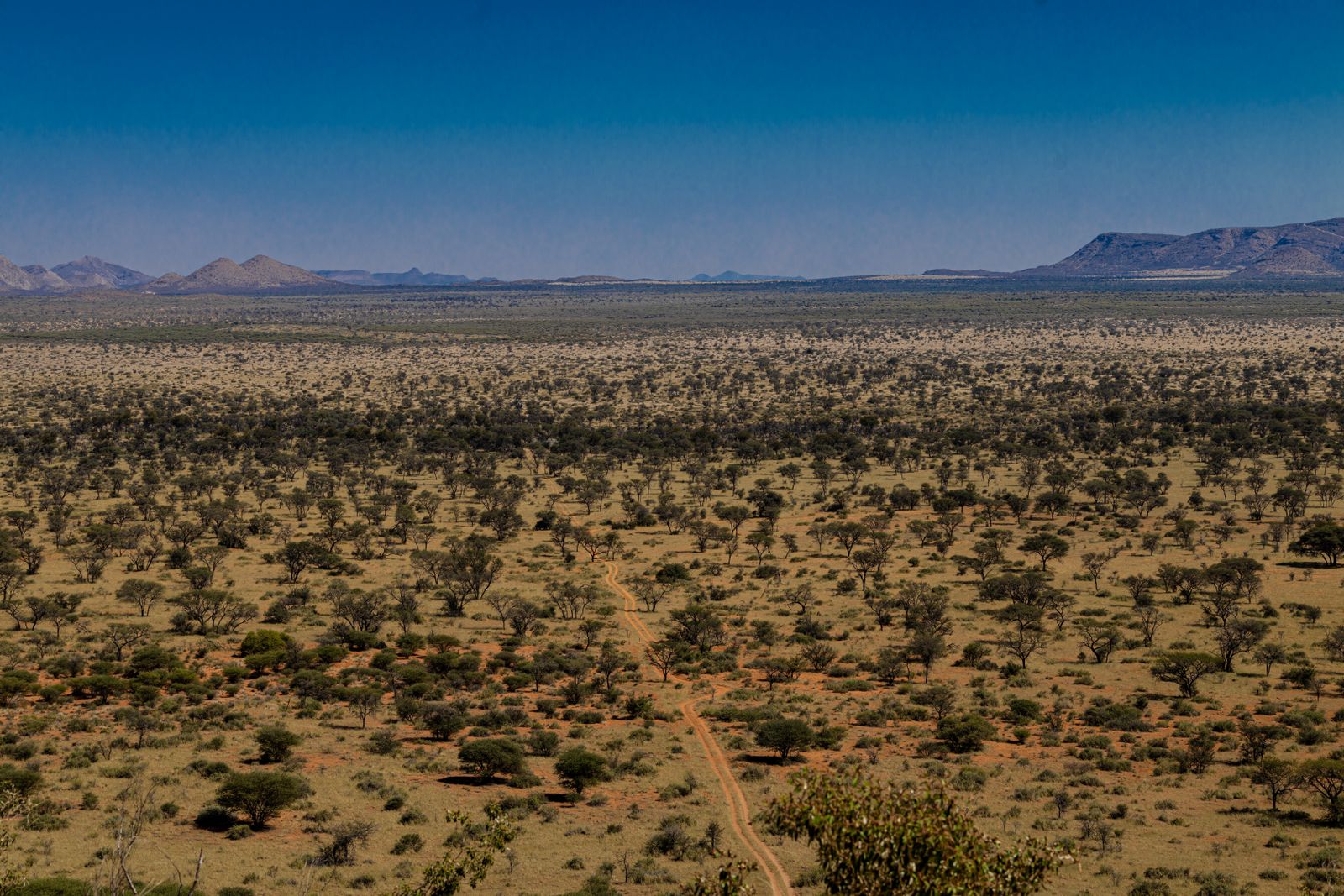
Jacobus Hermanus Brits was out hunting on the farm Hoba, near Grootfontein in what is now northern Namibia, when he came across a rock he could not place. “I saw this strange rock, sat on it and examined it,” he recalled in a statement recorded in 1954, more than three decades later.
Only the top of it showed above the ground. “While I was sitting on the rock it struck me that this rock was black whereas everything around it was limestone,” Brits said.
He took out his knife and scraped the surface. Underneath, he “discovered that it was shiny.”
A chisel and a trip to town
Brits went back for a tool. “I then went and fetched a chisel, cut off a piece and took it to the S.W.A. Company in Grootfontein,” his statement continues.
At the South West Africa Company, “the Manager took it, examined it, and identified it as a meteorite.” Brits did not name him. A company assay of the metal in 1921 found it was 81.29% iron and 17.49% nickel, according to a detailed scientific description of the meteorite published by British Museum mineralogist L. J. Spencer in 1932.
The digging
The next line of Brits’s account is about someone else. “Mrs Brits then partially excavated the meteorite and the Manager came to have another look at it.”
The statement says nothing more about her: not her first name, how she dug or for how long. It does record that the manager’s second inspection followed her work to expose the object.
Far larger than it looked
When Spencer inspected the meteorite in 1929, its flat upper surface measured 295 by 284 cm, about 10 by 9 feet, and the slab was between 55 and 122 cm thick. From those measurements and the density of the metal, he calculated a weight of 60 metric tons.
Brits had put it at 80 tons. Estimates have ranged from about 40 to 100 tons since 1920, Peter Spargo noted in a 2008 history of the find published by the Astronomical Society of Southern Africa.
Hoba is now described as the largest known intact meteorite. Its mass is estimated at about 60 metric tons, reduced over the decades as scientists and souvenir hunters chipped pieces away, according to Britannica. It is an iron meteorite made of about 82.3% iron, 16.4% nickel and 0.8% cobalt.
No crater
Spencer found the slab sitting in soft, porous surface limestone, separated from it by about a foot of laminated “iron-shale” produced as the metal weathered. Its top was roughly flat and level with the surrounding ground. “There is no crater around the meteorite,” he wrote.
A 2013 study by Martin Beech of the University of Regina modeled how Hoba could have arrived: entering the atmosphere at a shallow angle and landing at less than a few hundred meters per second. That impact, the study estimated, could have produced a simple crater about 20 m across and 5 m deep, since erased by erosion.
The meteorite is estimated to have fallen less than 80 000 years ago and has not been moved, according to Britannica.
Whose discovery?
Brits’s account was not the first written claim. In a letter to the Pretoria Museum dated September 17, 1921, Michael J. Hanssen, who occupied the farm Hoba West at the time, wrote: “I have discovered on my farm a huge Meteorite.”
Spargo, working from museum and archive records, concluded that “the credit for the discovery of the meteorite in 1920 must go to” Brits, whose words, he wrote, have “an undoubted ring of truth about them.”
The record has gaps. Brits’s declaration, signed in Outjo on October 2, 1954, when he was 75, survives as a typed transcript at the Alte Fort Museum in Grootfontein. Spargo reported in 2008 that the handwritten original had not been traced. It also gives a slightly different timeline from the usual 1920 date: Brits said he lived on the farm “from 1920, or perhaps a little earlier,” and found the rock “during the winter some two years later.” Spencer put the find “late in 1920.”
Where it lies now
News of the find spread slowly. Astronomer Willem Luyten brought it wider attention with an article in the Afrikaans-language newspaper Die Volksblad in February 1929, according to Spargo’s follow-up history. In 1955, the meteorite was declared a national monument to protect it from vandalism. In 1987, the farm’s owner donated the site to the state, and a visitor center and stone amphitheater were built around it, the Mineralogical Society of the District of Columbia reports.
Hoba still lies where it landed. Visitors now look down on it from stone terraces, around the same black slab a hunter once sat on before noticing it did not belong.

The Watchers Staff covers earthquakes, volcanoes, severe weather, space weather and other natural events. Published since 2011, The Watchers reports on a changing planet and the science behind it.
