
Impact of prolonged power outage on excess deaths in Puerto Rico after Hurricane Maria
Hurricane Maria made landfall near Yabucoa, Puerto Rico, at 10:15 UTC (06:15 LT) on September 20, 2017, leaving 2 975 excess deaths and causing the longest blackout in U.S. history. The storm showed how fragile infrastructure can turn a natural hazard into a mass-casualty disaster. With the grid collapsed for months, hospitals faltered, medicines spoiled, and thousands died not from winds or floods but from the blackout’s cascading effects.
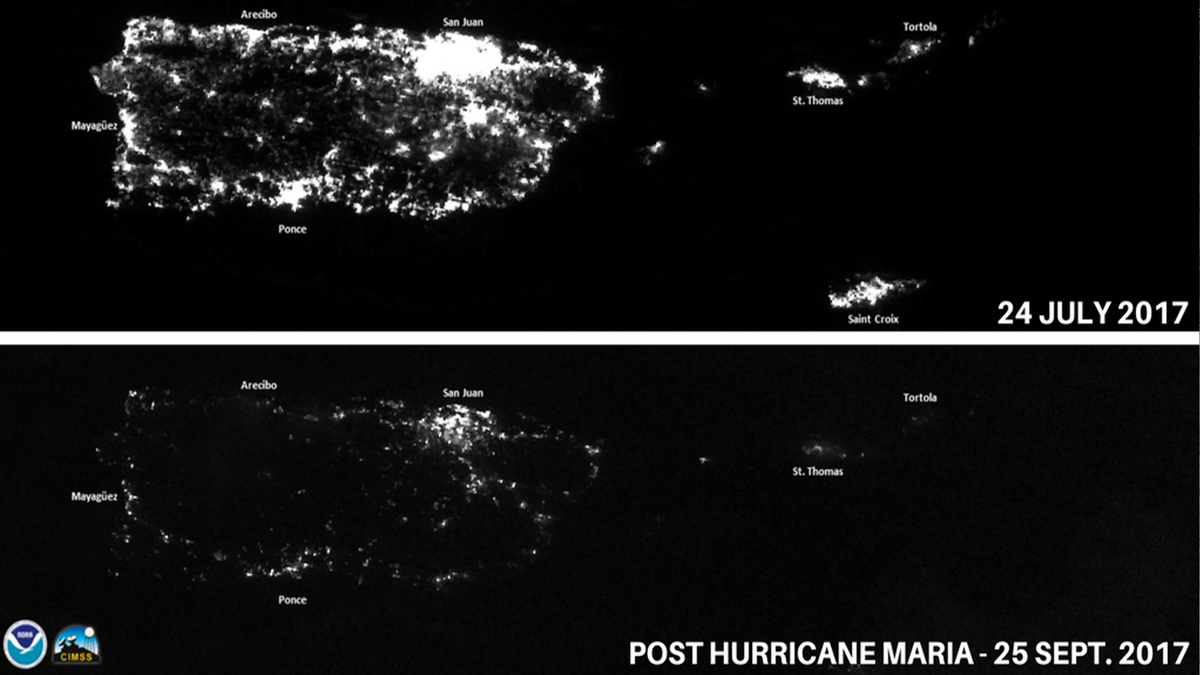
Comparison of lights at night in Puerto Rico before (top) and after (bottom) Hurricane Maria. Credit: NOAA National Environmental Satellite, Data, and Information Service (NESDIS)
Hurricane Maria began as a tropical wave moving off the west coast of Africa in early September 2017. By September 16, it had strengthened into a hurricane east of the Lesser Antilles, and just two days later it underwent explosive intensification.
In less than 24 hours, Maria’s maximum sustained winds increased by over 80 km/h (50 mph). Its central pressure fell to 908 hPa, a sign of a compact and highly dangerous system. By September 19, Maria had already destroyed much of Dominica with winds exceeding 260 km/h (160 mph) before turning its sights on Puerto Rico.
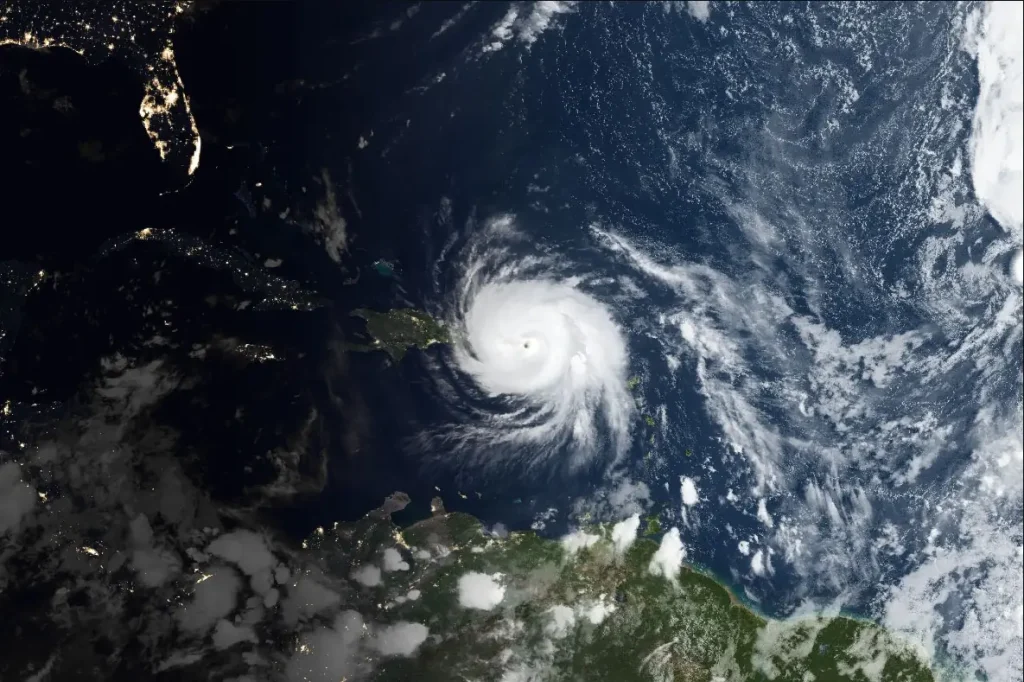
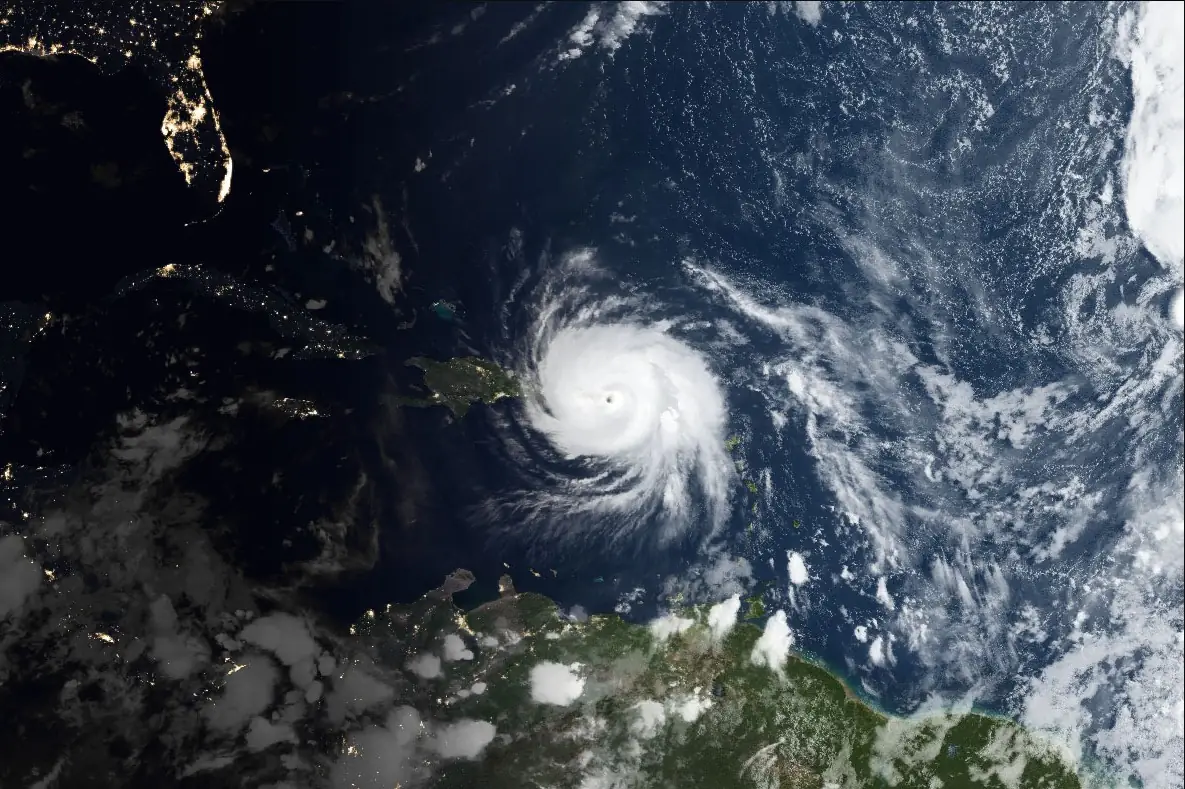
At 10:15 UTC on September 20, Maria’s eyewall crossed Puerto Rico’s southeast coast near Yabucoa. Sustained winds reached 250 km/h (155 mph), placing it at the high end of Category 4. The island’s mountainous terrain did little to weaken the storm. Instead, it caused catastrophic rainfall as moist air was lifted and cooled.
 Satellite image of Hurricane Maria on September 20, 2025. Credit: NASA Terra/MODIS
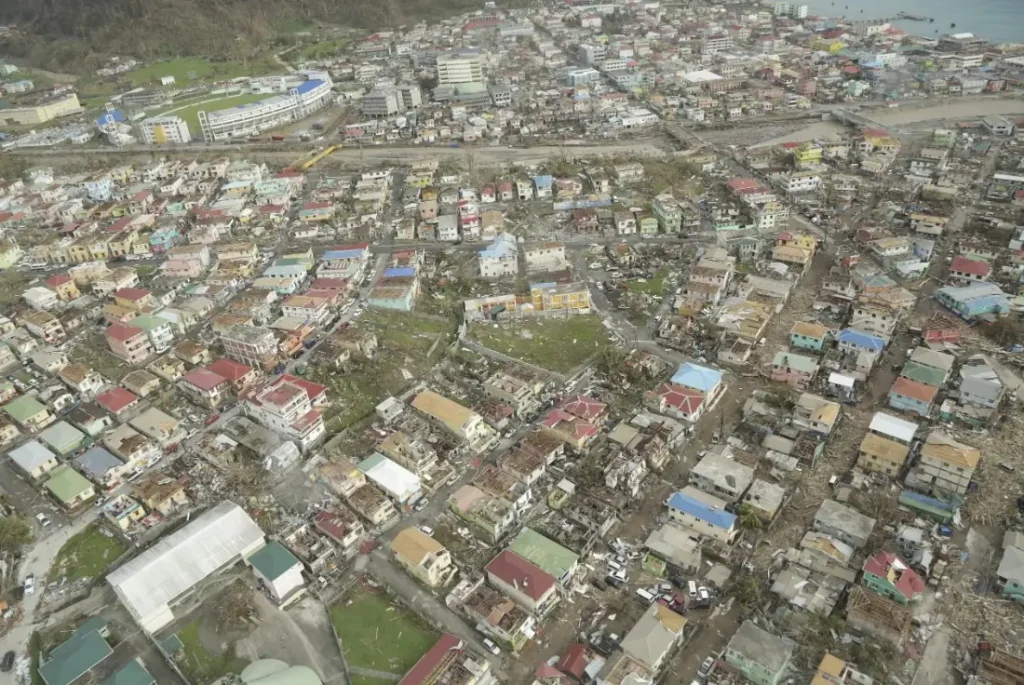
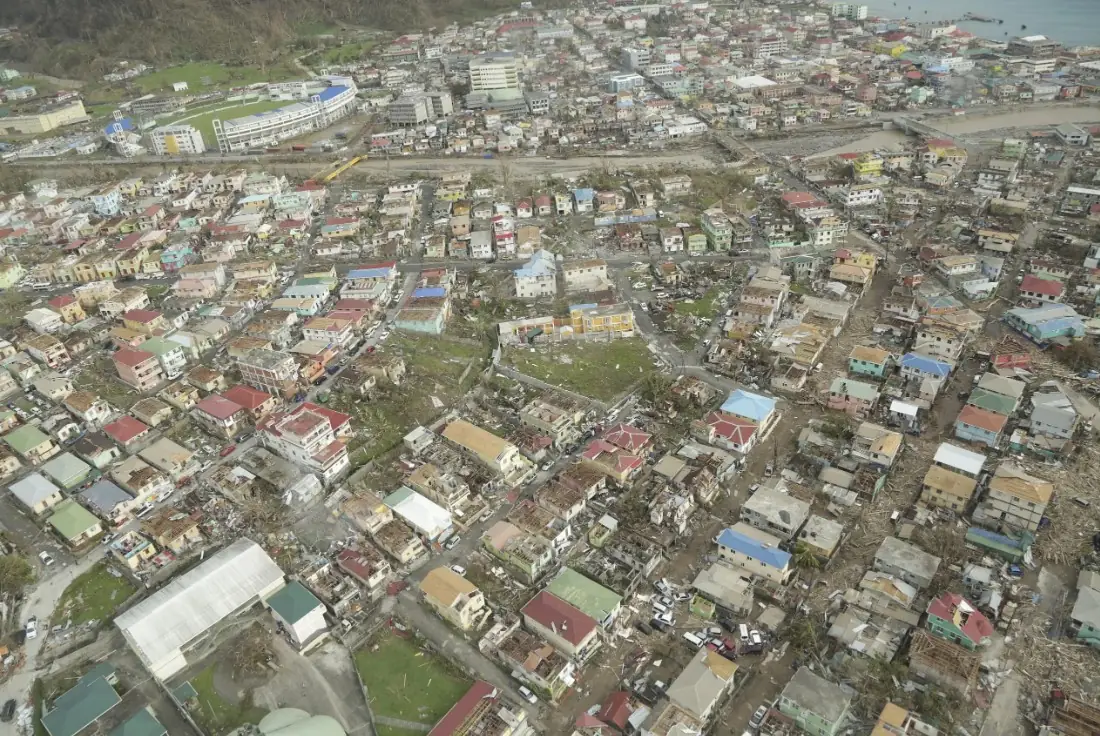
- An aerial view of part of Roseau, revealing widespread damage to roofs. Flash floods clogged roads with debris—vegetative and structural—and mud. Credit: DFID – UK Department for International Development
- Thousands of homes suffered varying degrees of damage while large swaths of vegetation were shredded by the hurricanes violent winds. Credit: U.S. Customs and Border Protection
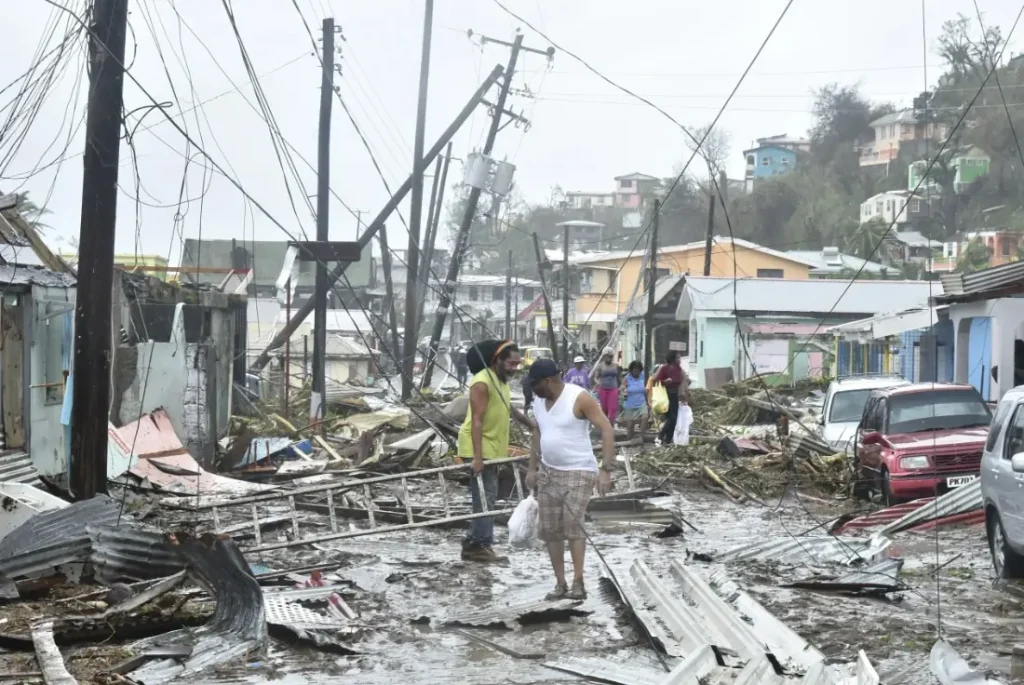
- A road in the Roseau area is littered with structural debris, damaged vegetation and downed power poles and lines. Credit: Roosevelt Skerrit
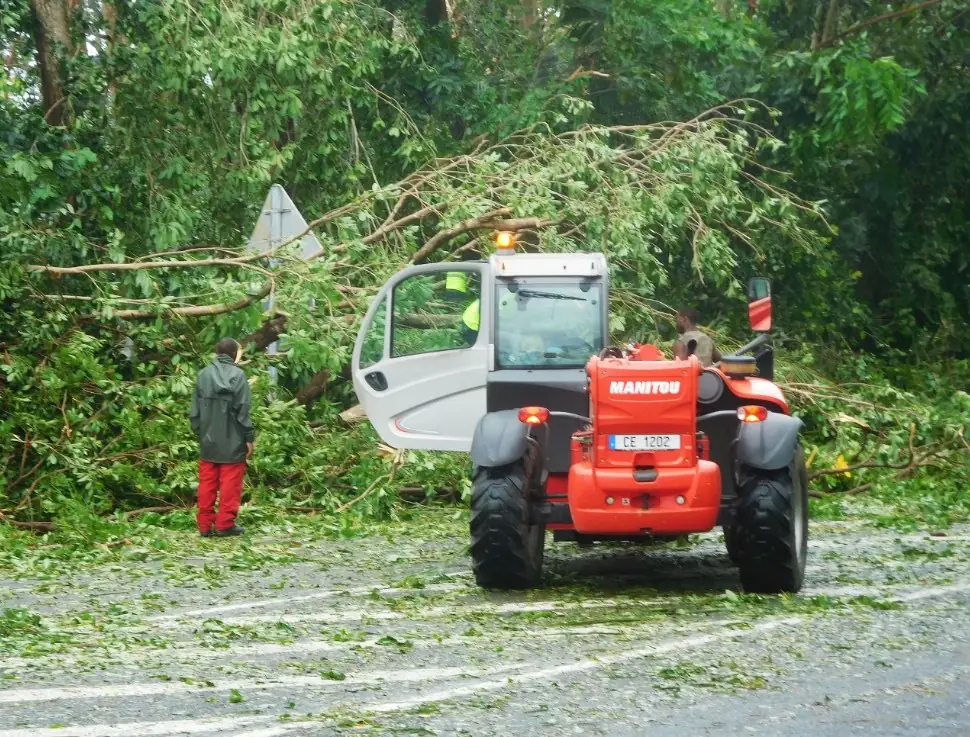
- Numerous trees fell across Guadeloupe, clogging roadways with debris. Credit: Filo gèn’
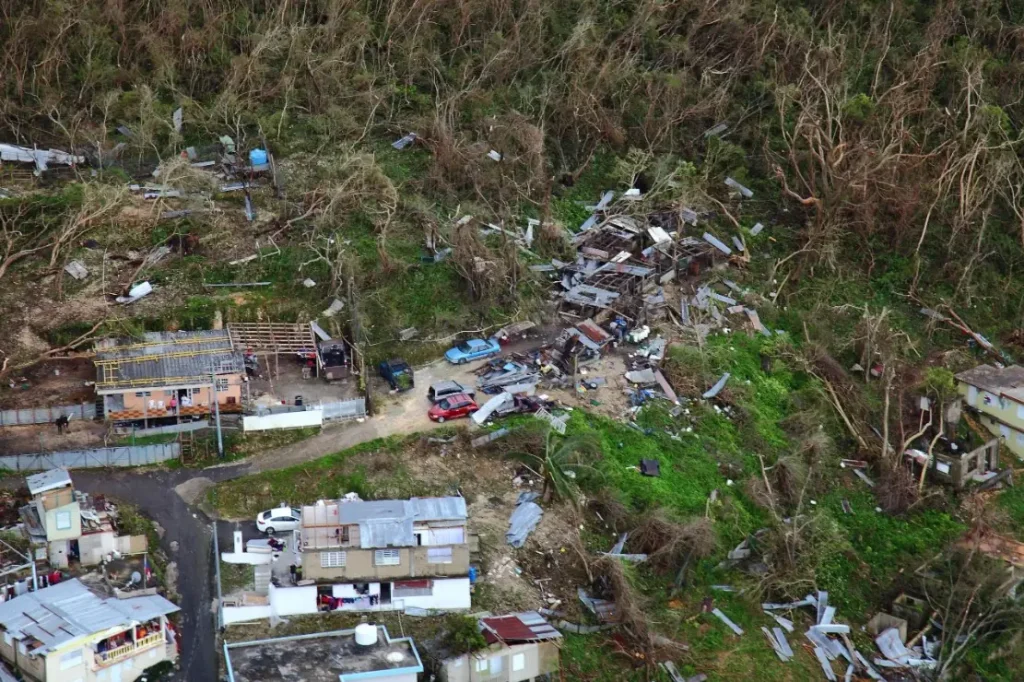
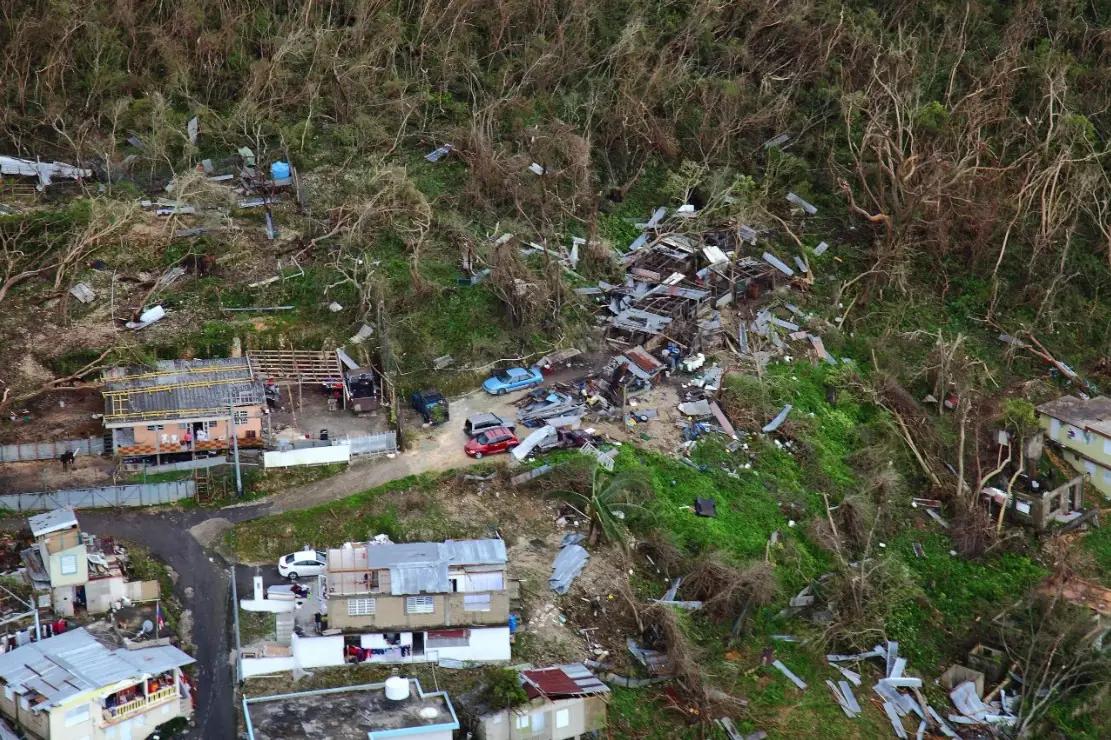
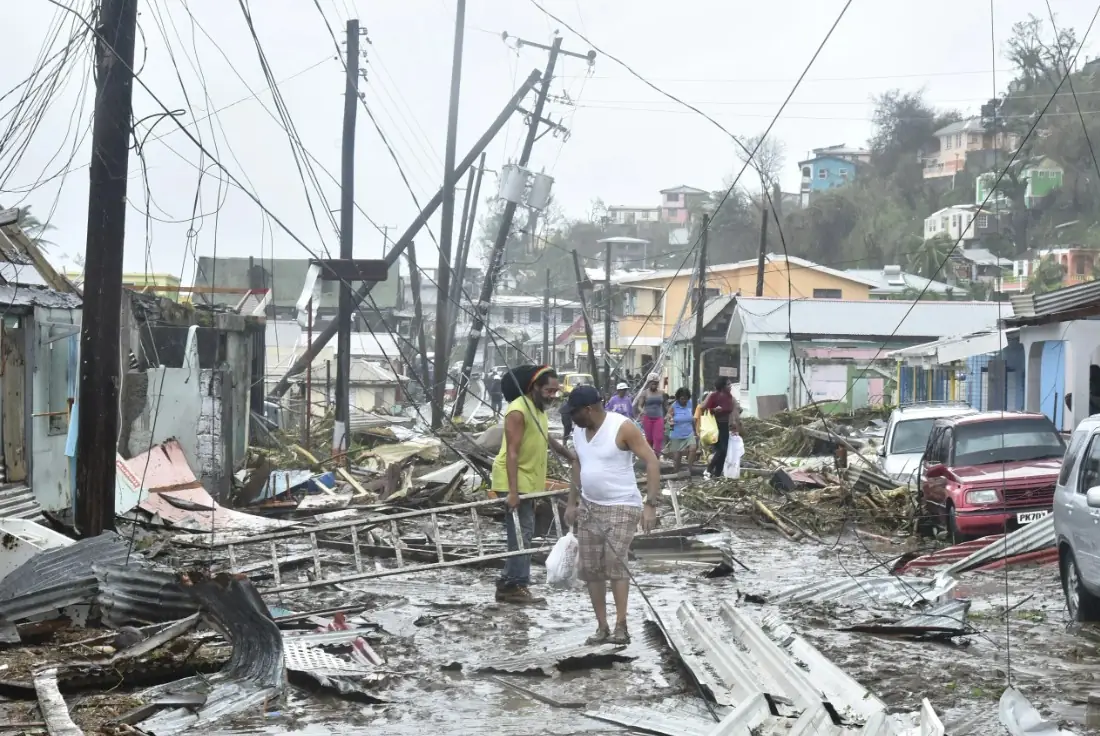
Rainfall totals exceeded 1 140 mm (45 inches) in the central mountains. Entire river valleys flooded, landslides scarred hillsides, and agricultural fields were stripped bare. More than 80% of Puerto Rico’s crops were destroyed in a single day.
The physical damage was overwhelming. Roofs were ripped away, power lines collapsed, and cell towers fell. Bridges and roads buckled under floodwaters, isolating communities for weeks. The entire island lost electricity, marking the start of the longest blackout in U.S. history.
Counting the casualties
In the days after the storm, Puerto Rican officials announced just 16 fatalities. The official count soon rose to 64, but the number did not change for months. These were “direct” deaths, such as drowning in floods or being crushed by collapsing structures.
Doctors, journalists, and families quickly warned that the toll was far higher than official figures suggested. Patients dependent on dialysis missed treatments, while cancer patients lost access to chemotherapy. Oxygen concentrators and ventilators failed as generators ran out of diesel. In remote mountain towns, blocked roads meant ambulances could not reach those in need.
The Puerto Rican government faced criticism for undercounting deaths. Political pressure grew, especially as the Trump administration praised the response. In August 2018, the government finally released an independent study led by George Washington University.
The GWU report concluded that 2 975 more people died between September 2017 and February 2018 than would normally be expected. It was not a list of names but a statistical excess, calculated by comparing observed deaths to expected baselines adjusted for age, seasonality, and migration. The estimate came with a confidence range of 2 658–3 290.
This number became the official toll. It revealed that Maria was not just a meteorological disaster but a humanitarian crisis magnified by weak infrastructure.
Months earlier, Harvard researchers had published a strikingly higher estimate. By surveying 3 299 households across Puerto Rico, they extrapolated that 4 645 people had died between September 20 and December 31, 2017. Their method captured deaths that never entered official records but produced a wide confidence interval from 793 to 8 498, reflecting uncertainty in sample-based surveys.
A Bayesian reanalysis of monthly vital statistics suggested around 910 excess deaths in September and October alone. Municipal-level work showed that mortality was not evenly spread. Mountain towns like Utuado and Adjuntas, which faced months without electricity or medical access, had higher rates than coastal cities where power was restored sooner.
The scientific arguments over methodology, whether to trust surveys, registry comparisons, or statistical models, produced different totals. But the conclusion was shared: the overwhelming majority of deaths were indirect, driven not by the storm itself but by the collapse of the systems that sustain life.
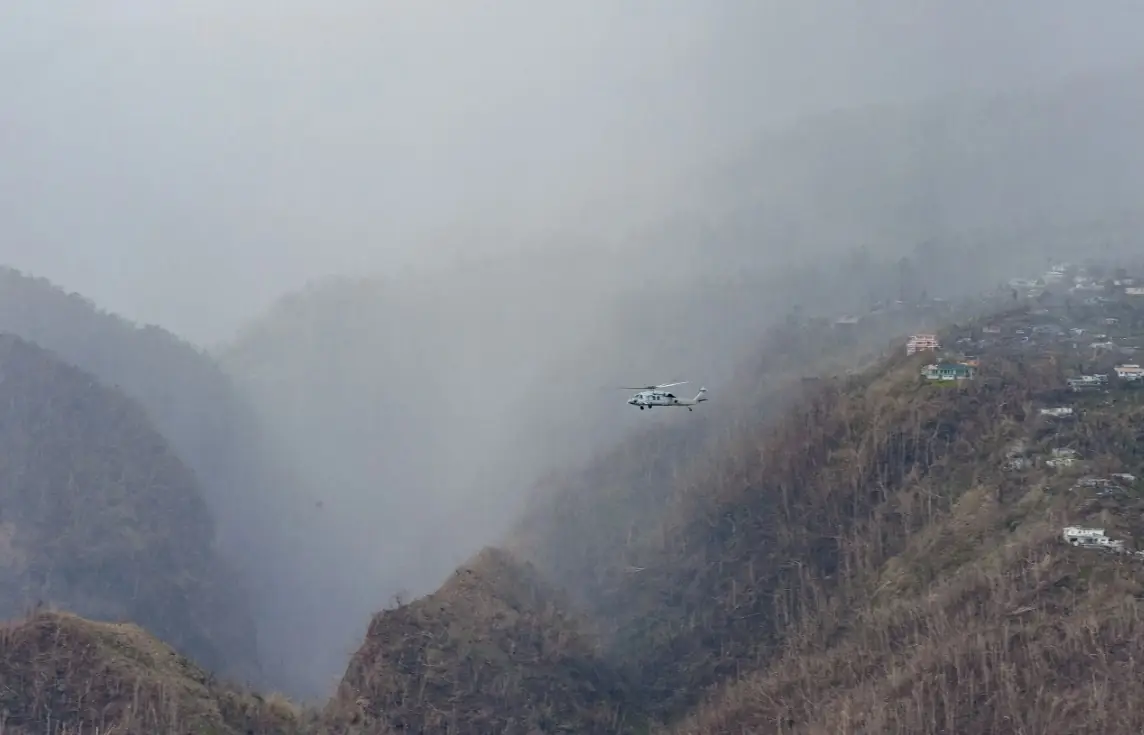
- A SH-60 Seahawk flies over Dominica en route to deliver humanitarian aid. The mountainous terrain of the island poses serious challenges to relief operations in more remote areas. Credit: Official U.S. Navy Page from United States of America MC3 Michael Molina/USS Wasp
- Debris-clogged roads added to logistical challenges faced by rescue and relief crews. Credit: U.S. Department of Agriculture Master Sgt. Joshua DeMotts/1st Combat Camera Squadron
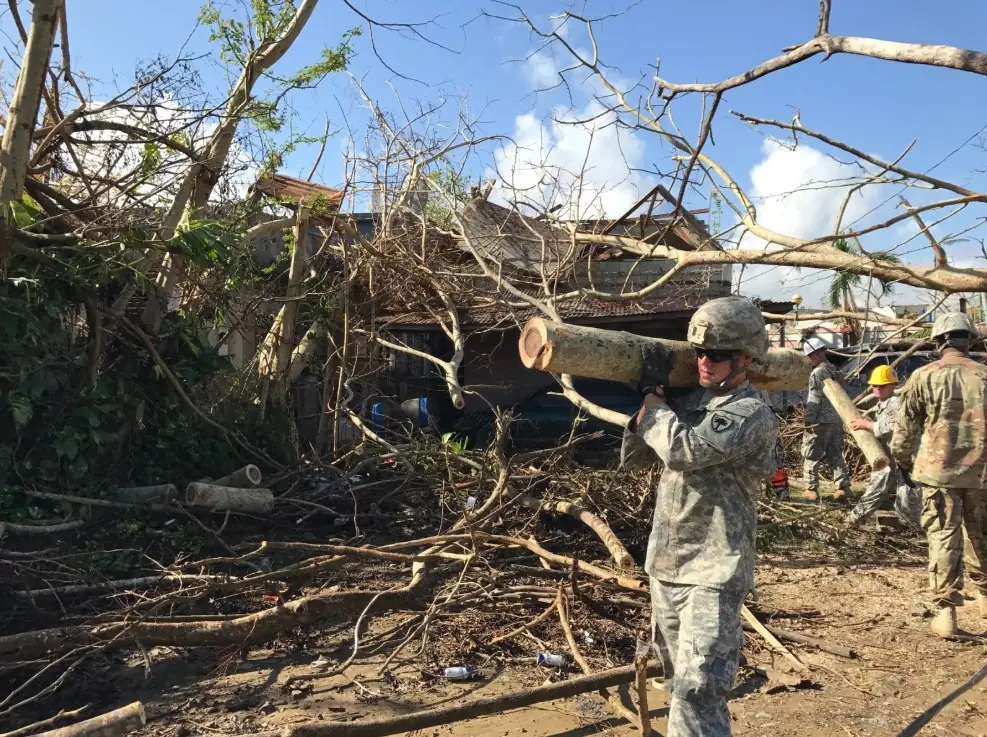
- Members of the South Carolina National Guard assisting with clean up efforts in Caguas. Credit: SC National Guard in Puerto Rico
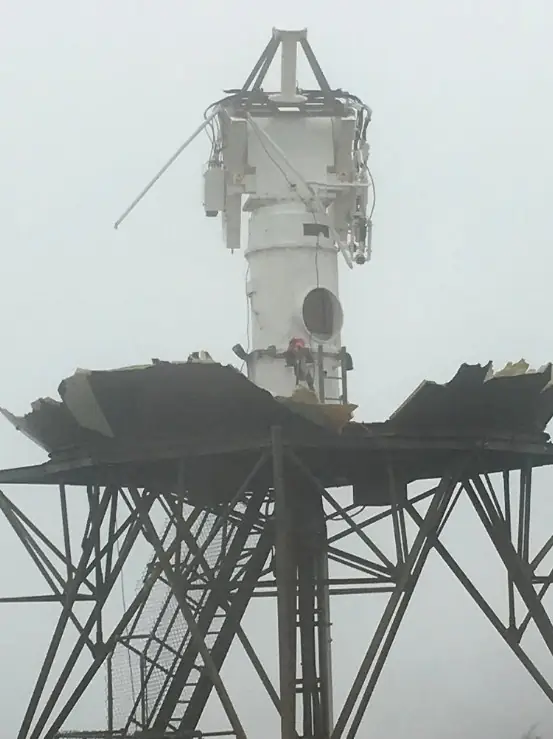
- The US NWS NEXRAD radar in Puerto Rico destroyed by Maria. Credit: NWS
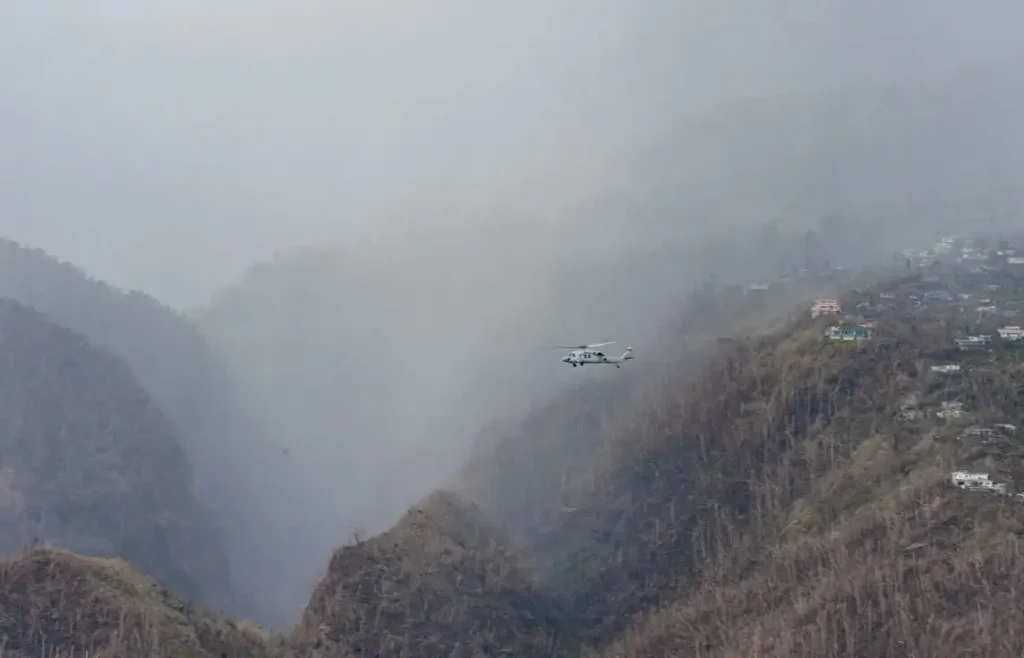
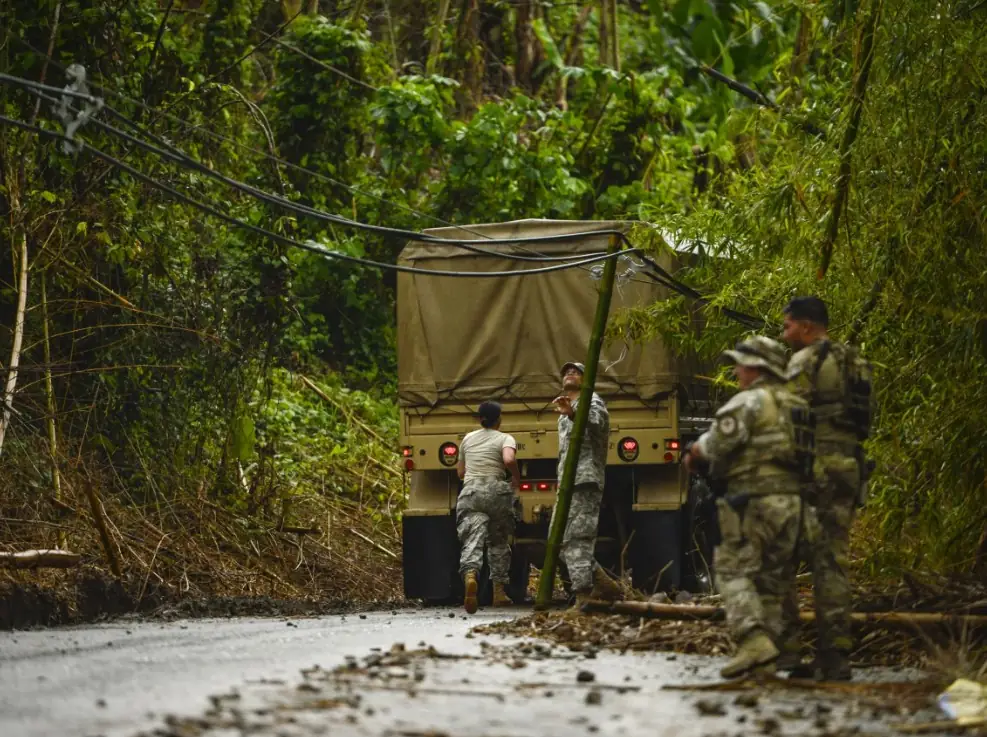
Blackout amplified mortality
Maria’s winds shredded Puerto Rico’s already fragile grid. Wooden poles splintered, transmission towers toppled, and substations flooded. Roughly 80% of transmission and distribution infrastructure was destroyed.
All 3.4 million residents lost power. For weeks, the island at night appeared almost entirely dark from space. NASA satellites tracking nighttime light showed faint recovery in urban areas after one month, but rural municipalities remained blacked out for over six months.
Hospitals struggled to keep operating as backup generators ran continuously for weeks, often breaking down. Police escorted fuel convoys to prevent theft, but supplies remained scarce. Dialysis clinics were forced to ration treatment, refrigerated medicines spoiled, and nursing homes without air conditioning grew dangerously hot.
These failures turned a natural hazard into a mass-casualty event. People who might have survived the winds and floods died later from heart attacks untreated, from diabetes unmanaged, or from infections untreated when clinics closed.
The blackout was not just inconvenient. It was lethal.
Efforts to harden the grid
In the months after Maria, the main question was how to rebuild an energy system that had collapsed almost entirely. Engineers assessed transmission towers twisted to the ground, substations drowned by floods, and thousands of kilometers of distribution lines splintered. Policymakers debated whether to restore the old centralized grid or replace it with a more resilient, decentralized system built around solar power and storage.
In December 2017, the Solar Energy Power Association published Build Back Better, calling for distributed solar, microgrids, and more robust infrastructure. Their vision was to replace a brittle centralized system with a flexible, decentralized one.
The U.S. Department of Energy and the National Renewable Energy Laboratory later launched the PR100 study, which modeled how Puerto Rico could reach 100% renewable energy while also achieving resilience. The study recommended selective undergrounding of lines, stronger utility poles, improved vegetation management, and decentralized energy storage.
Professional engineering groups like IEEE highlighted rooftop solar paired with battery systems as the fastest path to resilience. Even if transmission lines failed, households and communities could maintain essential power for refrigeration, medical equipment, and communications.
Pilot projects began across the island. Community centers and hospitals installed microgrids, while some rural schools were equipped with solar arrays and batteries to serve as “resilience hubs.” These efforts showed promise but reached only a small share of Puerto Rico’s total energy needs.
Progress and setbacks
Billions of dollars were earmarked for Puerto Rico’s grid reconstruction, primarily through FEMA and the Department of Energy. Projects included transmission line replacements, vegetation management, and microgrid development, but progress has been slow.
The Government Accountability Office documented years of delays, citing contract disputes, bureaucratic bottlenecks, and limited technical capacity. Critics argue that reconstruction has focused too heavily on rebuilding old centralized infrastructure instead of investing in distributed systems that would better withstand hurricanes.
In September 2022, Hurricane Fiona struck as a Category 1 storm. Despite its relatively modest intensity compared to Maria, Fiona again caused island-wide outages. For many Puerto Ricans, this proved that five years of reconstruction had done little to fix fundamental vulnerabilities.
While wealthier households and businesses that can afford rooftop solar and batteries have achieved energy independence, low-income and remote communities continue to endure long outages during storms. This unequal recovery has widened Puerto Rico’s energy divide.
Hurricane Maria demonstrated with tragic clarity that indirect deaths can far exceed direct fatalities. Outages, medical disruption, and delays in recovery amplified the disaster’s toll on thousands of lives.
Resilience planning must therefore go beyond forecasting storms or strengthening levees. It must integrate health care continuity, decentralized energy systems, and social equity. Protecting vulnerable populations, people who depend on dialysis, refrigeration, and constant care, should be the main measure of preparedness.
References:
1 Ascertainment of the Estimated Excess Mortality from Hurricane Maria in Puerto Rico – George Washington University – Milken Institute School of Public Health – Accessed on September 20, 2025
2 Puerto Rico Grid Resilience and Transitions to 100% Renewable Energy – PR100 – March 2024

I’m a science journalist and researcher at The Watchers, contributing to the Epicenter edition, where I cover peer-reviewed scientific research and emerging discoveries across Earth and space sciences. With a background in astronomy and a passion for environmental science, I’ve worked in shark and coral conservation in Fiji, conducting reef and shark-behavior research, contributing to mangrove restoration, and earning PADI Open Water and Coral Reef Certifications. I bring a blend of scientific rigor and storytelling to illuminate the discoveries shaping our planet and beyond.

Commenting rules and guidelines
We value the thoughts and opinions of our readers and welcome healthy discussions on our website. In order to maintain a respectful and positive community, we ask that all commenters follow these rules.