• A soy sauce maker used fire to guide villagers through Japan’s 1854 tsunami, then funded a seawall that protected most of Hiro in 1946

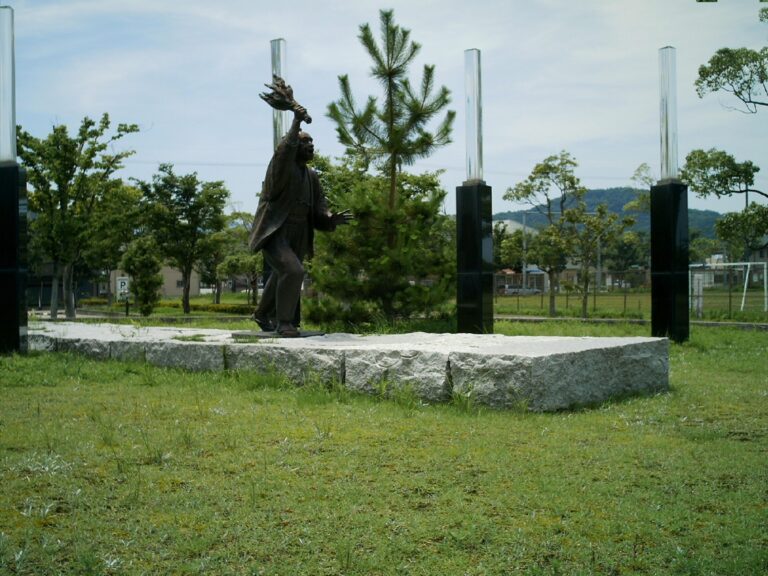
    Soy sauce maker Hamaguchi Goryō lit rice-straw fires to guide villagers to higher ground when a tsunami struck Hiro, Japan, in darkness on December 24, 1854. He then financed an embankment that protected most of the settlement from the 1946 Nankai tsunami, 88 years after its completion.
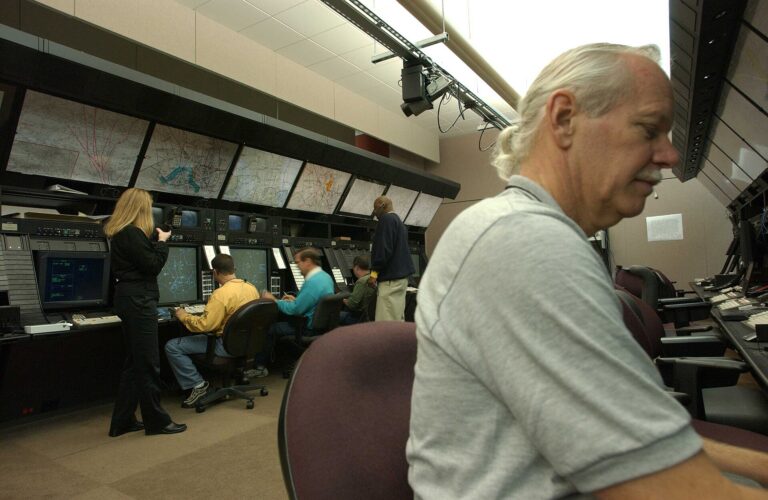
  • Second nationwide US flight halt since 9/11: how the November 13 FAA ground stop compares with September 2001 and January 2023

    The November 13, 2026, FAA order halting all US departures is only the second nationwide stop since 9/11. Here is how it compares with the 2001 shutdown of US airspace and the 90-minute NOTAM outage of January 2023.

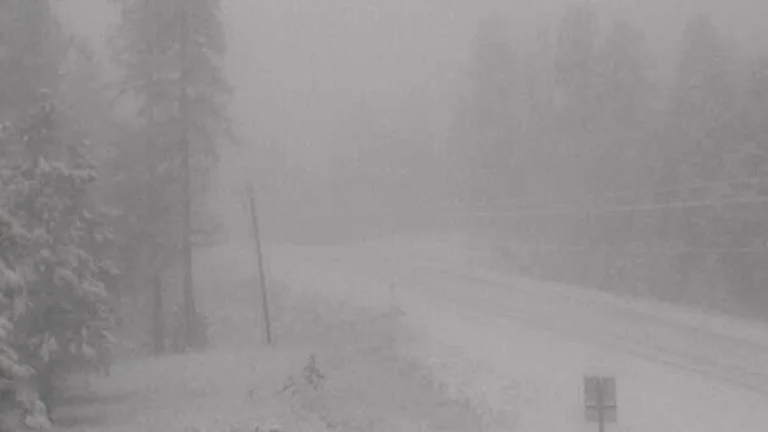
  • A 19-year-old Nebraska teacher reportedly tied her pupils together with twine and led them to safety through a blizzard in January 1888

    On January 12, 1888, a violent blizzard tore the roof from a rural Nebraska schoolhouse, forcing 19-year-old teacher Minnie Freeman to lead her pupils through blinding snow to a nearby farmhouse. Contemporary reports describe her linking the children with twine and carrying the youngest. Everyone reached shelter, but historical accounts disagree on how many children she rescued and how far they walked.

  • In the winter of 1811–12, earthquakes near New Madrid, Missouri, shook so hard that witnesses saw the Mississippi River flow backward, and the shaking left a brand-new lake in Tennessee

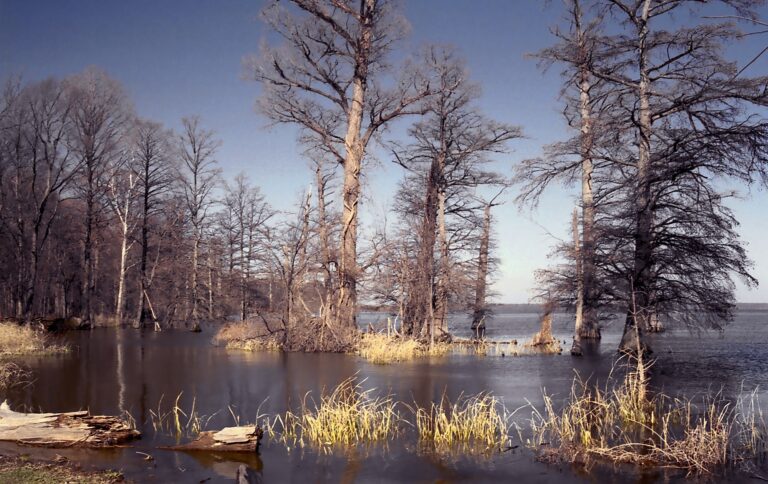
    During the New Madrid earthquakes of 1811–1812, waves and sudden riverbed uplift sent parts of the Mississippi River surging upstream. The February 7, 1812 shock also reshaped northwestern Tennessee, where ground subsidence and obstructed drainage helped form modern Reelfoot Lake. The river disturbance was temporary; the flooded landscape endured.

  • On 28 August 1859 a solar storm shocked telegraph operators and threw sparks on other lines, and on 2 September Boston to Portland clerks unhooked their batteries and kept sending for more than two hours on the aurora’s current alone.

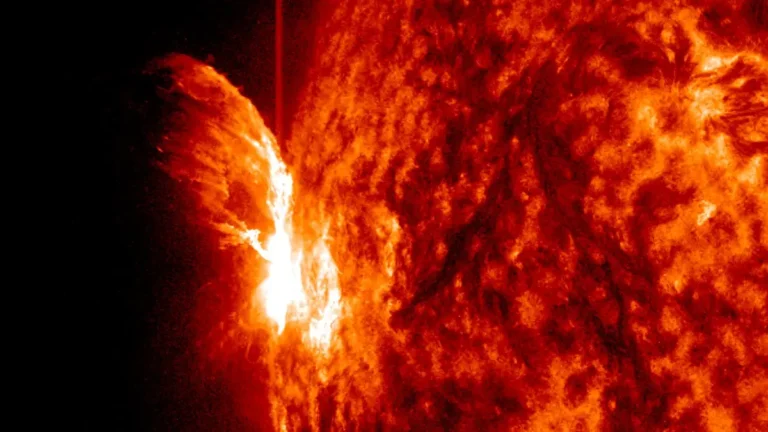
    Solar storms on August 28 and September 2, 1859, drove disruptive currents through telegraph networks, shocking operators and throwing sparks from equipment. During the second storm, operators between Boston and Portland, Maine, disconnected their batteries and exchanged messages for more than two hours using the storm-induced current alone.

  • Britain appointed a Minister for Drought in August 1976, and it rained so much afterward that by November MPs were calling him the Minister of Flood

    Denis Howell was given responsibility for Britain’s drought response in August 1976. By November 16, after two exceptionally wet months, MP Arthur Jones was calling him “The Minister of Flood” in the House of Commons. The nickname captured a dramatic weather reversal, while parts of the water system were still recovering.

  • Marine iguanas in the Galápagos got shorter by as much as 6.8 cm (2.7 inches), or a fifth of their length, when El Niño left them short of the seaweed they can digest, and the biggest ones shrank the most and lived the longest

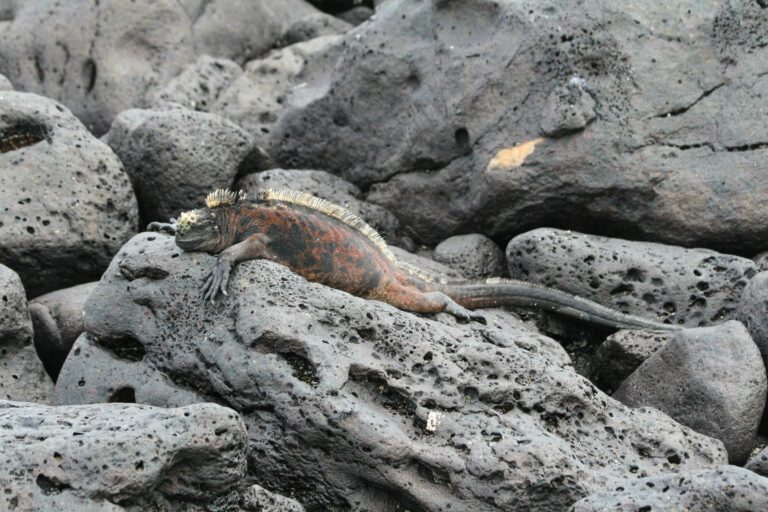
    Marine iguanas in the Galápagos Islands can lose as much as 6.8 cm (2.7 inches), or one-fifth of their body length, when El Niño disrupts their food supply. Researchers tracking individual adults found that the reptiles could grow longer again when conditions improved. Among large iguanas, those that shortened most also survived longer during the food shortage, revealing an unusual response to environmental stress.

  • Maui residents showed elevated metal burdens months after 2023 wildfires

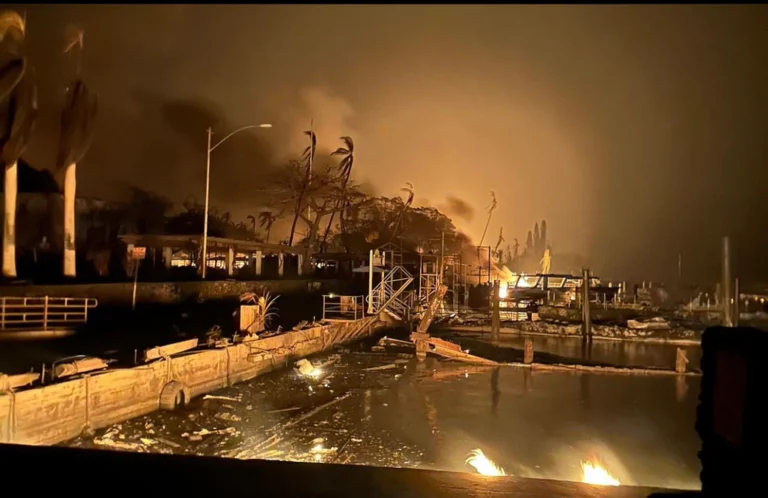
    A study of 1 400 Maui adults found unusually high urinary concentrations of several metals 6–18 months after the August 2023 wildfires, while participants with greater combined metal burdens were more likely to have abnormal lung-function tests. Antimony showed the largest difference, at nearly 40 times U.S. reference values, but the researchers caution that the study identifies statistical associations and cannot determine how much of the measured burden came directly from the fires.

  • Crocodilian fossil from the Sphinx’s rock formation reveals a different evolutionary history

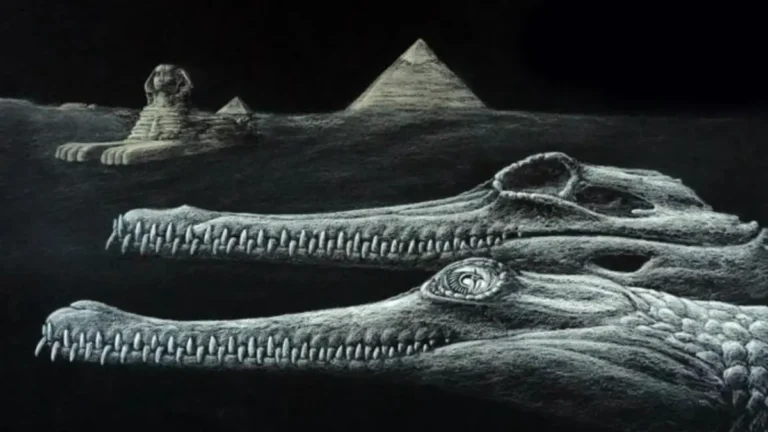
    A crocodilian fossil collected in Egypt nearly a century ago has been assigned to a new genus after researchers found that it was not closely related to the living false gharial, as its original classification had implied. The reclassification identifies a separate branch of long-snouted crocodilians that inhabited the ancient Mediterranean about 45 million years ago, adding evidence of a more diverse prehistoric ecosystem.

  • First-of-its-kind deep-Earth conductivity map reveals ancient continental fragments beneath the United States

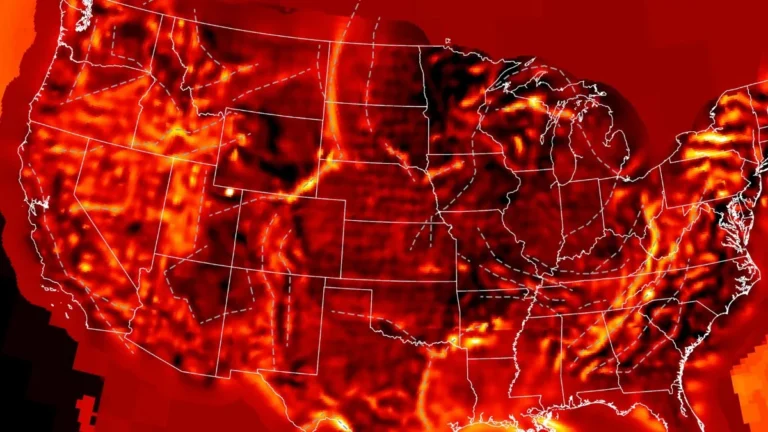
    A first-of-its-kind continent-scale conductivity map made using over 1 700 magnetotelluric stations deployed across the United States has revealed buried tectonic fragments beneath eastern North America, allowing researchers to reconstruct the continent’s deep electrical structure while exposing conductive regions linked to ancient continental collisions, mineral systems, and geomagnetic storm hazard propagation.