• Hidden patterns in geological time reveal Earth’s variability limit of 500 million years

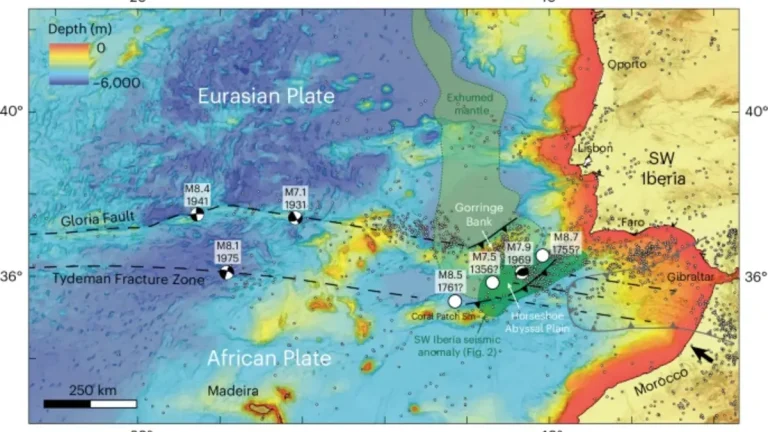
    An international study published in Earth and Planetary Science Letters revealed that geological time boundaries follow a multifractal pattern, with Earth’s variability saturating at approximately 500 million years. The research was co-authored by Prof. Andrej Spiridonov from Vilnius University.

  • Pacific clues improve atmospheric river forecasts

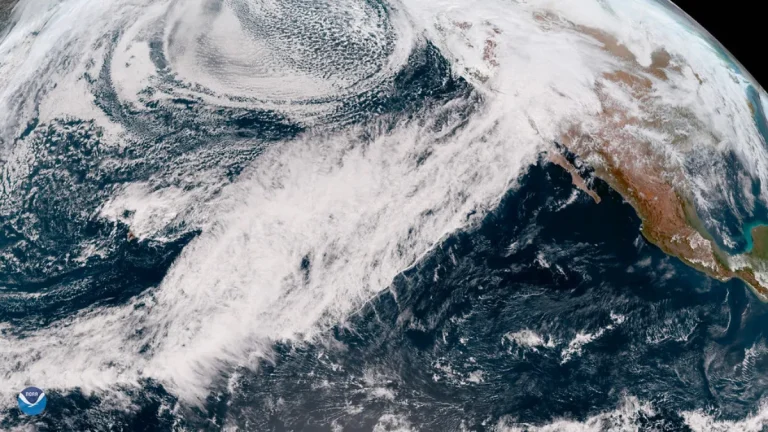
    Researchers have been actively trying to enhance atmospheric river forecasts by collecting targeted observations over the Pacific Ocean. Through the Atmospheric Rivers Reconnaissance (AR Recon) project, aircraft, buoys, and radiosondes gather real-time data on important atmospheric variables, which are then integrated into high-resolution weather models. This approach leads to measurable gains in forecast accuracy, improving readiness along the West Coast and supporting hydrologic planning across the country.

  • China to drill world’s deepest borehole, breaking Kola Superdeep record

    China has launched a new deep-Earth drilling project aiming to reach 15 km (9 miles), which would make it the deepest borehole ever drilled in the world. The initiative seeks to explore geological structures, tap into potential energy reserves, and enhance scientific understanding of the Earth’s interior.

  • Fleet of rapid response ocean bottom seismographs deployed after M7.0 earthquake in Northern California

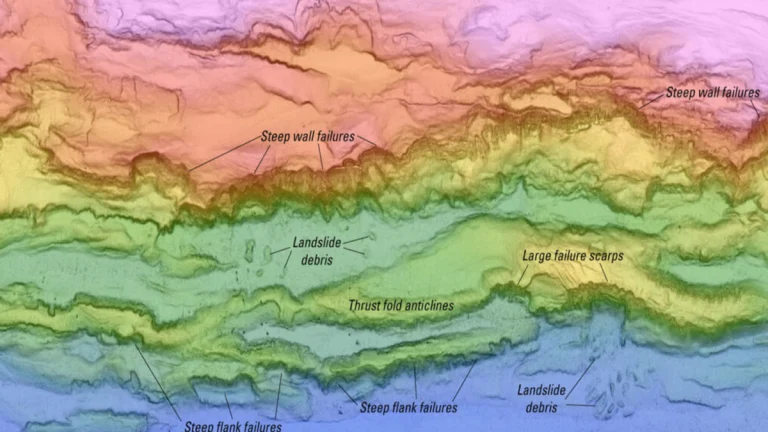
    A fleet of rapid response ocean bottom seismographs was deployed to monitor aftershocks and gather critical data on seismic activity following the M7.0 earthquake that struck offshore Northern California on December 5, 2024.

  • Zavaritsky volcano identified as source of 1831 climate changing eruption and blue sun reports

    Researchers pinpointed the Zavaritsky volcano as the source of the massive 1831 eruption that caused global cooling and turned the sun blue. The discovery connects sulfur deposits in polar ice cores to a previously overlooked volcanic event in the remote Pacific.

  • Preseismic electromagnetic signals recorded before Nepal earthquake on November 3, 2023

    Electromagnetic signals lasting up to 70 seconds were detected before an M6.4 earthquake struck western Nepal on November 3, 2023. Researchers operating magnetotelluric stations in the Ganga Basin have described this as an important observation in earthquake precursor studies.

  • Magnetic North Pole shift brings updates to World Magnetic Model 2025

    The World Magnetic Model (WMM) 2025 was released by the NCEI and the BGS on Tuesday, December 17, 2024. The release forecasts changes in Earth’s magnetic field for the next 5 years as the magnetic north pole keeps moving faster leading to important improvements in global navigation systems.