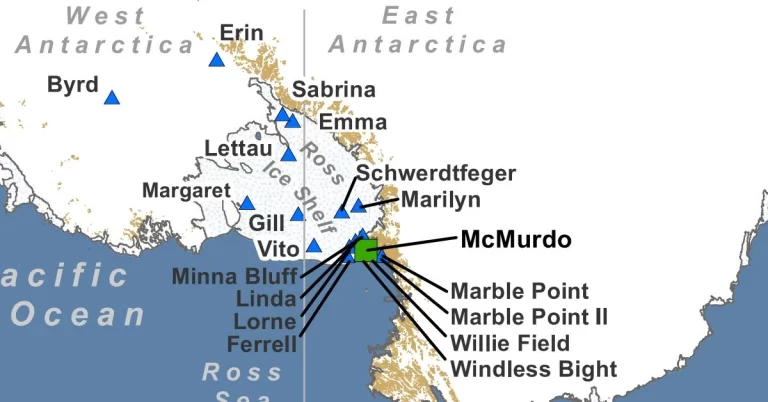
• Study reveals complex behavior and environmental impact of unpredictable deep-sea currents

    A comprehensive investigation headed by Lewis P. Bailey of the National Oceanography Centre and involving global collaborations revealed the complicated and unpredictable behaviour of deep-sea currents. This four-year study offshore North Mozambique investigates how these currents interact with the seafloor, challenging existing models and bringing new insights into marine ecosystems.
  • Staircase pattern discovered in Earth’s rotational deceleration evolution

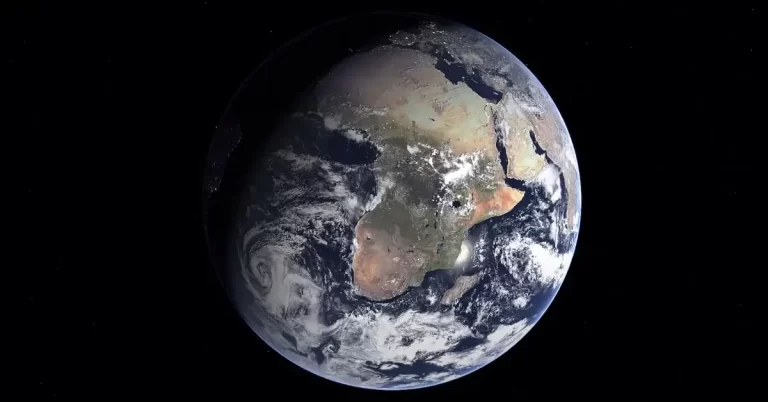
    Researchers discovered that Earth’s rotational slowing occurs in a staircase pattern rather than a flat drop. This pattern, discovered after intensive geological and astronomical investigation, shows alternating periods of stability and fast change in Earth’s rotation over the last 650 million years.

  • Galaxies in denser regions up to 25% larger than those in less crowded locations

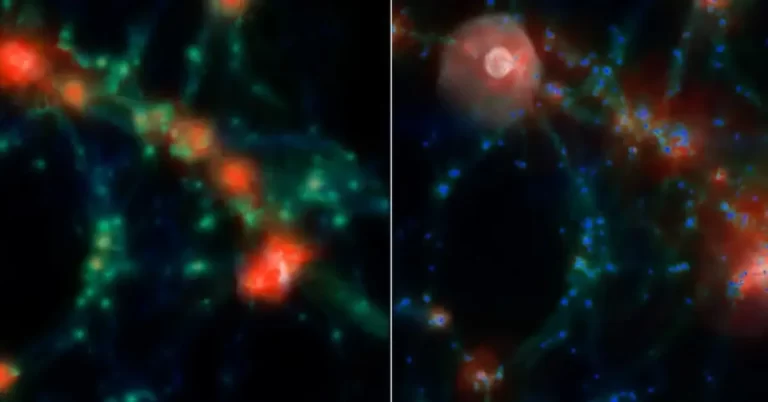
    A new study discovered that galaxies in denser astronomical surroundings are up to 25% larger than those in less crowded locations. This study, published on August 14, 2024, in The Astrophysical Journal, stressed the importance of ambient density in galaxy size, refuting prior theories that focused solely on internal processes.

  • Discovery of a diamond-rich core-mantle boundary offers new information into Mercury’s evolution

    Scientists discovered that Mercury may have a 16 km (10-mile) thick diamond layer at its core-mantle barrier. This revelation, based on NASA’s MESSENGER mission data and high-pressure laboratory experiments, shed new light on the planet’s complicated interior structure and thermal development. The team was led by Yongjiang Xu and Yanhao Lin of the Center for…

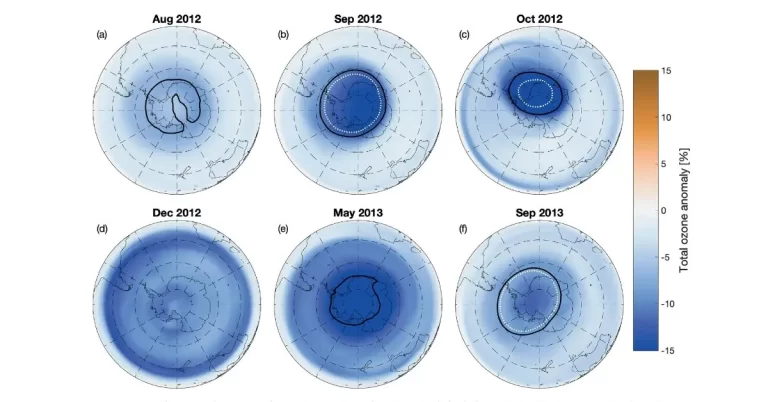
  • 20-year study reveals significant ozone depletion due to decades of solar proton events

    A comprehensive study led by Grigoriy Doronin, using data from NASA’s Aura MLS and NOAA’s SWPC, examined mesospheric ozone depletion due to solar proton events (SPEs) over the past two decades. The study, which ran from 2004 to 2024, demonstrated the considerable impact of high-energy protons from the Sun on ozone levels, indicating notable changes in depletion patterns across the northern and southern hemispheres.