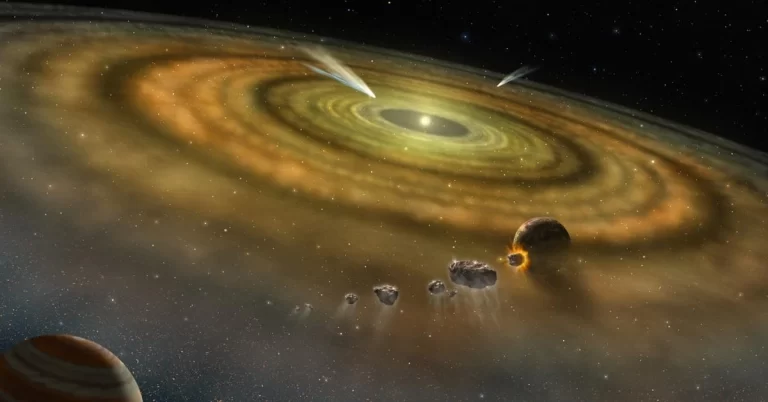
• Space telescopes reveal massive asteroid collision in Beta Pictoris

    The combined data from NASA’s JWST and Spitzer Space Telescopes revealed a massive asteroid collision in the Beta Pictoris system, providing a unique view into the early stages of planet formation. This result emphasizes the dynamic character of young planetary systems and the importance of asteroid impacts in their evolution.

  • Study proposes accurate AI model to help predict volcanic eruptions

    Researchers at the University of Granada have developed an innovative system demonstrating a very accurate machine-learning algorithm developed to predict volcanic eruptions. The study with important implications for global volcanic hazard forecasting and disaster preparedness.

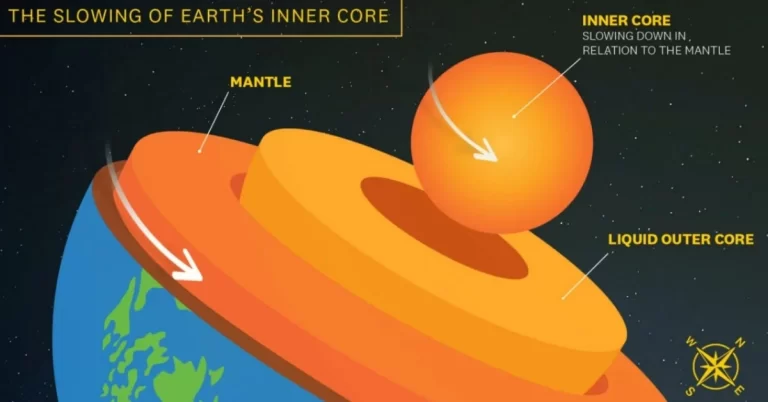
  • Earth’s inner core slowdown confirmed by seismic data

    A new scientific study proves that the Earth’s rotation speed has been decreasing throughout the past decade, with data suggesting that the rotational speed of the inner core has gotten 2.5 times slower compared to the past decade.

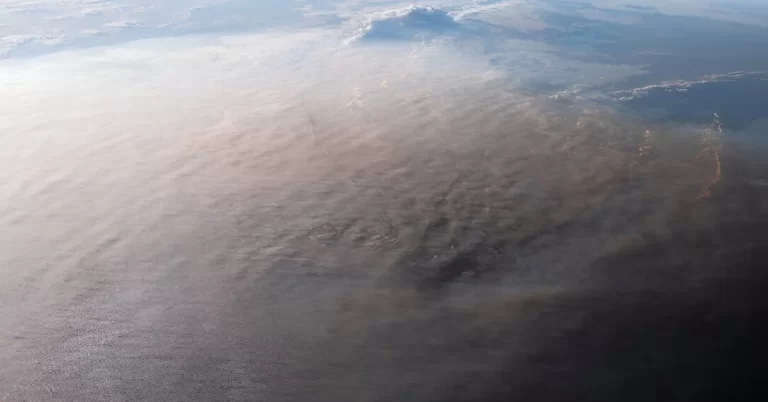
  • Study suggests ancient interstellar cloud collision shrank heliosphere to 0.22 AU, substantially impacting Earth

    A new study published in Nature Astronomy provides evidence that our solar system passed through a dense interstellar cloud 2 – 3 million years ago, exposing Earth to higher cosmic radiation and altering the climate. The discovery suggests that the Sun’s location in space might shape Earth’s history more than it was previously considered.

  • Deep magma reservoirs’ role in predicting large-scale volcanic eruptions

    New research reveals that deep magma buoyancy, rather than the proportion of solid and molten rock, drives volcanic eruptions. The study, conducted by researchers at Imperial College London and the University of Bristol, highlights the importance of searching for clues much deeper in the Earth’s crust, where rocks are first melted into magma before rising to chambers closer to the surface.

  • New molecule detected in space using machine learning and ALMA observatory

    MIT researchers have recently reported the detection of 2-methoxyethanol, a previously unknown molecule, in space. The study utilized machine learning and ALMA observations to find this complex molecule in the star-forming region NGC 6334I. The discovery enhances the understanding of molecular complexity during star formation, providing new insights into the chemical processes that occur in space.

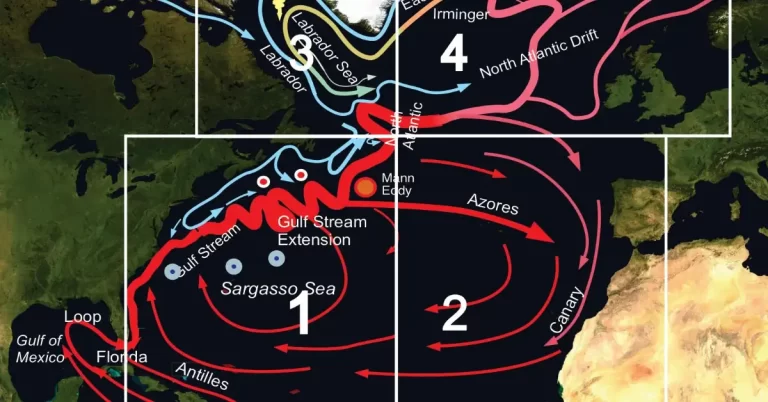
  • NCEI scientists warn of weakening Atlantic Ocean currents, profound implications on global climate patterns

    Scientists from the National Centers for Environmental Information (NCEI) and the University of Maryland have provided evidence of a significant slowdown in the Atlantic Meridional Overturning Circulation (AMOC), a key climate regulator. Published in Frontiers in Marine Science, the research utilized over six decades of oceanic data to track the health of this vital oceanic component. This slowdown, observed primarily in the last two decades, could have profound implications on global climate patterns.

  • Giant volcano discovered in Mars’ Tharsis volcanic province

    Scientists at the 55th Lunar and Planetary Science Conference in The Woodlands, Texas, announced the discovery of a vast volcano and a potential glacier ice sheet in Mars’ Tharsis volcanic province, near the equator. The finding, based on images from spacecraft orbiting Mars since 1971, highlights a volcano provisionally named “Noctis” and suggests the presence of glacier ice beneath a volcanic deposit. This discovery opens new avenues for studying Mars’ geological evolution and future exploration.