• AI revolutionizes space debris detection, surpassing conventional methods

    As we extend our reach into the cosmos, the clutter of space debris in Low Earth Orbit (LEO) becomes a pressing concern, threatening the safety and sustainability of space operations. To help with this growing problem, a recently published study in the journal IET Radar, Sonar & Navigation, introduced a promising solution leveraging the power of artificial intelligence (AI) to enhance the detection of these small but hazardous objects.
  • Astronomers discover oceans of water vapor in planet-forming disc around young star

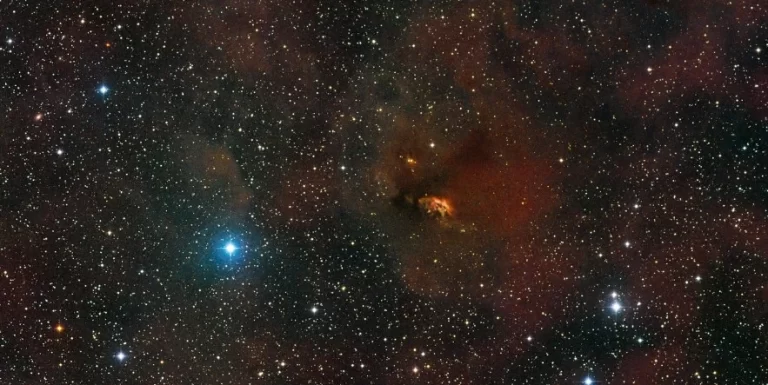
    Astronomers using the Atacama Large Millimeter/submillimeter Array (ALMA) have discovered vast reservoirs of water vapor in the disc around HL Tauri, a young star 450 light-years away from Earth, unveiling processes that may lead to the birth of planets rich in water and redefining our search for life in the universe.

  • Study confirms no risk of asteroid Apophis being redirected toward Earth by other asteroids

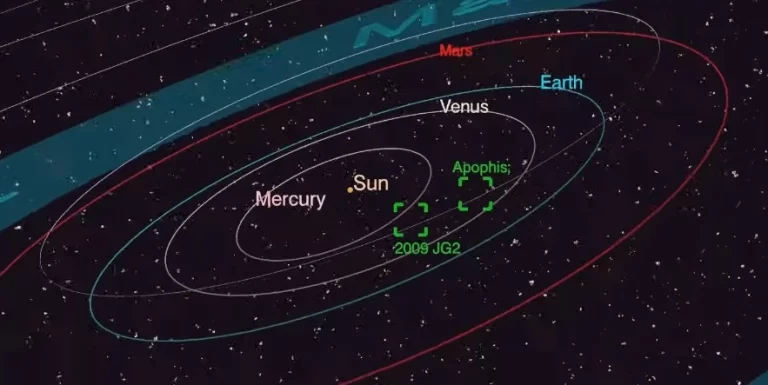
    A comprehensive study by astronomers from Western University calculated the paths of all known asteroids and found there is no risk of the notorious asteroid Apophis colliding with another space object and altering its course toward Earth, further dispelling fears of a potentially catastrophic impact in April 2029. Apophis is named for the demon serpent, who personified evil and chaos in ancient Egyptian mythology.

  • Extreme anticyclonic anomaly linked to catastrophic rainfall in Henan and marine heatwave

    A study published in Advances in Atmospheric Sciences has unveiled the unprecedented nature of an anticyclonic anomaly over Northeast Asia in July 2021, which played a key role in both the extreme precipitation in Henan Province, China and a severe marine heat wave in Japan Sea. This phenomenon resulted in significant ecological and economic impacts, including the deaths of 380 people in Zhengzhou and record-breaking losses to Japan’s coastal fisheries.

  • Advanced modeling uncovers seamounts as the source of Japan’s tsunami earthquakes

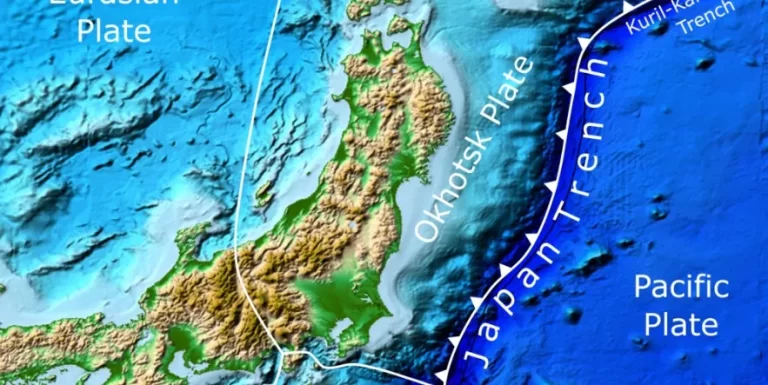
    A recent study challenges the prevailing hypothesis that subducted seamounts are weakly coupled and slide aseismically, suggesting instead that they act as strong asperities causing significant earthquakes. Through modeling and analysis, researchers have debunked the weak asperity model, providing a new explanation for the source of historical tsunami earthquakes along the southern Japan Trench, including the 1677 M8.3–8.6 Enpo Boso-oki event.

  • New insights into the predictability of Earth’s magnetic field reversals

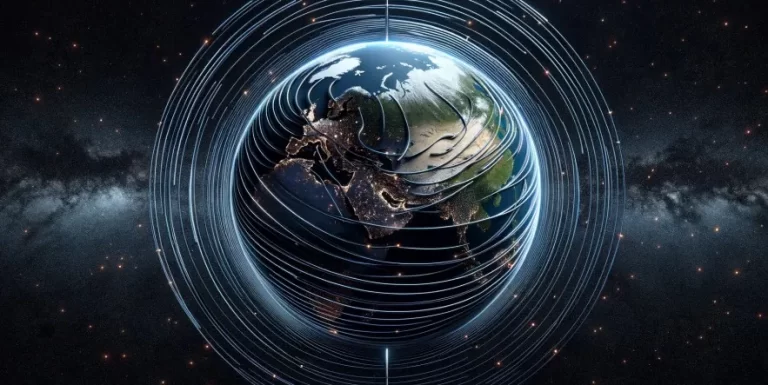
    In a groundbreaking study published on February 3, 2024, a team of scientists led by Daniil Tolmachev introduced a novel approach to predicting Earth’s magnetic field reversals. Titled “Predictability of Magnetic Field Reversals,” the research utilizes mathematical modeling to identify early warning signals of these geomagnetic phenomena, potentially offering a new paradigm in understanding and preparing for their consequences on technology and life on Earth.