• Yale-led study reveals orbital tilt in pristine solar systems as common phenomenon

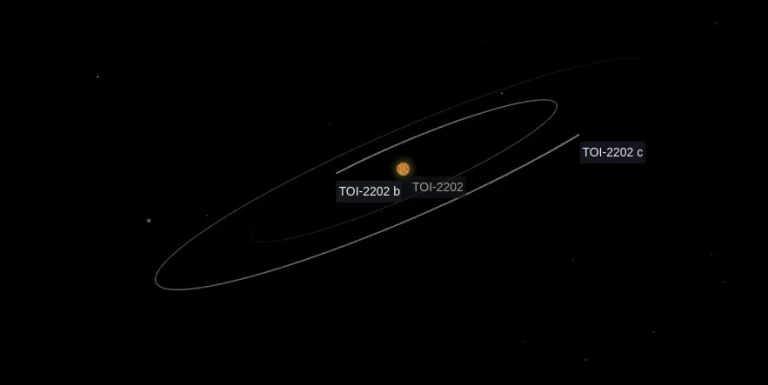
    A new study spearheaded by Yale astronomer Malena Rice and published in The Astronomical Journal has made a significant discovery about the orbital tilt of planets in pristine solar systems. Contrary to previous assumptions that slanted orbits result from cosmic disturbances, this research suggests that even in stable solar systems, planets can exhibit an orbital tilt of up to 20 degrees.

  • NJIT astronomers reveal unique aurora-like radio emission above sunspot

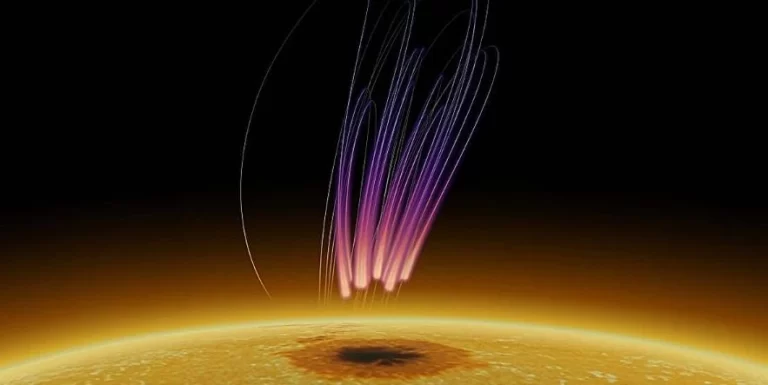
    In a groundbreaking study published in Nature Astronomy, researchers from the New Jersey Institute of Technology’s Center for Solar-Terrestrial Research (NJIT-CSTR) have documented an extraordinary aurora-like radio emission occurring approximately 40 000 km (25 000 miles) above a sunspot. This novel radio emission, which shows characteristics akin to the auroral emissions observed around planets like Earth, Jupiter, and Saturn, presents an unprecedented understanding of solar radio bursts and their potential link to similar phenomena in stars with large starspots.

  • Study links volcanic eruptions in 540s, 1450s, 1600s to global cooling events

    A new study led by the University of St Andrews, in collaboration with international researchers, reveals that historical volcanic eruptions, particularly in high latitude regions, have caused significant yet transient global cooling effects. Published in the Proceedings of the National Academy of Sciences, the research utilized sulfur isotopes from ice cores to trace the climatic impact of volcanic eruptions in the Northern Hemisphere, particularly during notably cold decades like the 540s, 1450s, and 1600s.

  • Tropical volcanic eruptions disrupt Indian Ocean climate cycles for up to 8 years

    A recent study published in Geophysical Research Letters has found that volcanic eruptions occurring in tropical regions can disrupt climate cycles in the Indian Ocean for up to 8 years. The research, conducted by scientists from MIT and WHOI, focused on the impact of volcanic eruptions on the Indian Ocean Dipole (IOD) and the El Niño Southern Oscillation (ENSO).

  • Exceptionally bright gamma-ray burst offers new data on the formation of life-essential elements

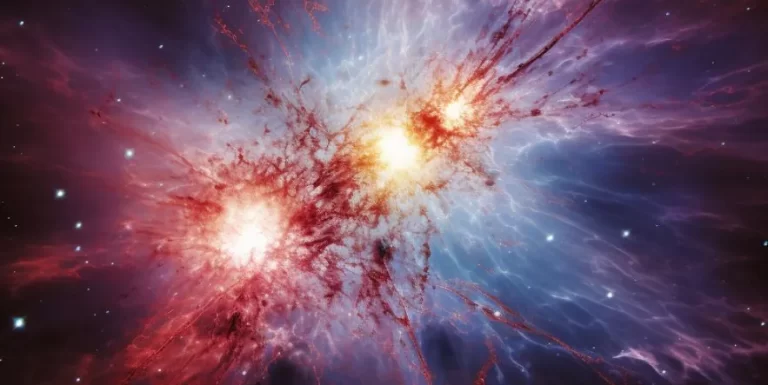
    Through a collaborative effort involving multiple ground and space-based telescopes, including the James Webb Space Telescope, scientists observed an exceptionally bright gamma-ray burst, GRB 230307A. This gamma-ray burst, caused by a neutron star merger, has been instrumental in advancing the understanding of nucleosynthesis, revealing the formation of rare chemical elements essential for life.

  • New study explains how Kolumbo volcano’s eruption led to destructive tsunami in 1650

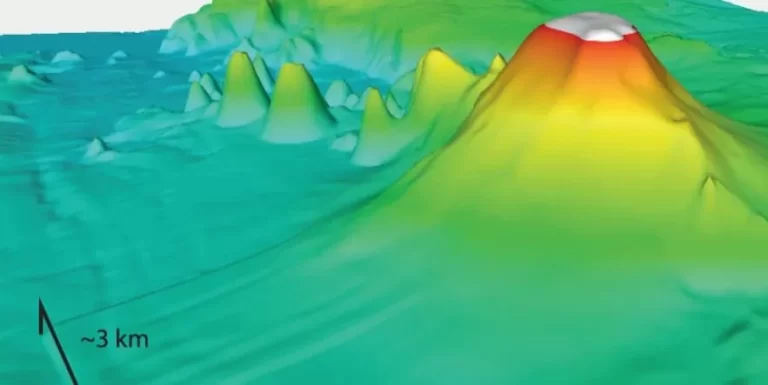
    A study published in Nature on October 26, 2023, detailed the complex mechanisms behind the 1650 volcanic eruption of Kolumbo in the Aegean Sea, which led to a devastating tsunami. Using advanced 3D seismic data and numerical simulations, the researchers identified a sequence of a landslide followed by an explosive eruption as the key events.

  • Asteroid Polyhymnia’s density beyond known elements

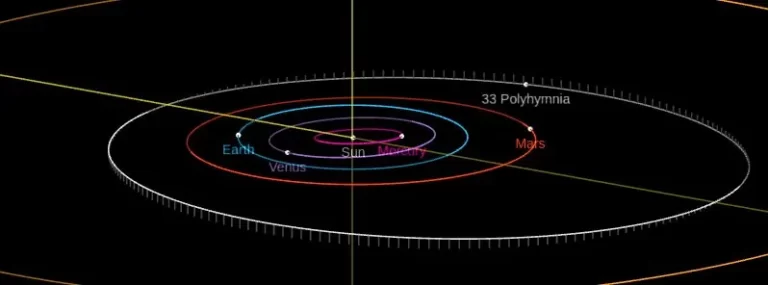
    A groundbreaking study by the University of Arizona reveals that asteroid Polyhymnia has a density exceeding that of any known elements on Earth. Led by Jan Rafelski, the research team used the Thomas-Fermi model to predict the existence of superheavy elements that could account for this extraordinary density. These findings not only challenge our understanding of the Periodic Table but also have significant implications for future asteroid mining endeavors.