
The Leonid meteor shower peaks on the night of November 17, exactly 60 years after the 1966 storm, when some observers reported meteors falling at up to 40 a second, though this year’s show should be closer to 15 an hour
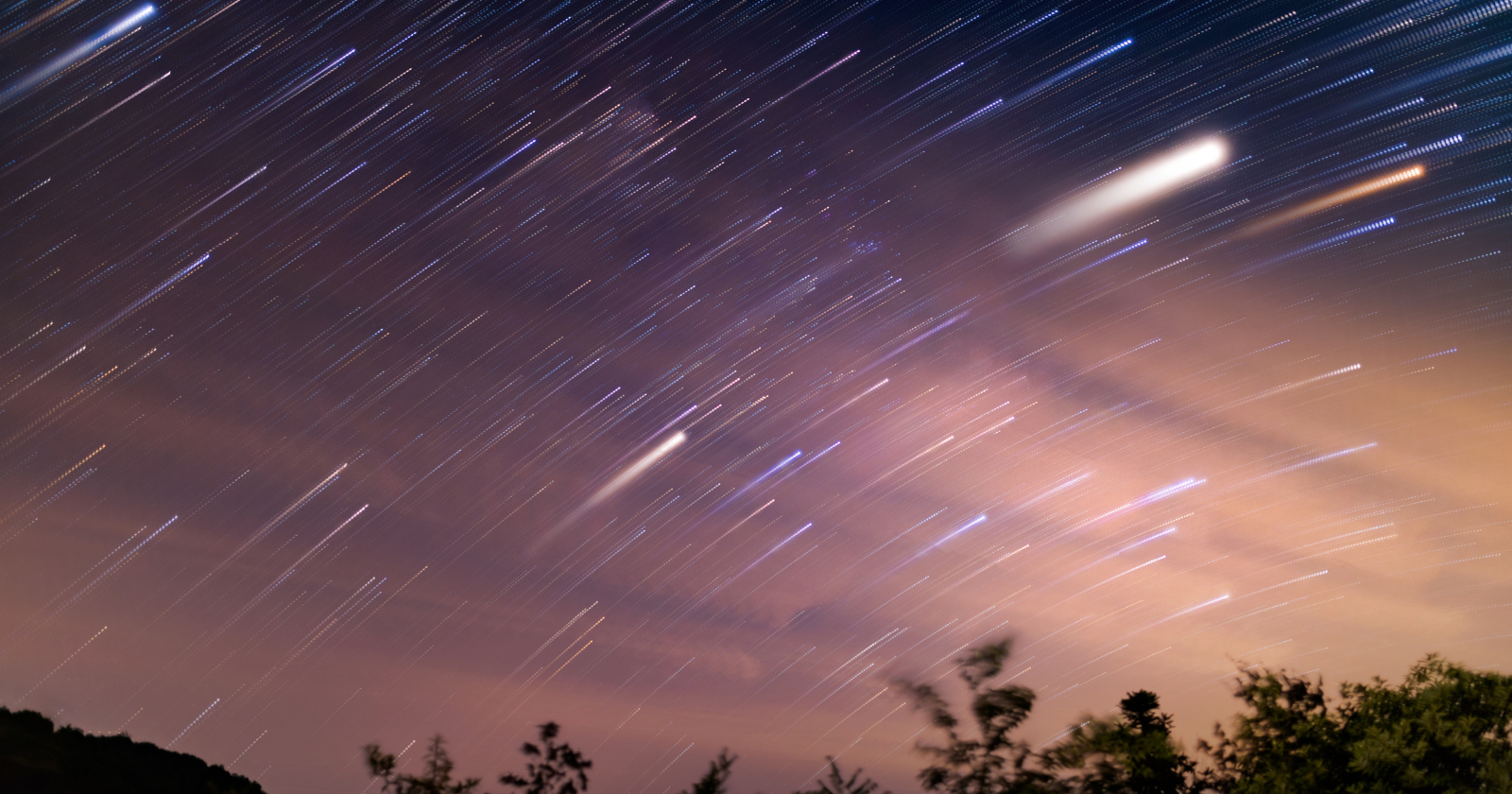
In the early hours of November 17, 1966, a small group of amateur astronomers stood on Kitt Peak in Arizona, watching the sky. As the night went on, the number of meteors kept climbing. Then it exploded.
At the peak, they estimated meteors were streaking across the sky at around 40 per second. It was one of the greatest meteor storms ever recorded. Sixty years later, on the night of November 17, the same meteor shower returns, though this time with a much quieter display.
What the Leonids are
The Leonids happen every November, when Earth passes through a stream of dust left behind by Comet 55P/Tempel-Tuttle. As those tiny particles, most no bigger than a grain of sand, hit our atmosphere at about 44 miles per second, they burn up and create streaks of light.
The shower gets its name from the constellation Leo, the Lion. If you trace the meteors’ paths backward, they all seem to come from a point in Leo called the radiant.
The great storm of 1966
Comet Tempel-Tuttle orbits the Sun every 33 years. When it passes close by, it leaves fresh, dense trails of dust. If Earth plows through one of those trails, the usual trickle of meteors can turn into a storm.
That’s what happened in 1966. Observers in the western United States reported rates rising from a few dozen an hour to thousands per minute in a short burst. The group at Kitt Peak estimated the peak at about 40 meteors per second at 4:54 a.m. local time, equal to about 144,000 meteors an hour. The most intense part lasted only around 15 minutes.
Other famous storms
The 1966 display wasn’t the first. In November 1833, a Leonid storm over North America was so dramatic that many people thought the world was ending. It also helped launch the scientific study of meteors, as astronomers realized the meteors came from a single point in the sky.
More recently, strong Leonid displays were seen in 1999, 2001 and 2002, with rates reaching the thousands per hour in some places. Those outbursts were well predicted in advance, using models of the comet’s dust trails.
What to expect this year
This year, Earth won’t pass through a dense dust trail, so no storm is expected. Under ideal dark skies, the Leonids should produce about 15 meteors an hour at their peak, the shower’s typical rate in an ordinary year.
The peak is expected late on November 17, around midnight UK time, so the best viewing for most of the world is the night of Tuesday, November 17, into the early hours of Wednesday, November 18. The Moon will be at first quarter, but it sets around midnight or earlier in most places, leaving darker skies for the best hours before dawn.
How to watch
Find a dark spot, as far as you can from streetlights and city glow. Give your eyes about 20 minutes to adjust to the darkness, and avoid looking at your phone, which resets your night vision.
You don’t need a telescope or binoculars. Lie back and look at a wide area of sky. The radiant in Leo rises around midnight, and the hours between about midnight and dawn are best. Leonids are fast, and some leave glowing trails that linger for a second or two.
Dress warmly. Mid-November nights can be cold, and you may be outside for an hour or more.
When the next storm could come
The comet last passed near the Sun in 1998, and its next close approach is expected in 2031. Some forecasters predict stronger Leonid activity around 2033 and 2034, possibly hundreds of meteors an hour, though models disagree and a storm on the scale of 1966 is far from certain.
For now, this year’s quieter show is a chance to watch a famous shower and remember the night, 60 years ago, when the sky seemed to rain light.

The Watchers Staff covers earthquakes, volcanoes, severe weather, space weather and other natural events. Published since 2011, The Watchers reports on a changing planet and the science behind it.
Published in the last 24 hours
- When Arctic air reached South Florida in January 2020, Miami fell to 40°F and the National Weather Service warned residents to watch for cold-stunned iguanas dropping out of the trees Epicenter
- In May 2024, the strongest solar storm in 20 years put northern lights over the southern US, and across the Plains, GPS-guided tractors built to plant within an inch drifted about 10 feet off their rows Epicenter
- In 1943, a flight instructor in Texas flew a two-seat training plane into the eye of a hurricane because he was curious, then landed and took the base weatherman up for a second pass Epicenter
- A soy sauce maker used fire to guide villagers through Japan’s 1854 tsunami, then funded a seawall that protected most of Hiro in 1946 Epicenter
