
At least 2 dead in Tripoli after heavy rains trigger severe flooding, Libya
At least two people died after heavy rain flooded Tripoli, Libya, on October 13, 2026, submerging roads and homes, stranding motorists and disrupting electricity. The National Center of Meteorology (NCM) recorded 152.5 mm (6 inches) at Souq al-Jumaa, while the Government of National Unity said the accumulation at Arada occurred during about two continuous hours.
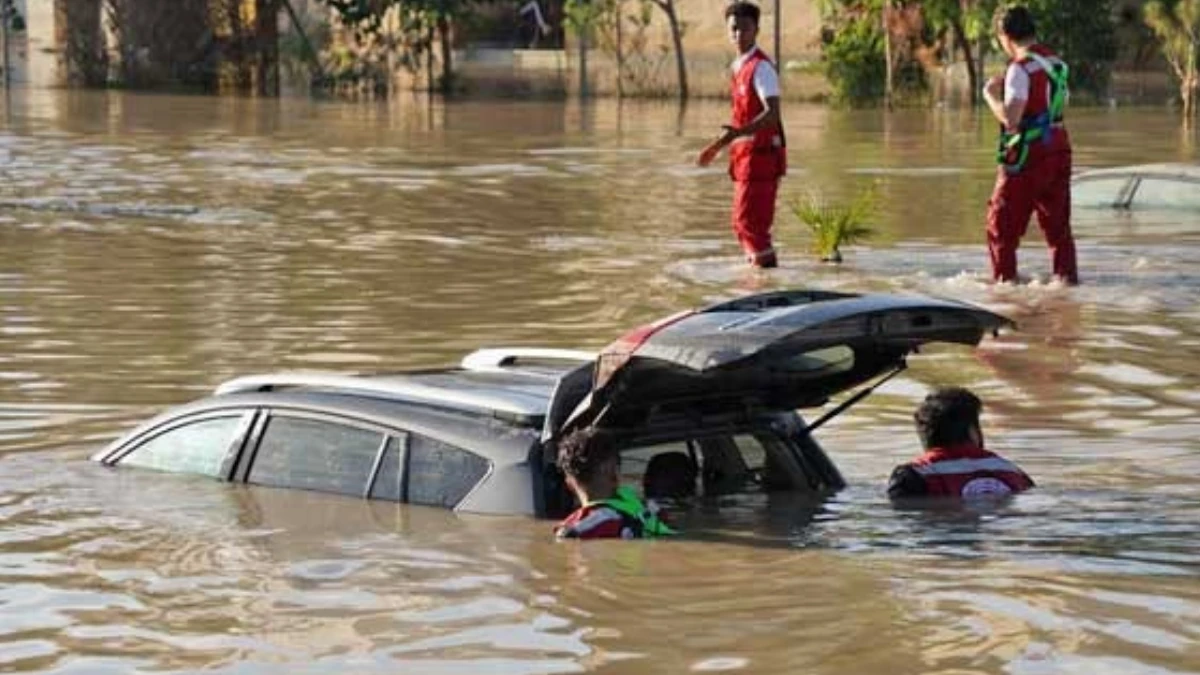
Flooding in Tripoli, Libya on October 14, 2026. Credit: Libya Red Crescent
The Government of National Unity identified two people who died during the flooding. A Jumhouria Bank employee was electrocuted while entering his workplace after rainwater reached electrical infrastructure, while lawyer Abdul Salam Daqimish drowned after his vehicle became submerged near Al-Hashan Bridge.
Some local and regional reports placed the death toll at three or four. The higher figures included two unnamed migrant workers. However, these have not been confirmed by any local authority at the time of reporting.
The NCM rainfall bulletin lists the Souq al-Jumaa measurement within the 24-hour observation period ending on October 14. The government said the rainfall was concentrated over about two hours, while the mayor of Central Tripoli told Reuters that the heavy rain lasted approximately 2.5 hours.
Souq al-Jumaa’s mayor declared the municipality a disaster area after roads were closed, entrances to neighborhoods became inaccessible, and homes were flooded.
The municipality declared October 14 a local holiday, excluding health, security, judicial, and other essential services, to allow pumping and road-clearing operations to continue.
The Emergency Medicine and Support Center (EMSC) said it received 907 emergency calls and 28 messages during the event. Its field teams responded to about 280 reports involving rescues, evacuations and assistance to people stranded by floodwater.
Operations extended across Souq al-Jumaa, Ain Zara, Al-Hashan, Al-Dahmani, Al-Ghararat, Arada, Abu Sitta, Janzour, Al-Farnaj and Zawiya Street. EMSC also reported that floodwater prevented children from leaving some schools and that teams evacuated them to safe locations; no number of evacuated children was published.
The General Water and Sewerage Company reported removing approximately 390 608 m³ (103.2 million US gallons) of rainwater during October 13 and 14. Crews treated 51 water-accumulation sites through 9 384 pumping-truck trips.
Pumping continued along Al-Shouk Road, in Salah al-Din and at several locations in eastern Tripoli. In Fashloum, crews installed a pump to remove water from a flooded basement after part of a commercial building collapsed.
The Tripoli Security Directorate initially closed the eastbound Second Ring Road from University Bridge. On October 14, the road remained closed in both directions after Zenata Bridge and near the Al-Bifi diversion while crews removed water, soil and debris.
Vehicles recovered from the flooded road were transferred to the Highway Traffic Department for collection by their owners. Housing and Construction Ministry teams inspected road washouts, marked remaining hazardous locations and identified sites requiring additional repairs.
Floodwater entered electrical substations, prompting the General Electricity Company to disconnect power preventively in affected areas. The company said electricity would be restored after the installations were secured, but it did not publish a customer-outage total.
The Government of National Unity deployed the National Safety Authority, General Water and Sewerage Company, Tripoli Public Services Company, EMSC, ambulance agencies and other emergency bodies. Interior Ministry patrols assisted stranded motorists, recovered disabled vehicles and directed traffic toward safer routes.
The University of Tripoli suspended classes on October 13. Jumhouria Bank also suspended operations at its Tripoli branches, while the Ministry of Health established an emergency committee to monitor potential health consequences and coordinate field operations.
The Ministry of Social Affairs began assessing damage to households and public facilities across Greater Tripoli. The government subsequently said eligible residents would be compensated and directed authorities to improve drainage infrastructure, activate early-warning systems and investigate deficiencies exposed by the flooding.
The government said newer sections of the Third Ring Road and Airport Road drained effectively, while older networks experienced failures. Souq al-Jumaa Municipality disputed the adequacy of existing infrastructure and called for an integrated stormwater system, a technical review of road projects and accountability for any deficiencies established by engineering assessments.
The NCM attributed the unsettled weather across northern Libya to a low-pressure system centered over Greece. By October 15, it forecast generally stable conditions across most of western Libya during the following two days, while rain remained possible over northeastern Libya, particularly Jabal al Akhdar, where additional water accumulation was possible in low-lying areas.
References:
1 Second rainfall victim recovered in Tripoli – Libyan News Agency – October 13, 2026
2 Second Ring Road remains closed because of accumulated rainwater – Libyan News Agency – October 14, 2026
3 Torrential rain in Libya’s Tripoli kills two – Reuters – October 13, 2026

Rishav Kothari is Editor-in-Chief of The Watchers, where he runs the newsroom and covers earthquakes, volcanoes, severe weather and space weather.
