
Tornadoes damage homes and infrastructure across multiple Midwest states on April 17
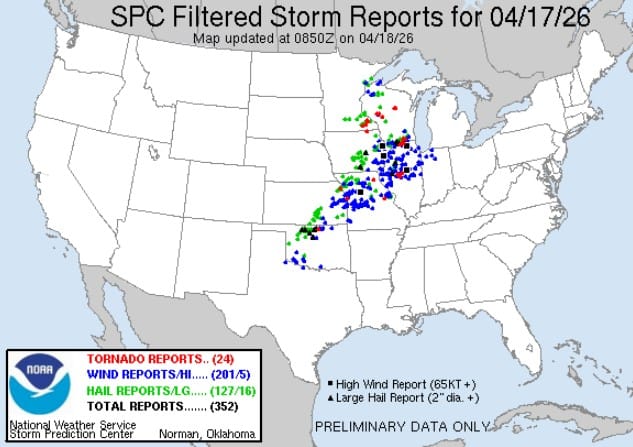
A severe weather outbreak produced multiple tornadoes across the Midwestern United States on April 17, 2026, resulting in structural damage to residential buildings and infrastructure in several states. Preliminary National Weather Service data indicates more than 20 tornado reports, with impacts concentrated in Wisconsin, Illinois, and Minnesota and extending into Missouri, and at least one reported injury.

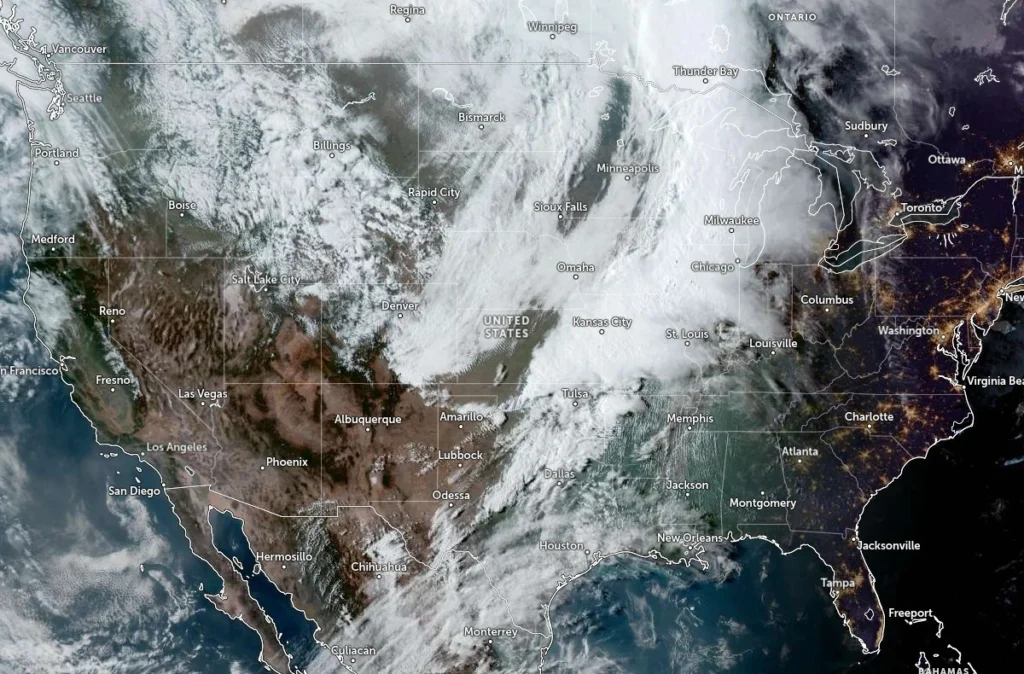
A severe convective system moved across the Midwest on April 17, producing multiple tornadoes, large hail, and damaging winds as it interacted with a warm, moist air mass ahead of an advancing cold front. The environment supported supercell thunderstorm development, allowing discrete storms to produce tornadoes before evolving into broader storm clusters.
Preliminary Local Storm Reports from National Weather Service (NWS) offices indicate more than 20 tornado reports across several states. The most significant impacts were reported in parts of Wisconsin, Illinois, and Minnesota, where tornadoes caused structural damage to residential buildings and infrastructure.
In Marathon County, Wisconsin, approximately 75 homes in the town of Ringle (population 1 711) sustained damage after a tornado moved through the area, according to local officials. The tornado reportedly started in Kronenwetter and moved north into Ringle.
Ringle Fire Chief Chris Kielman said some people were trapped in their basements, but no one was injured, and no one died. “Crews double-checked each affected property to make sure no one was inside. Several homes have been demolished.”
According to WSAW, displaced residents were taken to the D.C. Everest Middle School.
Additional damage was reported in Buffalo County, Wisconsin, where a confirmed tornado caused damage to multiple homes. Photographic evidence from the area showed structural damage consistent with tornadic winds, although detailed assessments of intensity and path length remain pending.

In Illinois, the town of Lena sustained significant structural damage, including impacts to school buildings and residential structures, according to local officials. Authorities restricted access to affected areas while conducting damage assessments. No injuries or fatalities were confirmed in the town.
Further south in Illinois, multiple tornado reports were logged across Winnebago County, including near Pecatonica, Shirland, and Roscoe.


In Minnesota, tornado activity was confirmed near the Rochester area in Olmsted County, where damage to homes was reported, and a temporary shelter for affected residents was established.

In Iowa, a tornado near Saratoga in Howard County resulted in one reported injury and damage to a residential structure and a vehicle, based on NWS Local Storm Reports supported by emergency responder confirmation.
Additional tornado reports were logged across Missouri, Kansas, and Oklahoma, including locations near Belton, Missouri, and Ponca City, Oklahoma. Some reports were based on radar signatures or preliminary observations and remain subject to verification.

Damage patterns across affected states included roofs removed from buildings, barns displaced from foundations, vehicles overturned, and widespread tree and power line damage.
In southeastern Minnesota, a tornado north of Elgin flipped a semi-truck and damaged multiple farmsteads, while another tornado near Plainview caused roof damage and structural displacement.
According to the NWS Storm Prediction Center Convective Outlook for Saturday, April 18, there is a slight risk of severe thunderstorms over parts of the upper Ohio Valley to the Appalachians. Isolated severe hail is also possible across parts of central Texas.
References:
1 Day 1 Convective Outlook – NWS/SPC – Issued 04:53 UTC on April 18, 2026
2 Storm Reports for April 17, 2026 – NWS/SPC – Accessed 08:00 UTC on April 18, 2026
Featured image: Tornado damage in Hatfield, WI on April 17, 2026. Credit: Live Storms Media (stillshot from the video)

Teo Blašković founded The Watchers in 2011 and edited it until 2026, covering seismic and volcanic activity, extreme weather, space weather and near-Earth objects. Articles on this page are his archive.
Published in the last 24 hours
- Hawaii's largest freshwater lake was 200 feet deep at 10 a.m. on June 2, 2018. By that afternoon, lava from Kilauea had boiled it away Epicenter
- Flying glass cut a teacher in Russia but none of her 44 pupils, because when a meteor flashed across the sky in 2013, she told them to get under their desks Epicenter
- A South Dakota man put the widest and heaviest hailstone on US record in his freezer, and a power cut melted part of it before NOAA measured it at 8 inches across and nearly 2 pounds in 2010 Epicenter
- Black kites and brown falcons in northern Australia have been seen snatching smoldering sticks from wildfires, flying them into unburned grass and dropping them, starting new fires that send lizards, rodents and insects running straight toward the waiting birds Epicenter
