
Kenya flood death toll rises to 71 as forecasters warn of renewed heavy rainfall
At least 71 people have died in flood-related incidents across Kenya since March 6, 2026, with Nairobi the hardest-hit area, as the Kenya Meteorological Department issued a Heavy Rainfall Advisory on March 18, warning that rainfall will intensify again across most parts of the country through March 24.
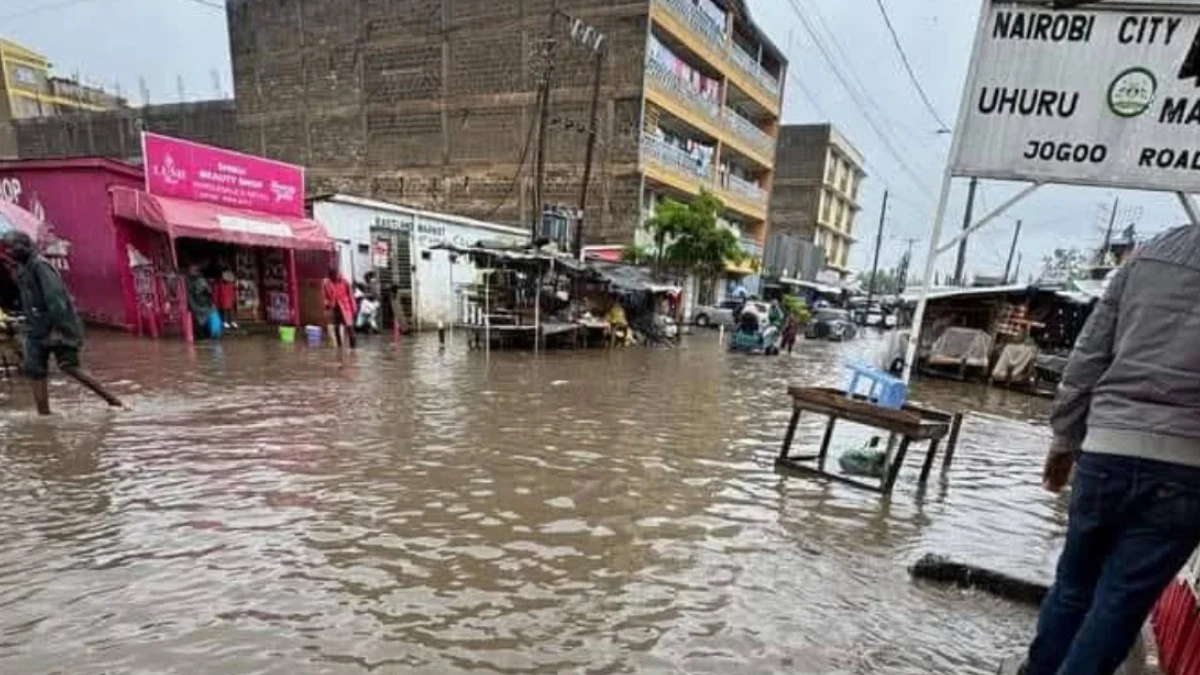
Flooding in Nairobi, Kenya on March 7, 2026. Credit: Manna Ministries International
The death toll for ongoing floods across Kenya has risen to 71, the Ministry of Interior and National Administration confirmed on March 17.
“Adult males account for the majority of the recorded fatalities following the tragic floods that have swept through our country,” the ministry said.
The previous toll was 66, reported on March 15, and rose after three deaths were reported in Nairobi and one in the Eastern and Coast provinces of Kenya.
Kenya Meteorological Department issued a Heavy Rainfall Advisory on March 18, forecasting 20 mm (0.8 inches) of rain in 24 hours on March 19 and continuing to intensify until March 24. Peak intensity is forecast from March 20 to 23. The rainfall totals, though small, will add to the ongoing flooding and increase the risk of landslides.
Moderate to heavy rainfall threat is forecast across the Lake Victoria Basin, the Rift Valley, and both highland regions east and west of the Rift Valley, including Nairobi.
Dozens of counties are at risk, including Nairobi, Kiambu, Nakuru, Kisumu, Mombasa, and Garissa, among others, with a 33–66% probability of heavy rainfall.
Residents were warned of flash floods, poor visibility, lightning hazards, and potential landslides, particularly over the Aberdare ranges and Mt. Kenya region. Officials also cautioned that flooding may occur downstream even in areas not experiencing heavy rainfall locally.
Flash floods had begun affecting the region since March 6–7, when overnight rainfall caused the Nairobi River to burst its banks.
Currently, a total of 36 fatalities have been confirmed in Nairobi, 19 in the Eastern Province, 8 in the Rift Valley, 4 in Nyanza, 3 in Coast, and 1 in the Central Province. Most of the fatalities were caused by the overflow of the Nairobi and Ngong Rivers.
At least 2 622 people have been displaced and sheltered, and several homes and roads have been destroyed; damage to power lines and water infrastructure has also been reported.

I am an Assistant Editor and Severe Weather & Science Journalist at The Watchers, specializing in real-time severe weather coverage, geophysical event reporting, and research-driven scientific analysis. You can reach me at rishav(at)watchers(.)news.

Commenting rules and guidelines
We value the thoughts and opinions of our readers and welcome healthy discussions on our website. In order to maintain a respectful and positive community, we ask that all commenters follow these rules.