
Dense fog triggers 59-vehicle pile-up on Highway 99, closing both directions for six hours, California
Dense fog covering California’s Central Valley early on January 31, 2026, led to a 59-vehicle crash on Highway 99 in Tulare County, closing the main north–south route for about six hours. Emergency crews treated 10 injured drivers and passengers while removing wreckage from the fog-covered roadway.
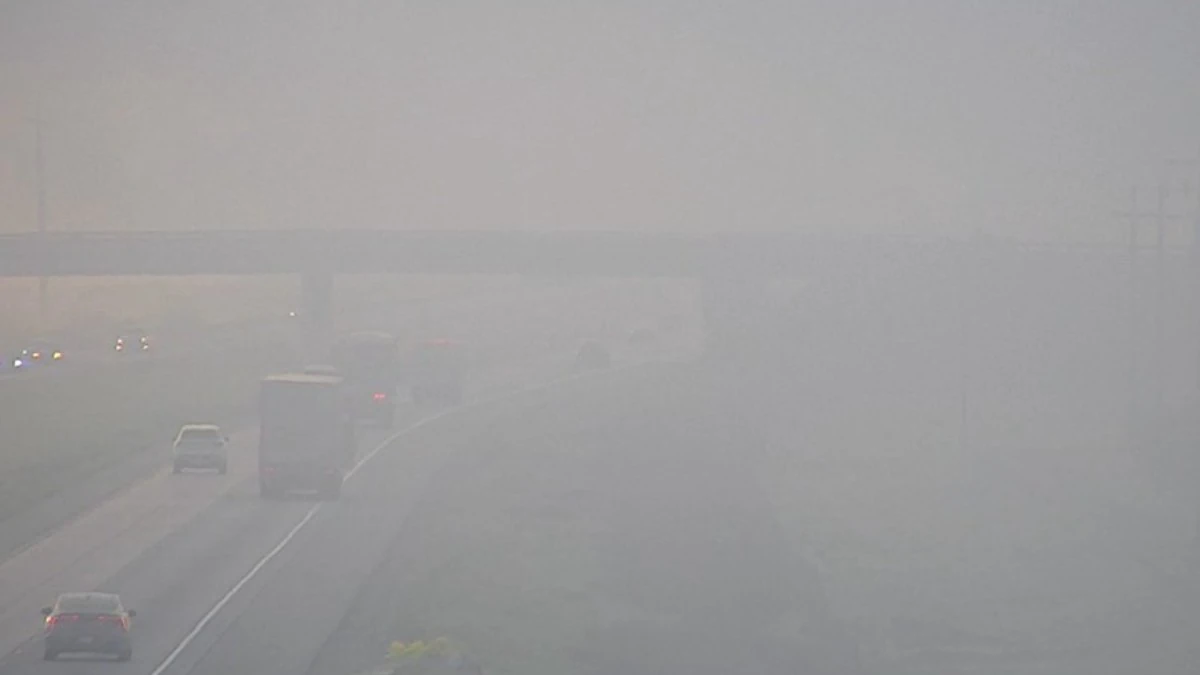
Dense fog in California on January 30, 2026. Credit: Caltrans
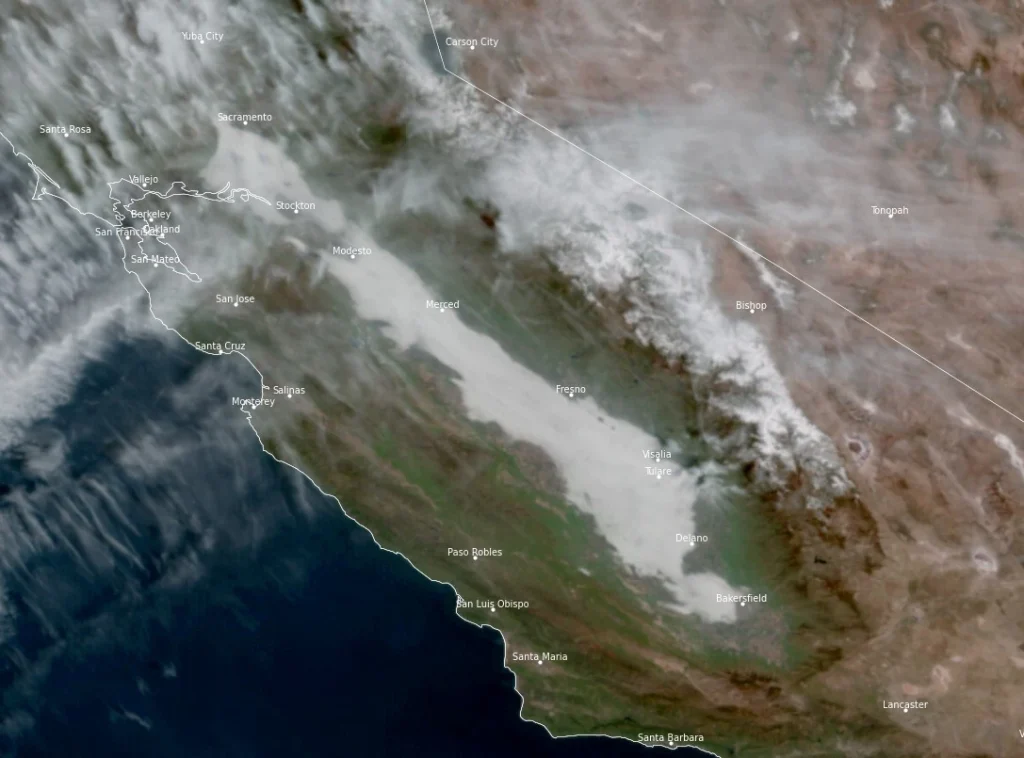
A chain-reaction collision involving 59 vehicles occurred on California State Route 99 at about 08:15 LT (16:15 UTC) on January 31, near Avenue 24 north of Delano in Tulare County. According to the California Highway Patrol (CHP), dense tule fog reduced visibility to 30–60 m (100–200 feet), causing a series of impacts in both traffic directions.
Both northbound and southbound lanes were closed for roughly six hours while emergency responders cleared wrecked vehicles and assisted motorists trapped in the fog.
The Tulare County Fire Department reported 10 hospitalizations for minor to moderate injuries. No fatalities were confirmed by CHP officials as of February 1.
Images from the scene showed passenger cars, trucks, and several semi-trailers stopped across multiple lanes. Tow trucks and cleanup crews worked through the morning to remove vehicles and spilled debris. The California Department of Transportation (Caltrans) reopened the highway around 14:00 LT (22:00 UTC).

Tule fog commonly forms in California’s Central Valley during winter when moist air becomes trapped beneath temperature inversions.
Under calm, high-pressure conditions, fog develops overnight and can persist after sunrise, drastically limiting visibility along regional highways. Visibility during Saturday’s event dropped below 30 m (100 feet) in some areas, creating conditions for multi-vehicle collisions within seconds.
Authorities reminded drivers that automatic headlights may not activate in dense fog and urged manual use of low-beam lights and reduced speed. CHP and Caltrans continue to review dash-cam and traffic-camera footage to reconstruct the sequence of impacts.
Tule fog events have historically caused major pile-ups in the Central Valley. In November 2007, a near-zero-visibility episode led to an 108-vehicle crash on Highway 99 near Fresno, killing two people and injuring dozens.
Winter fog hazards remain a recurring threat for motorists traveling between Bakersfield and Modesto during the cool season.
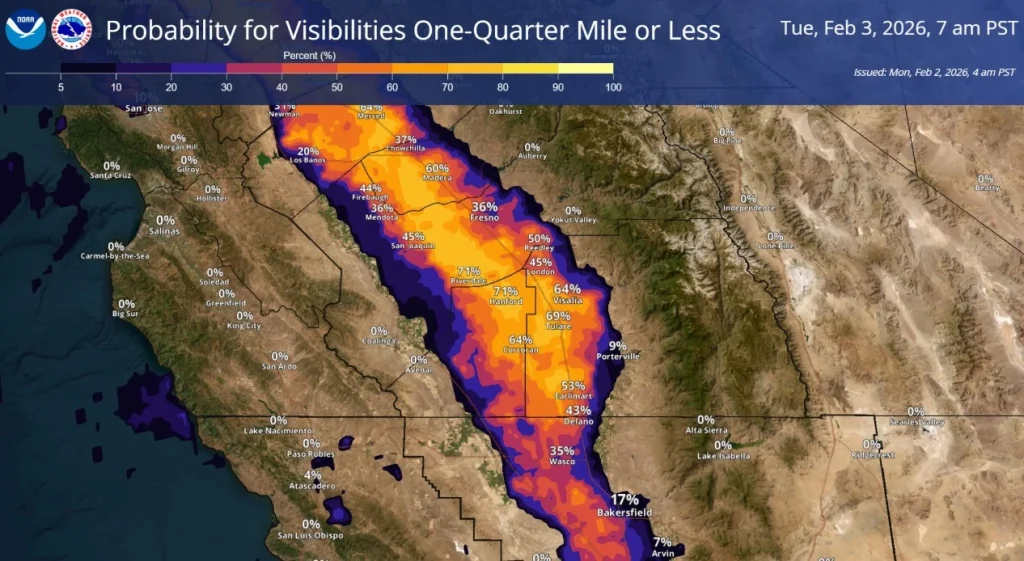
“There is very little change to the forecast over the next few days, as the upper level pattern remains stagnant over California,” meteorologists at the NWS office in Hanford, CA said. “As such, there is moderate confidence that dense fog will continue develop in the San Joaquin Valley on Tuesday (60-70%) and Wednesday (50-60%).”

Teo Blašković founded The Watchers in 2011 and edited it until 2026, covering seismic and volcanic activity, extreme weather, space weather and near-Earth objects. Articles on this page are his archive.
Published in the last 24 hours
- In September 1859, a solar storm lit up the night sky so brightly that gold miners in the Rocky Mountains woke up after midnight and started cooking breakfast, convinced the aurora glowing over their camp was the sunrise Epicenter
- A patch of warm Pacific water that could become the strongest El Niño in more than 70 years sits thousands of miles from any American town, yet it is already the main reason NOAA expects a wetter winter across the South and a milder one across the North
