
Flooded uranium mines in Russia’s Kurgan Region raise radioactive contamination fears
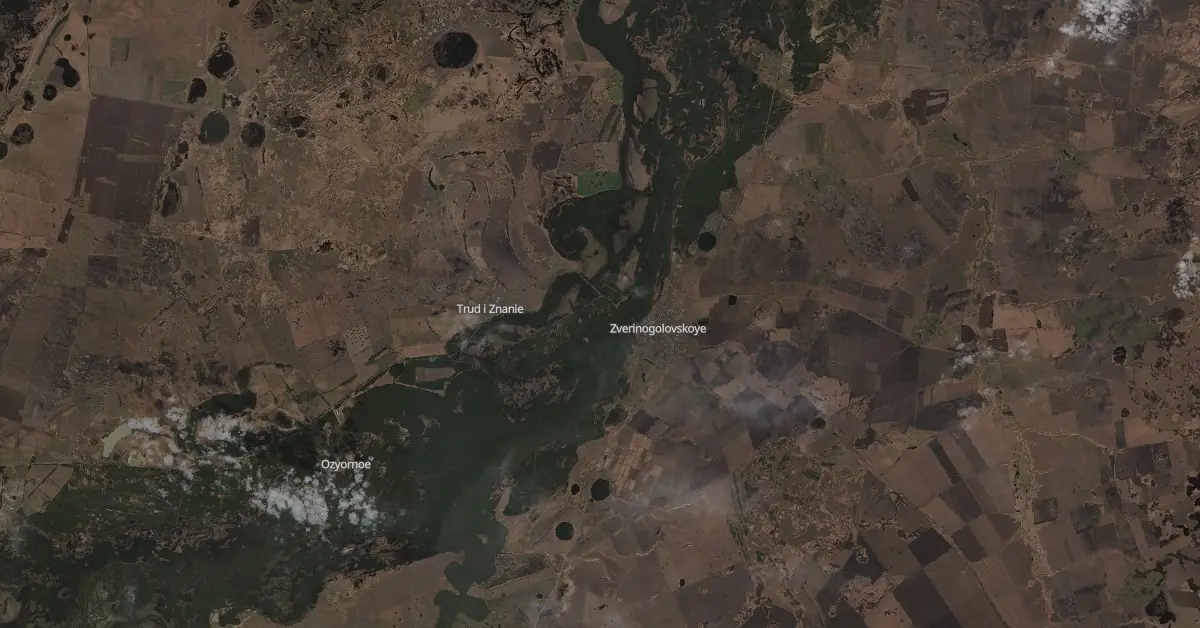
Image credit: Copernicus EU/Sentinel-2, The Watchers. Acquired on April 22, 2024
Severe flooding in Russia’s Kurgan region has inundated areas surrounding the Dobrovolnoye uranium deposit, leading to potential radioactive and chemical pollution in the Tobol River. This event was reported on April 21, 2024, by the investigative news outlet Agentstvo, citing local authorities and environmentalists.
The Kurgan region in Russia has experienced its worst flooding in decades this month, with significant concern over the potential leakage of radioactive materials from submerged uranium mines into the Tobol River. The Dobrovolnoye uranium deposit, identified within the flood zones of Kurgan’s Zverinogolovsky district, was highlighted in a map released by local authorities on April 11.
This area has seen extensive uranium mining activities, managed by a company under Rosatom, Russia’s state nuclear energy agency. According to NS Energy Business, the mine is estimated to be holding approximately 7 077 tons of uranium at a grade value ranging from 0.01 percent to 0.05 percent uranium.
Sergei Eremin, who leads the regional environmental group Foundation for Public Control Over the State of the Environment and the Well-Being of the Population, pointed out that a video recorded by a local resident suggests that an old well, which has been leaking uranium for 35 years, might already be submerged due to the flooding.
The mine is located between the villages of Zverinogolovskoye and Trud i Znanie.
Andrei Ozharovsky, a nuclear physicist, noted that some wells were improperly sealed, leading to ongoing leaks of uranium salts into the river while Alexei Shvarts, a former regional head with experience in uranium mining, voiced concerns to Agentstvo about the degradation of natural defenses against contamination.
Additionally, environmentalists fear that radioactive substances have already been introduced into the river system, posing a direct threat to the health and safety of hundreds of thousands residing downstream.
Despite the dilution effect of the Tobol’s waters, increased concentrations of uranium present a significant risk. Uranium, being both radioactive and chemically toxic, poses health risks at even low concentrations, particularly through drinking water leading to internal radiation exposure.
Local ecological activists have long opposed uranium mining in the region, pointing out the dangers of spring floods from the Tobol River. These concerns were historically ignored, as evidenced by the continued operations and previous incidents of flooding in the 1980s and a significant event in 1994.
Rosatom has rebutted claims of potential environmental impact, labeling the public’s concerns as “radiophobia combined with ignorance.” They maintain that the uranium deposits are well-isolated from the Tobol River through natural barriers, dismissing the possibility of any contamination.
References:
1 В Курганской области затопило старые урановые скважины. Экологи опасаются, что радиоактивный раствор попал в Тобол – Agentstvo – April 21, 2024
2 Информация о зонах подтопления – МУНИЦИПАЛЬНОЕ ОБРАЗОВАНИЕ ГОРОД КУРГАН – April 11, 2024
3 Russia’s Record Floods Submerge Uranium Mines in Urals – Reports – The Moscow Times – April 22, 2024
4 Radioactive Leak Threat in Russia as Flood Heads for Uranium Mines – Newsweek – April 22, 0224

Teo Blašković founded The Watchers in 2011 and edited it until 2026, covering seismic and volcanic activity, extreme weather, space weather and near-Earth objects. Articles on this page are his archive.
Published in the last 24 hours
- A meteorite blew a crater beside a village near Lake Titicaca in 2007, and dozens of villagers who went to see it got headaches and nausea, though tests found nothing the rock had added to the water Epicenter
- The people who pay closest attention to the weather are the ones storms have already cost the most, a study of 946 students found, with one damaging storm making little difference to how much attention a student paid, but two or more making a clear one Epicenter
- The sea is falling in Juneau, Alaska, because land freed from melted glaciers is rising about 0.6 inches a year Epicenter
- A dam above Los Angeles collapsed just before midnight on March 12, 1928, and the flood killed more than 400 people, hours after the engineer who built it had spent two hours looking at a new leak and decided there was no danger Epicenter

Well they just moved it “lower in the source.” translated literally.
classified it under “violent and graphic content”
just saying; You can delete the comments, You don’t need to publish.
Take a good care!
Facebook is pestering me for sharing this. I’ll see what happens.
To holistically healthy conscious awareness and human evolution!