
Twelve grains of Kuiper Belt dust preserve evidence of an ancient water reservoir beyond the giant planets
Scientists analyzing 12 microscopic dust particles linked to the Kuiper Belt found evidence that water in the distant early Solar System carried far more of the heavy oxygen isotopes ¹⁷O and ¹⁸O than familiar inner-system material. The finding provides a rare physical constraint on a long-predicted water reservoir and on how effectively matter moved between the outer and inner Solar System as the planets formed.
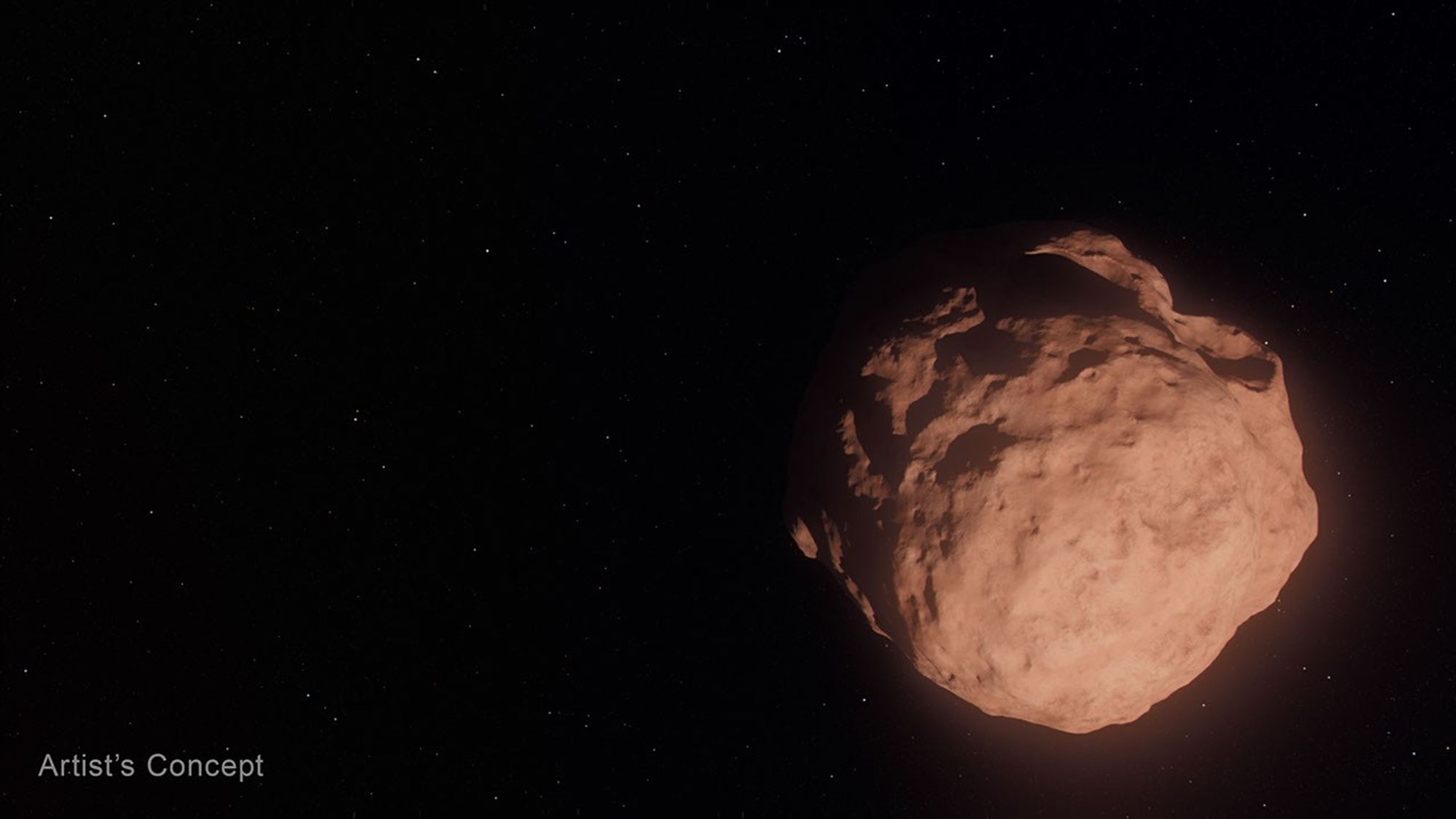
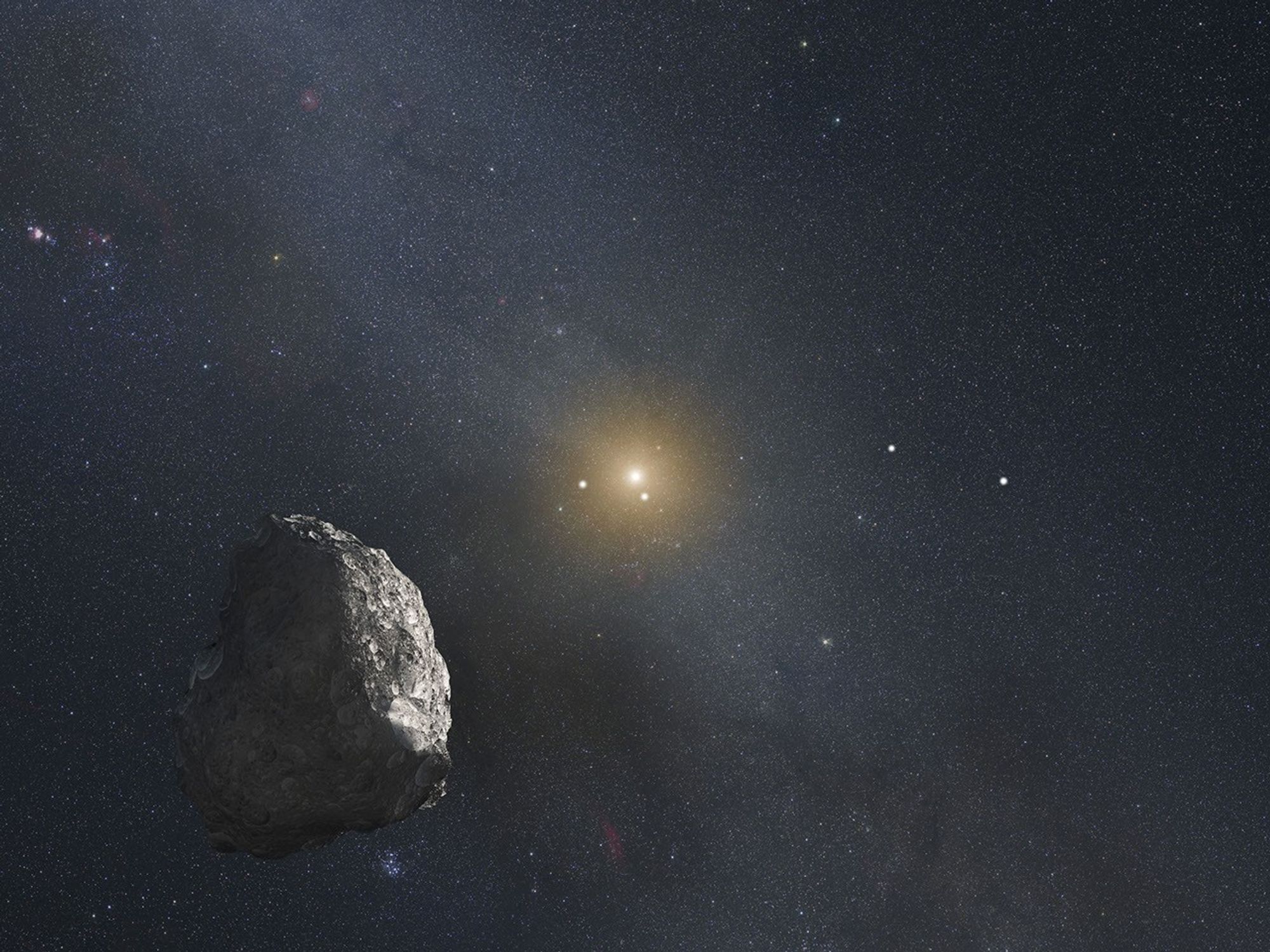
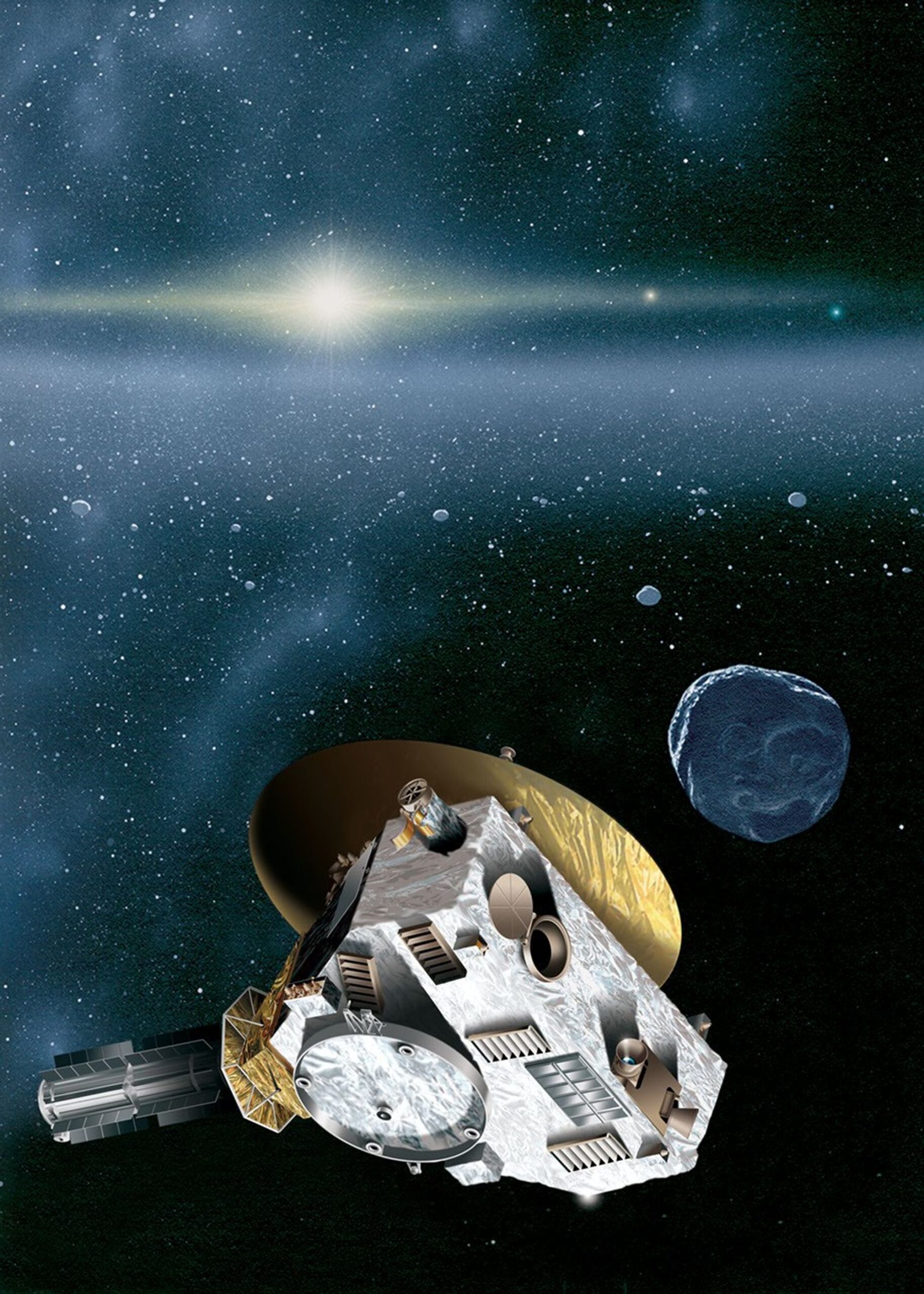
Artist's concept of a trans-Neptunian object, one of the small icy bodies orbiting beyond Neptune. The image provides context for the outer Solar System population associated with the dust in the study; it does not depict a specific parent body of the 12 analyzed grains. Artwork: NASA, ESA, Leah Hustak (STScI)
For decades, oxygen-isotope measurements posed a problem for models of the young Solar System. Material returned by NASA’s Genesis mission established that the Sun is comparatively rich in oxygen-16, while Earth and many meteorites contain proportionally more oxygen-17 and oxygen-18. Models could produce a complementary reservoir of water depleted in oxygen-16, but material preserving such an extreme composition remained exceptionally scarce.
Keller et al. (2026) now place that reservoir in a part of the Solar System where directly sampled material is extremely limited. Their analysis combines mineralogy, oxygen-isotope measurements and exposure histories from 12 hydrated interplanetary dust particles associated with Edgeworth-Kuiper Belt objects. The grains preserve evidence that water beyond the giant planets had a markedly different oxygen-isotope composition from the water recorded by most hydrated meteorites formed closer to the Sun.
Dust from an otherwise difficult-to-sample region
The particles reached Earth naturally and were collected from the stratosphere through NASA’s cosmic-dust program. Before atmospheric entry, interplanetary grains accumulate microscopic damage tracks when energetic particles from the Sun pass through crystalline minerals such as olivine and pyroxene.
The track-rich particles examined in the study contain about 1010 to 1011 solar energetic-particle tracks/cm2, equivalent to about 1014 to 1015 tracks/m2. Keller and colleagues report that those densities are approximately two orders of magnitude above values expected for particles delivered from main-belt asteroids or Jupiter-family comets. The long exposure history therefore provides an independent constraint linking the particles to the distant outer Solar System.

The 12 particles are tiny even by ordinary dust standards. The samples selected for the study were approximately 10 to 30 µm across, while ultrathin sections prepared for transmission electron microscopy were only about 50 to 70 nm thick.
Scale guide: how small are the samples?
A micrometre (µm) is one millionth of a metre. The 10 to 30 µm particles studied here are therefore 0.010 to 0.030 mm across. A nanometre (nm) is one billionth of a metre; the laboratory sections cut for transmission electron microscopy were approximately 50 to 70 nm thick.
Their mineralogy is dominated by hydrated clay minerals, mainly saponite with lesser serpentine. The grains also contain FeNi sulfides, Mg-Fe carbonates, rare surviving anhydrous silicates and abundant carbonaceous material. Their bulk carbon abundance averages about four times that measured in CI chondrites, among the most chemically primitive meteorites known.
The grains contain the aftermath of water-rock reactions
The particles are not fragments of preserved ancient liquid water or intact pieces of Kuiper Belt ice. Their importance comes from hydrated minerals formed when water chemically altered originally dry mineral material on their parent bodies.
At low temperatures, precursor silicates reacted with H2O-CO2-bearing fluids and produced clay minerals. The researchers therefore treated the clay-rich material as a chemical archive of the fluid that once passed through it.
Researchers at NASA’s Johnson Space Center examined the mineral structures and chemical compositions using electron microscopy. At UCLA, the team used a CAMECA ims-1290 ion microprobe to measure the relative abundance of the three stable oxygen isotopes: ¹⁶O, ¹⁷O and ¹⁸O.
Oxygen isotopes are useful tracers because materials that formed or reacted in different chemical reservoirs can preserve different proportions of the three isotopes. The hydrated Kuiper Belt particles occupy an oxygen-isotope trend distinct from known groups of hydrated carbonaceous chondrites, despite having mineralogy that in several respects resembles highly altered primitive meteorites.
| Evidence | Status | What it establishes |
|---|---|---|
| Solar energetic-particle tracks | Measured | Unusually long exposure consistent with an outer Solar System origin |
| Hydrated clay minerals | Observed | The precursor material underwent aqueous alteration |
| Oxygen isotope ratios | Measured | The hydrated grains differ isotopically from most hydrated meteorites |
| Ancient water isotope composition | Reconstructed | The altering fluid was strongly depleted in ¹⁶O and enriched in heavy oxygen isotopes |
| Saturn as a transport barrier | Interpretation + model context | Provides a mechanism that could explain limited mixing between reservoirs |
Reconstructing water that no longer exists in the sample
The ancient water itself was not measured. Keller and colleagues used mass balance between the isotope composition of the hydrated particles and plausible anhydrous precursor materials to calculate the composition of the fluid responsible for alteration.
The average reconstructed fluid has a δ¹⁸O value of about +155 ± 17‰ and a δ¹⁷O value of about +143 ± 32‰, with Δ¹⁷O of about +62 ± 34‰. The reported analytical uncertainties are 2σ values.
What do δ¹⁸O and Δ¹⁷O mean?
δ¹⁸O describes how the ratio of oxygen-18 to oxygen-16 in a sample differs from Standard Mean Ocean Water. A value of +155‰ means that the reconstructed ¹⁸O/¹⁶O ratio is approximately 15.5% above the reference ratio. Δ¹⁷O is a separate quantity used to describe departures from normal mass-dependent relationships among the three oxygen isotopes. It is important because unusually large Δ¹⁷O values can preserve evidence of distinct chemical reservoirs and mass-independent isotope processes in the early Solar System.
A δ¹⁸O value of +155‰ corresponds to an ¹⁸O/¹⁶O ratio approximately 15.5% higher than the Standard Mean Ocean Water reference ratio. In physical terms, the reconstructed fluid contained substantially less oxygen-16 relative to the heavier oxygen isotopes than terrestrial reference water.
The researchers explicitly treat the reconstructed composition as an upper-limit estimate. Clay minerals contain structural hydroxyl as well as more weakly bound interlayer water. That loosely bound water can be lost before atmospheric entry or under the high vacuum used during secondary-ion mass spectrometry, meaning it is not represented in the bulk isotope measurements used for the reconstruction.
The study measures altered minerals and reconstructs the ancient water. It does not directly measure surviving Kuiper Belt water.
Keep reading
Why “heavy water” can be misleading here
The phrase “heavy water” in the paper differs from its usual chemical meaning. Conventional heavy water refers to water enriched in deuterium, the heavy isotope of hydrogen, most recognizably D2O. Keller et al. are describing water whose oxygen is strongly enriched in the heavier stable isotopes ¹⁷O and ¹⁸O.
The distinction is essential. The study’s principal evidence does not establish a reservoir of deuterium-rich D2O, and hydrogen-isotope terminology should not be substituted for the oxygen-isotope result.
A reservoir scientists had expected but struggled to locate
The oxygen-isotope problem predates the new measurements. Solar-wind samples returned by NASA’s Genesis mission established that the Sun is rich in ¹⁶O relative to terrestrial planets and most meteorites. A widely discussed class of photochemical models produces ¹⁶O-rich gas together with relatively ¹⁶O-poor water in the molecular cloud or protoplanetary disk.
The expected heavy-oxygen reservoir has nevertheless been difficult to identify in physical material. Simple two-reservoir models derived from primitive meteorites previously produced much more moderate reconstructed Δ¹⁷O values of roughly +7 to +9‰. An exceptionally ¹⁶O-poor signature with Δ¹⁷O near +80‰ had been found in rare cosmic symplectite from the Acfer 094 meteorite, but that material is uncommon and its history does not establish the location of a major Solar System water reservoir.
Other outer-system measurements provide additional context. The Rosetta mission measured ¹⁶O-depleted water in comet 67P/Churyumov-Gerasimenko, while NASA’s Stardust mission returned solid particles from comet Wild 2. Sample provenance and preservation remain important limitations, however, particularly because fine-grained Wild 2 material was altered during high-speed capture in aerogel.
The isotope difference also records limited mixing
The new particles matter because their oxygen-isotope signatures and their outer-system exposure histories occur in the same samples. That allows the researchers to connect a strongly ¹⁶O-poor alteration reservoir with material associated with the Edgeworth-Kuiper Belt rather than relying only on meteorites whose original formation locations can be difficult to establish.
The mineralogy adds another distinction. Hydrated IDPs resemble CI chondrites in the extent of aqueous alteration but differ in important details. They lack the abundant Ca-rich carbonates typical of highly evolved CI alteration assemblages, nearly all lack magnetite, and their carbon abundance is substantially higher.
Keller and colleagues interpret those differences as evidence that the Kuiper Belt particles experienced alteration under conditions different from those recorded by CI and CM meteorites. Short-lived hydrothermal systems, low-temperature reaction kinetics, restricted water-to-rock ratios or more reducing carbon-rich conditions could have prevented the grains from reaching the mineralogical and isotopic equilibrium seen in extensively altered meteorites.
The scarcity of material with the same extreme heavy-oxygen signature in hydrated meteorites formed closer to the Sun becomes part of the study’s larger interpretation. If material had mixed efficiently across the entire protoplanetary disk, comparable particles should be more common in inner-system populations.
The authors conclude instead that the outer reservoir remained largely isolated from the carbonaceous-chondrite formation region and other parts of the inner Solar System.
A possible barrier near Saturn
The researchers propose that the forming giant planets helped preserve this separation. Their discussion gives particular attention to Saturn, with Uranus and Neptune also considered as possible contributors to the restriction of inward material transport.
Solid particles embedded in a protoplanetary disk do not simply remain where they formed. Their interaction with surrounding gas normally causes them to lose orbital energy and drift toward the Sun. A pressure maximum can change that motion by creating a region where drifting particles slow, accumulate or stop moving inward.
Hydrodynamic simulations cited by Keller et al. predict that such a pressure bump could have developed exterior to Saturn during the first few million years of Solar System history. In that scenario, the barrier would have reduced radial transport of material from the distant outer disk toward the regions where carbonaceous meteorite parent bodies formed.
The grains do not directly record Saturn creating such a barrier. Their measured evidence consists of mineralogy, chemistry, oxygen-isotope compositions and solar energetic-particle exposure tracks. The connection to Saturn and the other giant planets comes from combining those observations with the rarity of comparable material in meteorites and with numerical models of disk transport.
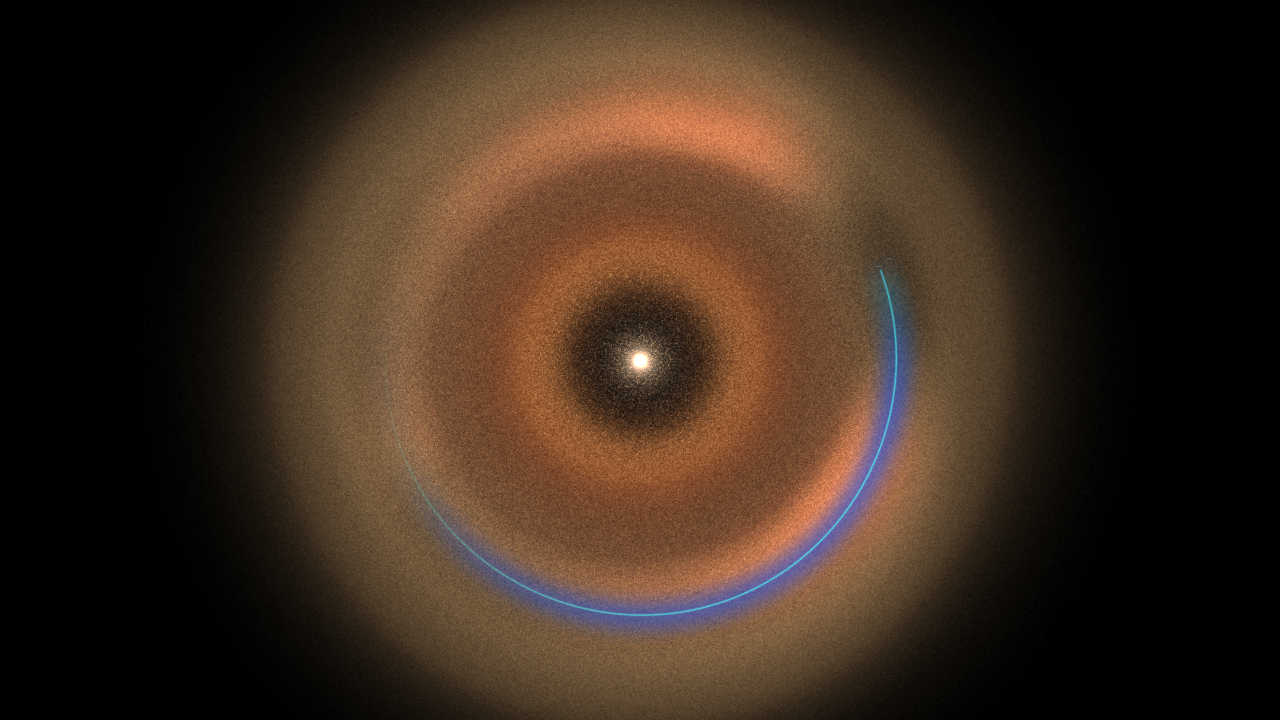
Video: the Kuiper Belt as a planetary frontier
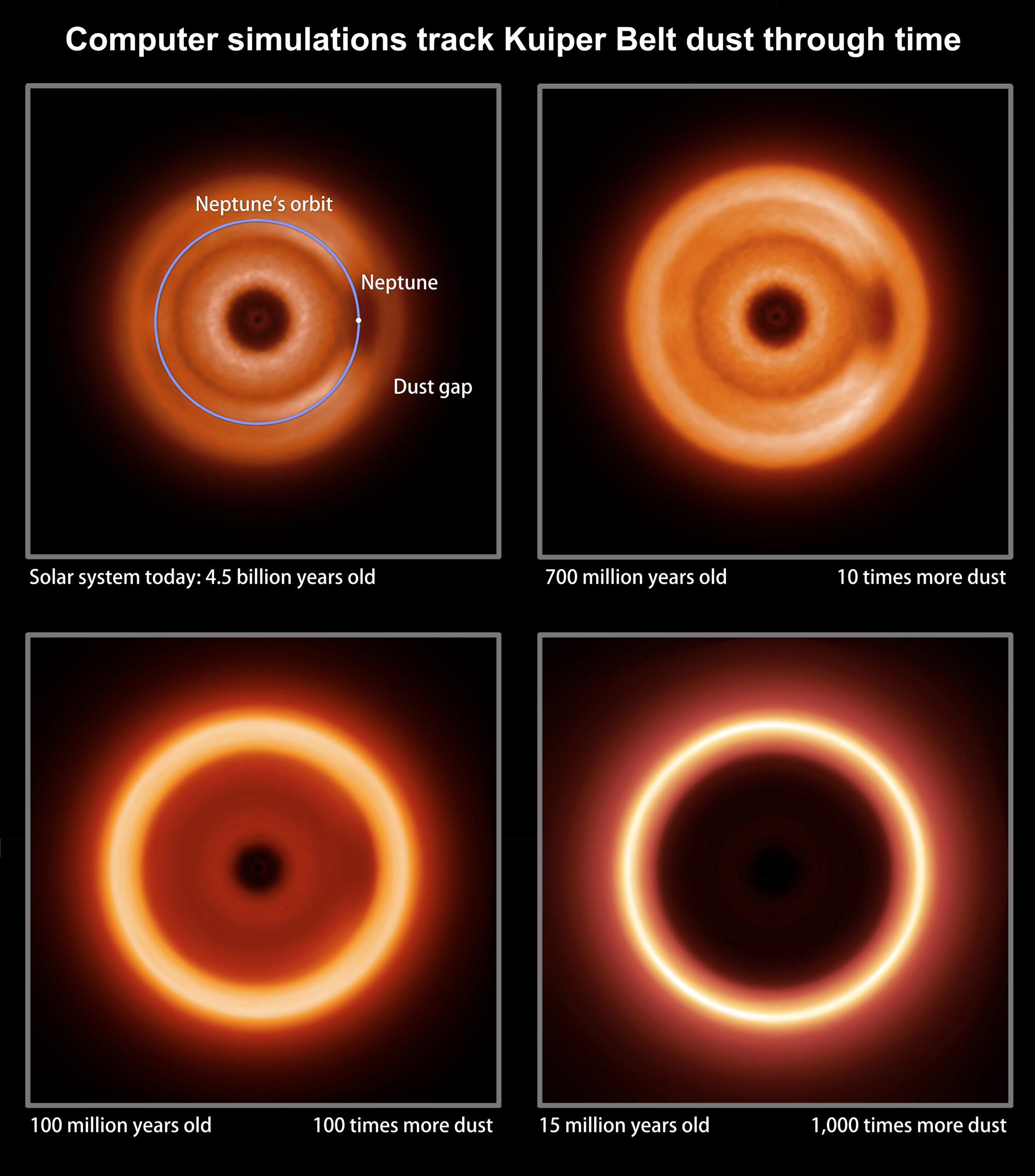
NASA simulation: how Kuiper Belt dust evolves
What the 12 grains can and cannot establish
The study offers access to material from a region that remains difficult to sample directly, but its boundaries are important. Only 12 hydrated particles were analyzed. Their individual parent bodies are unknown, and their association with the Edgeworth-Kuiper Belt comes from accumulated solar energetic-particle tracks rather than an observed trajectory from a named object to Earth.
The ancient fluid composition is also reconstructed rather than measured from surviving water. Its calculation depends on the assumed composition of the precursor material and on alteration reactions that convert those starting minerals into the observed hydrated assemblage.
Evidence boundary: direct, reconstructed and interpreted
Directly measured or observed: particle mineralogy, chemistry, oxygen-isotope composition and solar energetic-particle tracks.
Reconstructed: the isotope composition of the ancient water that altered the precursor material.
Interpreted: that the reconstructed reservoir was a major outer Solar System water reservoir and remained largely separated from inner-system material.
Model-supported explanation: giant planets, particularly Saturn, restricted inward radial transport through pressure structures in the protoplanetary disk.
The calculated fluid values additionally represent an upper limit because loosely bound interlayer water is excluded from the mass-balance treatment. The authors instead calculate the fluid composition from structural hydroxyl retained within the hydrated minerals.
Those limitations leave a clear route for testing the interpretation. Analysis of more hydrated, track-rich particles could determine whether the extreme isotope signature is widespread across Edgeworth-Kuiper Belt material or restricted to particular parent bodies. Better constraints on precursor mineralogy and alteration conditions would narrow the reconstructed water composition, while future samples of known outer Solar System provenance could test how representative the stratospheric particles are.
The result therefore adds something that meteorites alone have struggled to provide: a physical population of water-altered grains with both an unusual oxygen-isotope signature and an independent exposure history pointing to the distant Solar System. How broadly that reservoir extended, which parent bodies experienced aqueous alteration, and precisely how the giant planets separated the early disk remain open questions.
References:
1 Keller, L. P., Snead, C. J., Liu, M.-C., & McKeegan, K. D. (2026). A primordial heavy water reservoir in the outer solar system. Science Advances, 12(46), eaeg1602. DOI: 10.1126/sciadv.aeg1602
2 NASA Scientists Find Clues to Ancient Ice Beyond Neptune – NASA Science – November 18, 2026
3 UCLA and NASA researchers identify ancient water reservoir in outer solar system – UCLA Division of Physical Sciences – November 16, 2026

Rishav Kothari is Editor-in-Chief of The Watchers, where he runs the newsroom and covers earthquakes, volcanoes, severe weather and space weather.
More reporting
- NASA selects 302 small-business projects for lunar power, robotics and surface infrastructure
- Euclid image reveals how faint the star system behind SN 2024vjm had to be
- NASA turns California lidar surveys into high-resolution maps of wildfire fuel structure
- Hera finds DART transformed Dimorphos in ways Earth-based observations could not resolve
