
Des Moines breaks single-day snowfall record set in 1895, Iowa

Image credit: ISP-Trooper DeVault
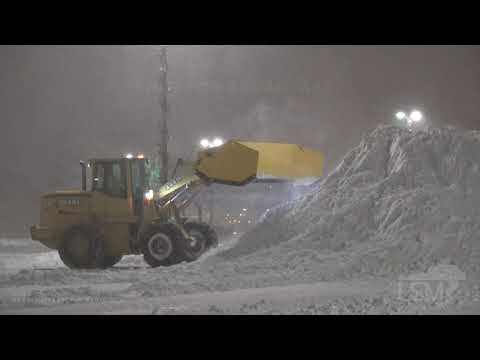
Des Moines in Iowa set a new single-day snowfall record on Monday, January 25, 2021, after the city recorded up to 26.2 cm (10.3 inches), breaking the previous record of 25.4 cm (10 inches) set in 1895.
Snow started falling Monday noon in central Iowa and continued into Tuesday morning, creating hazardous travel conditions across the state.
The weather also disrupted flights into and out of Des Moines International Airport, while many school districts were prompted to dismiss or cancel classes.
By the end of Monday, the city registered 26.2 cm (10.3 inches) of snow, according to the National Weather Service (NWS). It smashed the record for January 25, previously set when 25.4 cm (10 inches) of snow fell 126 years ago, in 1895.
@EdWilsonWX13HD @JeriannWX @WHOWeather @NWSDesMoines @BrettMcWx @WXMegs @StormChaserTodd @IAStormChasing @AmberAwx I-245E lots of ice & near white out at times. When cars are not crawling, they're disappearing!!! 1/25/21 @ 2:38 to 2:52 pic.twitter.com/CiurND2eCK
— Alysia Jean (@BBChickBrueck) January 25, 2021
I80 blocked westbound near Atlantic. Traffic backed up for a couple miles stopped! Visibility and roadway conditions are deteriorating EXTREMELY fast! Multiple vehicles stuck on lanes behind the crash! Extremely dangerous! Travel NOT advised!!! Please stay home! pic.twitter.com/xXg8fe71d6
— ISP-Trooper DeVault (@TrooperDeVault) January 25, 2021
70 second video timelapse as intense snow storm strikes Des Moines today – instances of very low visibility and heavy snowfall rates on I-235. @iowadot @NWSDesMoines #iawx pic.twitter.com/MSLdjBimsW
— MN Safety (@SafetyAlertsMN) January 26, 2021
53 Seconds of blowing snow, including some cool snow swirls or snow devils on the UNI Campus. They were forming in an eddy behind the clock tower, and I could stand right up in them. Cool stuff. @NWSDesMoines #iawx pic.twitter.com/zkKlPz8ss6
— Casey Shanaberger (@WxCjs) January 26, 2021
Between Monday morning to Tuesday noon, the Iowa State Patrol responded to 147 crashes, eight of which resulted in injured passengers. Crews also responded to 45 stalled vehicles.
By Tuesday noon, 32.8 cm (12.9 inches) of snow had fallen in the airport, marking the 12th highest two-day snow total in the city's history and snowiest storm in Des Moines since a blizzard dumped 39.4 cm (15.5 inches) over December 8 to 9 in 2009.
NWS meteorologist Taylor Nicolaisen told the Associated Press that it's not common for the region to get more than a foot of snow from a single storm, adding that it has been decades since some cities had this much snow.

Published in the last 24 hours
- High Risk of excessive rainfall covers Florida’s Space Coast as St. Johns River near Cocoa reaches 5.67 m
- Male toads abandoned a pond in Italy five days before a deadly 2009 earthquake, while a scientist was counting them Epicenter
- An asteroid was spotted 19 hours before it exploded over Sudan in 2008, and students picked its pieces off the desert Epicenter
- A wave up to 3 m (10 feet) high rose out of Lake Michigan on a sunny June morning in 1954 and swept fishermen off Chicago’s piers, and when a second came 10 days later, warnings had cleared the shore Epicenter
