
Six killed, over 5 000 affected by incessant rains in Sri Lanka

Image credit: @senior_tamilan/Twitter
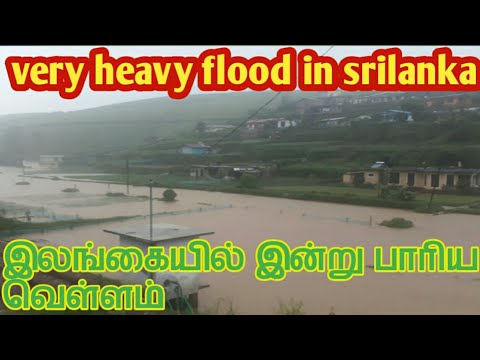
Six people have been killed and more than 5 000 affected by days of strong winds and heavy rains that triggered flooding and landslides across Sri Lanka, the Disaster Management Center confirmed on Monday, December 2, 2019.
Four out of the six fatalities were in the Nuwara Eliya district in the central highlands, which was also one of the worst-hit areas.
More than 120 houses have been partially or totally damaged. Over 600 people had been evacuated to safer locations.
The Disaster Management Center added that tri-forces had been deployed in many of the affected areas and were conducting rescue missions since then.

A landslide warning has been issued for several districts including Ratnapura. Residents near landslide-prone areas have been warned to vacate promptly.
According to the Meteorology Department's weather update on December 2 issued at 07:00 UTC, further rains were expected in the following days due to the northeast monsoons.
"Prevailing showery condition is expected to continue over the island next few days," the agency said. "Fairly heavy showers about 75 to 100 mm (3 to 4 inches) are likely at some places in Central, Uva, Sabaragamuwa, Western, Southern provinces and in Mullaitivu, Trincomalee and Batticaloa districts."
3 people dead in #landslide in #Walapane #SriLanka pic.twitter.com/oew2ZAfEqT
— Vidiyal.lk (@Vidiyallk) December 1, 2019
Due to heavy rain already there are some minor landslides reported. #rain #landslide #accident #SriLanka pic.twitter.com/Epx5kYQL9j
— Ahmed Naveeth (@AhmedNaveeth) December 1, 2019
Rainfall will decrease in coverage and intensity across S #India starting Tuesday. A weak low can lead to heavier rain in #SriLanka later Wednesday into Friday. Low near #Lakshadweep can become more well marked over the next day or so before dissipating over the AS late week. pic.twitter.com/6s4FjDD0op
— Jason Nicholls (@jnmet) December 2, 2019
"General public is kindly requested to take adequate precautions to minimize damages caused by temporary localized strong winds and lightning during thundershowers."

Published in the last 24 hours
- Second nationwide US flight halt since 9/11: how the November 13 FAA ground stop compares with September 2001 and January 2023 Epicenter
- FAA grounds all departing flights across the US after communications outage hits air traffic control centers nationwide
- In September 1859, a solar storm lit up the night sky so brightly that gold miners in the Rocky Mountains woke up after midnight and started cooking breakfast, convinced the aurora glowing over their camp was the sunrise Epicenter
- A patch of warm Pacific water that could become the strongest El Niño in more than 70 years sits thousands of miles from any American town, yet it is already the main reason NOAA expects a wetter winter across the South and a milder one across the North
