
The electrochemistry of Comets with Dr. Franklin Anariba
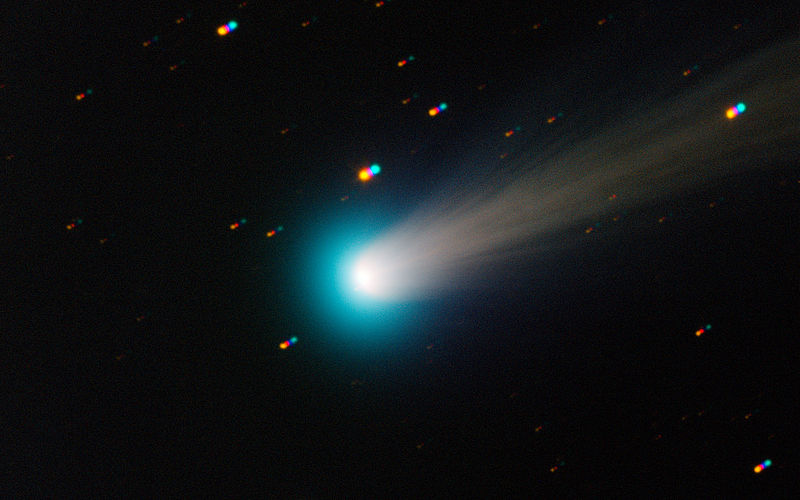
Featured image: Comet ISON. Credit: ESO/TRAPPIST
It is a great paradox in comet science: We are told that a comet nucleus is a ball of ice, or dirty snowball, or icy fluff ball that accreted billions of year ago in the solar system’s infancy. Comets are said to sublimate ices as they move toward the sun, and solar warming is responsible for much cometary activity. Yet this reasoning leaves unexplained countless puzzles in comet science. We ask the question, can the science of electrochemistry provide an answer to many comet mysteries?

Dr. Franklin Anariba, a specialist in electrochemistry, was a featured speaker at The Thunderbolts Project’s international conference EU2013: The Tipping Point. Dr. Anariba is also scheduled to speak at the forthcoming EU2015: Paths of Discovery, taking place June 25 – 29, Phoenix, Arizona, USA. https://www.thunderbolts.info/wp/2015…
We now present you in full Dr. Anariba’s 2013 talk, Cometary Electrochemistry: Can Electrochemical Processes Occur In Comets? Transcript of this talk: https://www.thunderbolts.info/wp/2015…
Previous video on mysterious water production from comet Tempel 1: https://www.youtube.com/watch?v=O1f99…
Why Don't Comets Melt in the Sun: https://www.youtube.com/watch?v=mRRpc…
Video courtesy of The Thunderbolts Project

The Watchers team and our contributors bring the latest on extreme weather, earthquakes, volcanic eruptions, space weather, and all things science. We're all about making sense of the natural world and keeping you informed on what’s happening. Got a tip or a question? Hit us up using the form at newstips!
Published in the last 24 hours
- Four small asteroids will pass close to Earth from November 21 to 23
- Male toads abandoned a pond in Italy five days before a deadly 2009 earthquake, while a scientist was counting them Epicenter
- An asteroid was spotted 19 hours before it exploded over Sudan in 2008, and students picked its pieces off the desert Epicenter
- A wave up to 3 m (10 feet) high rose out of Lake Michigan on a sunny June morning in 1954 and swept fishermen off Chicago’s piers, and when a second came 10 days later, warnings had cleared the shore Epicenter
