
Donald Scott: Parker Solar Probe and the Electric Sun
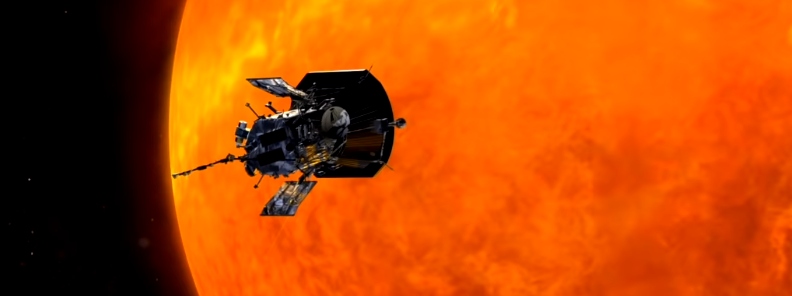
Image credit: NASA. Video courtesy The Thunderbolts Project
The first scientific papers were published on the NASA Parker Solar Probe mission’s earliest findings in December 2019.
The first four papers have suggested a number of "surprising" discoveries, including the speed of the solar wind rotating around the Sun, and the behaviors of dust particles that the probe has encountered at its perihelion.
From the perspective of the Electric Sun model, perhaps the most intriguing discovery to date is the "unexpected" changes in the Sun’s magnetic field that the probe has detected as it moves through the plasma environment.
In part one of this two-part presentation, a retired professor of electrical engineering Dr. Donald Scott begins his analysis of the Parker Probe data.

The Watchers team and our contributors bring the latest on extreme weather, earthquakes, volcanic eruptions, space weather, and all things science. We're all about making sense of the natural world and keeping you informed on what’s happening. Got a tip or a question? Hit us up using the form at newstips!

THE SUN IS EXTERNALLY POWERED THROUGH ITS MAGNETIC FIELD, JUST LIKE OUR OWN PLANET.
The atmosphere of the sun is identical to the atmosphere of the earth in many ways. Earth’s magnetic field, predominantly dipolar at its surface, is distorted further out by the solar wind. This is a stream of charged particles leaving the sun’s corona and accelerating to a speed of 200 to 1000 Km. per second. They carry with them a magnetic field, the interplanetary magnetic field (IMF). The solar wind is responsible for the overall shape of earth’s magnetosphere, and fluctuations in its speed, density and direction. It is the same thing with the cosmic energy that powers the sun. This cosmic energy carries with it magnetic field that causes the temporary changes in the direction of local magnetic field of the sun.