
Mid-June East Coast low-end derecho satellite imagery by GOES-14
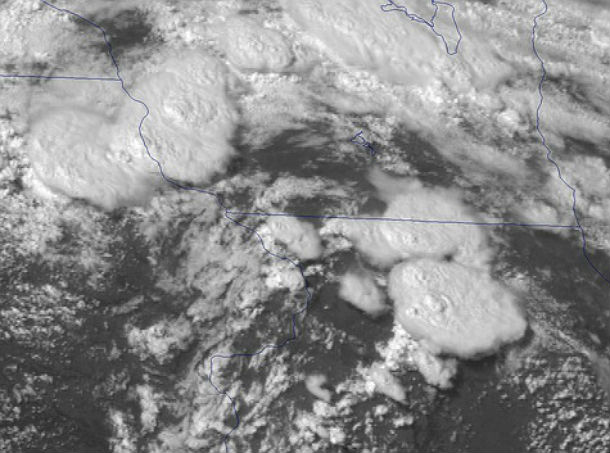
Featured image: GOES-14 0.63 µm visible channel image (Credit: NOAA/CIMSS)
For the past week, forecast models showed unstable conditions that could lead to significant severe weather events. NOAA put the GOES-14 satellite in Super Rapid Scan Operations mode on June 12 and 13, 2013 to monitor the ongoing severe bow echo/low-end derecho event that was moving across the eastern US. The satellite took images every minute in a truncated scan area, resulting in very detailed imagery of the storms developing out of the upper Midwestern U.S.
This movie bellow shows all of the available visible images from 09:20 UTC on June 13, 2013 through 01:29 UTC on June 14, 2013.

According to the SPC storm reports, these storms produced a wide swath of damaging winds (with gusts as high as 78 mph in Virginia), along with some large hail (up to 2.75 inches in diameter in Maryland).
Source: NOAA Visualisations

Published in the last 24 hours
- A broad low over southeastern Florida and the northwestern Bahamas has a 30 percent chance of subtropical or tropical development within 48 hours and a 50 percent chance within 7 days, the National Hurricane Center says
- High Risk of excessive rainfall covers Florida’s Space Coast as St. Johns River near Cocoa reaches 5.67 m
- Asteroid 2026 WJ to pass Earth at 1.7 lunar distances at 04:20 UTC on November 22, with 2026 WD following at 4.4 lunar distances on November 23
- Cyclone Akvan crossed the north Andhra Pradesh and south Odisha coasts close to Gopalpur on November 20 with 70-80 km/h winds gusting to 90, and has weakened into a deep depression



