
Don’t miss Orionid meteor shower this weekend as Earth passes Comet Halley debris
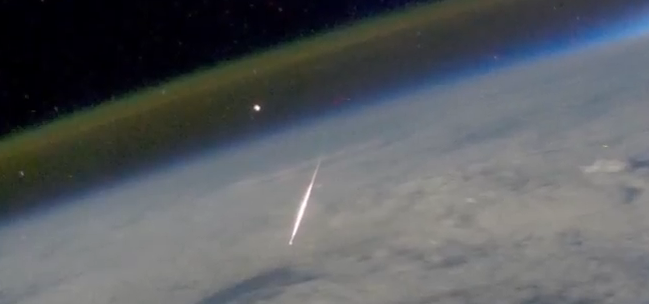
Image credit: TW
The debris from famous Comet Halley strike Earth’s atmosphere usually in late October of every year. In 2012 the view of its debris on Earth, also called Orionids, will be seen most fully from October 20 – 22 and peak on the morning of Sunday, October 21. Forecasters from NASA expect 25 meteors per hour on peak time.
Viewing conditions will be favorable this year as the peak will occur just after the first quarter moon (48% full). A fairly thin Waxing Crescent Moon will set before midnight.
The Orionid meteor shower, usually shortened to the Orionids, is the most prolific meteor shower associated with Halley’s Comet. The Orionids are so-called because the point they appear to come from, called the radiant, lies in the constellation Orion. The Orionids are one of two annual meteor showers produced by icy pieces of Halley’s Comet. The other shower, called the Eta Aquarids, peaks each year in early May.

Halley’s Comet returns to the inner solar system every 75 or 76 years, and it’s bright enough to be seen by the naked eye. The comet’s last appearance in our skies came in 1986, and the next is due in 2061.
The shower’s radiant point is close to the celestial equator which means in both the northern and southern hemispheres astronomers can sit back and enjoy the show.


Teo Blašković founded The Watchers in 2011 and edited it until 2026, covering seismic and volcanic activity, extreme weather, space weather and near-Earth objects. Articles on this page are his archive.
Earlier reporting
Nothing on Watchers was published in the last 24 hours. These are older articles.
- Asteroid 2026 WA passed Earth at 126,400 km, about a third of the Moon's distance, at 07:59 UTC on November 17
- On October 22, 2017, a single flash of lightning stretched 515 miles from eastern Texas to near Kansas City, a distance that takes eight hours to drive, and nobody realized how far it had gone until scientists went back through the satellite data years later Epicenter
- CPC posts a slight risk of heavy rain from the Gulf Coast to the Northeast urban corridor November 25-29, and a moderate risk of West Coast wind and Sierra snow on November 25
- Florida's east coast faces a moderate flash flood risk Wednesday through Friday, with 4 to 8 inches of rain forecast and the St. Johns River near Cocoa already in major flood at 17.13 feet

[…] More on this year’s Orionid meteor shower here. […]