
Sotarà volcano in Colombia on orange alert level, 6900 earthquakes since June 24th
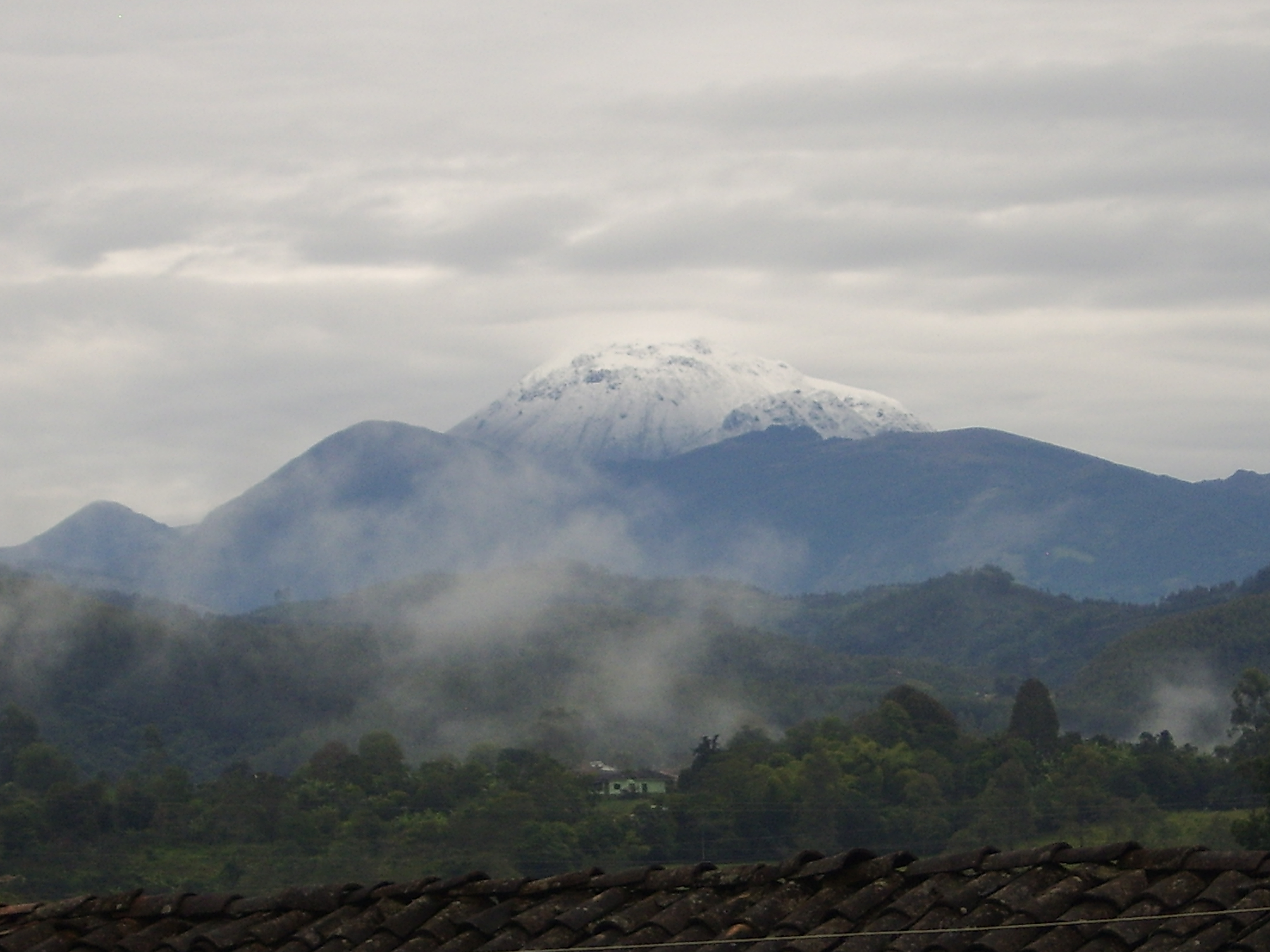
Image credit: TW
The recent increase in seismic activity under Sotarà volcano, Colombia promted INGEOMINAS to raise the alert level from yellow (unrest) to orange (eruption warning) on August 8, 2012.
The increase had been detected on June 24, 2012 and since that date, 6891 earthquakes have been recorded, i.e. an average of 150 quakes per day. Most of them (5177) are of very small magnitude, but the remaining 1714 quakes were of significant energy (local magnitudes 0.1-2.2) and concentrated in an area between 0.1 and 5 km northeast of the volcanic summit at depths between 2 and 6 km. None of these events were felt by inhabitants of the communities surrounding the volcano Sotará.
The deformation network shows a possible inflation process towards the northeast sector of the volcano, which correlates with the epicentral zone of seismicity reported and suggest that magma is rising there, and might (or might not) lead to an eruption in a near to medium future. During the month of July geochemical surveys showed no significant changes in temperatures of hot springs in the area. INGEOMINAS stresses that this activity does not pose any immediate danger to the communities aroud the volcano.
However, it should be said as well that this could change quickly.
Sotarà’s latest eruption date is unknown.
Volcán Sotará, also known as Cerro Azafatudo, is a little-known andesitic-dacitic stratovolcano located about 25 km SSE of Popayán city in southern Colombia, SW of Puracé volcano. Three calderas, 4.5, 2.5, and 1 km in diameter, are found on Sotará, giving the summit an irregular profile. No historical eruptions are known from Sotará, however the volcano currently displays fumarolic and hot spring activity.
Sources: EDIS, volcano.si.edu

Teo Blašković founded The Watchers in 2011 and edited it until 2026, covering seismic and volcanic activity, extreme weather, space weather and near-Earth objects. Articles on this page are his archive.
Published in the last 24 hours
- High Risk of excessive rainfall covers Florida’s Space Coast as St. Johns River near Cocoa reaches 5.67 m
- Asteroid 2026 WJ to pass Earth at 1.7 lunar distances at 04:20 UTC on November 22, with 2026 WD following at 4.4 lunar distances on November 23
- Cyclone Akvan crossed the north Andhra Pradesh and south Odisha coasts close to Gopalpur on November 20 with 70-80 km/h winds gusting to 90, and has weakened into a deep depression
- A broad low over southeastern Florida and the northwestern Bahamas has a 30 percent chance of subtropical or tropical development within 48 hours and a 50 percent chance within 7 days, the National Hurricane Center says

[…] Sotarà volcano in Colombia is ready to blow. The other ones around the world smoking away are listed here. Share this:ShareEmailFacebookStumbleUponLike this:LikeBe the first to like this. […]