
Impact of solstice solar flare is expected on June 24th
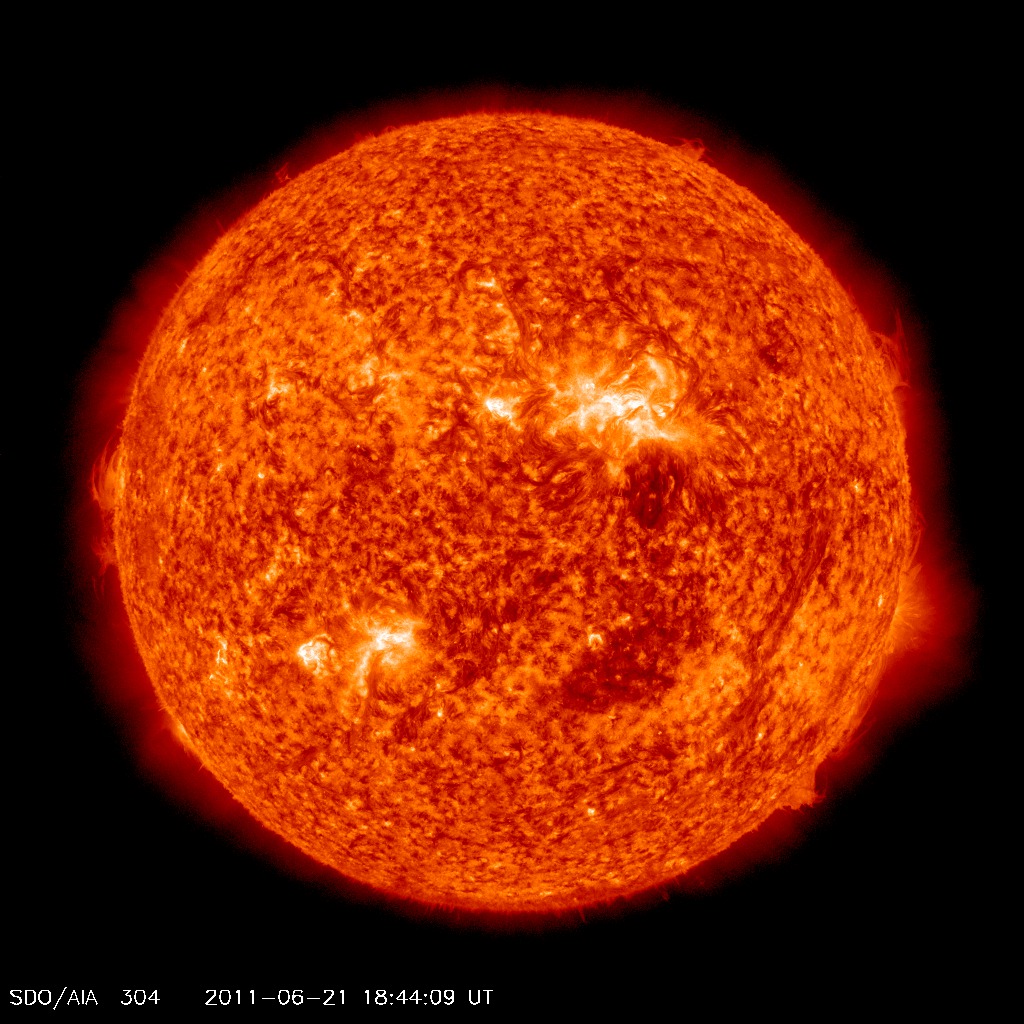
Image credit: TW
A CME propelled toward Earth by the “solstice solar flare” of June 21st may be moving slower than originally thought. Analysts at the GSFC Space Weather Lab have downgraded the cloud’s probable speed from 800 km/s to 650 km/s. Impact is now expected on June 24th at 0700 UT plus or minus 7 hours. In this animated forecast model, the yellow dot is Earth:
 A slower CME should deliver a weaker blow to Earth’s magnetic field. Forecasters now predict a relatively mild G1-class (Kp=5) geomagnetic storm when the cloud arrives. High-latitude sky watchers should be alert for auroras during the early hours of June 24. The season favors observers in the southern hemisphere where solstice skies are winter-dark. (SpaceWeather)

Earlier reporting
Nothing on Watchers was published in the last 24 hours. These are older articles.
- On October 22, 2017, a single flash of lightning stretched 515 miles from eastern Texas to near Kansas City, a distance that takes eight hours to drive, and nobody realized how far it had gone until scientists went back through the satellite data years later Epicenter
- CPC posts a slight risk of heavy rain from the Gulf Coast to the Northeast urban corridor November 25-29, and a moderate risk of West Coast wind and Sierra snow on November 25
- Florida's east coast faces a moderate flash flood risk Wednesday through Friday, with 4 to 8 inches of rain forecast and the St. Johns River near Cocoa already in major flood at 17.13 feet
- Cyclone Akvan to make landfall between Nellore and Visakhapatnam around noon on November 20, IMD forecasts 120-130 km/h winds gusting to 145
