• Late April visibility window allows blue auroras over Arctic regions

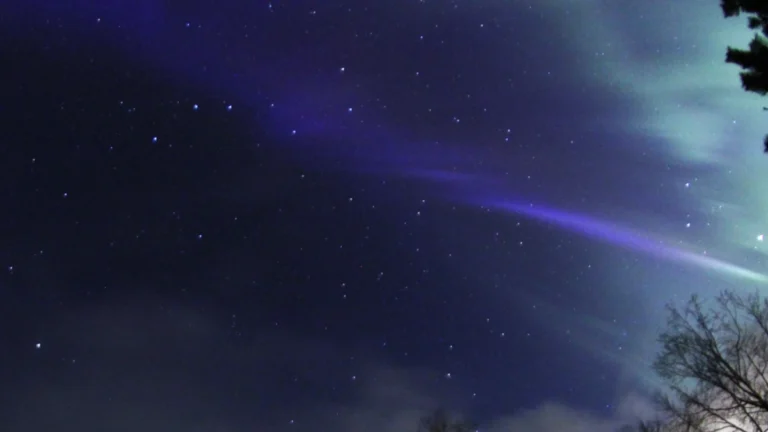
    Blue auroras could be possible over Arctic regions in late April 2026 as seasonal solar geometry allows sunlight to illuminate the upper atmosphere while ground-level skies remain sufficiently dark. The phenomenon is linked to ionized nitrogen emissions that are typically too faint to detect but can be amplified under these conditions.

  • Three killed in Sweden as Storm Johannes sweeps across Nordic countries

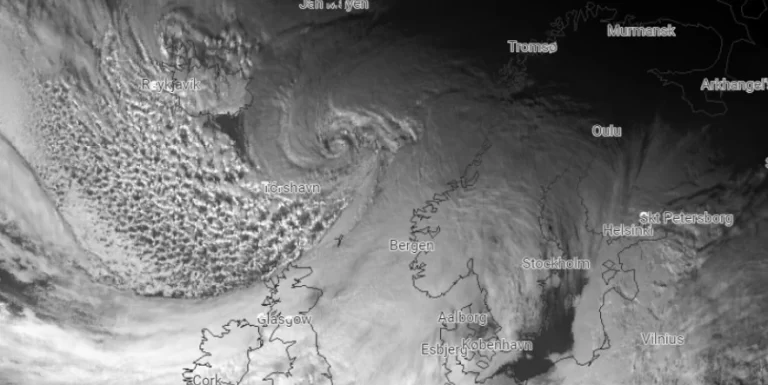
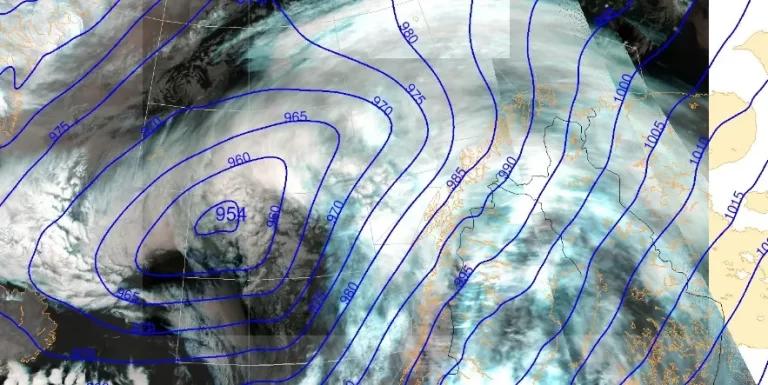
    A powerful winter storm named Johannes swept across the Nordic countries over the weekend, killing three people in Sweden and leaving hundreds of thousands without electricity across Sweden, Norway, and Finland. Sweden’s Meteorological and Hydrological Institute (SMHI) issued widespread alerts for strong winds as the system moved north. The storm, known as Hannes in Finland, also caused major travel disruptions, grounding flights and halting rail and ferry traffic.

  • Strong M6.5 earthquake hits Jan Mayen, Norway

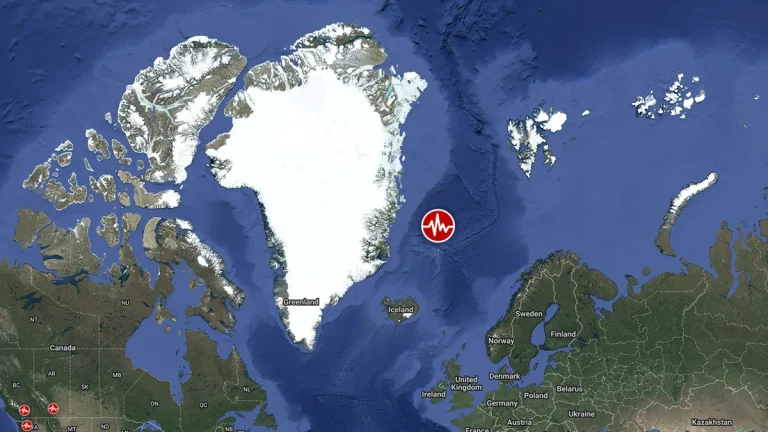
    A strong earthquake registered by the USGS as M6.5 hit near the coast of Jan Mayen, Norway at 02:33 UTC on March 10, 2025. The agency is reporting a depth of 10 km (6.2 miles). EMSC reported a slightly higher magnitude of M6.6 with the same depth.

  • Snowstorm paralyzes southern Norway, leaving thousands without power

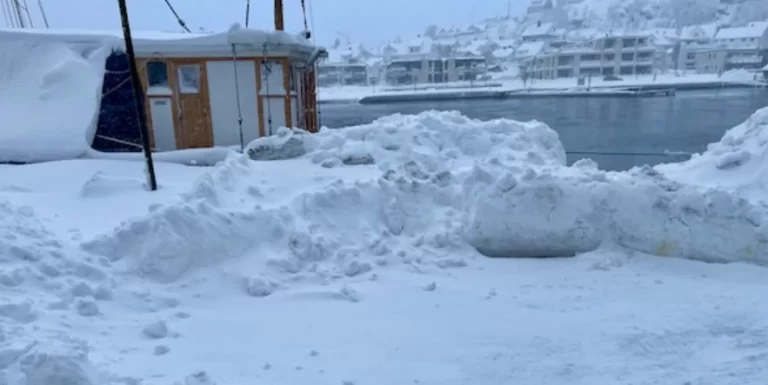
    Thousands of Norwegians have been trapped in snowdrifts across the southern part of the country, leading to widespread transport disruptions and power outages. State meteorologists have warned of continued heavy snow and strong winds, as municipalities scramble to manage the crisis, closing schools and deploying emergency services.

  • Borealis Mud Volcano – Unique new volcano discovered in the Barents Sea

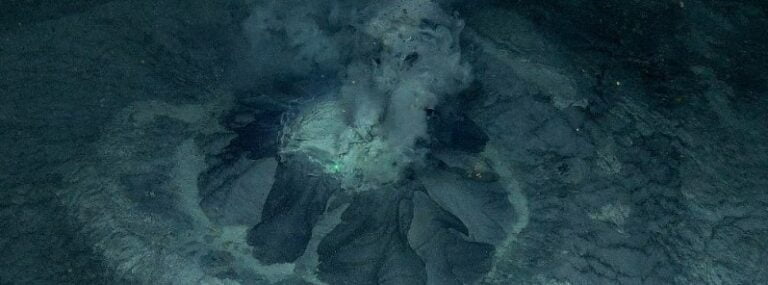
    Scientists from UiT, The Arctic University of Norway, in collaboration with REV Ocean, discovered a unique new volcano in the Barents Sea. The Borealis Mud Volcano, located at a depth of 400 m (1 312 feet) and approximately 130 km (80 miles) south of Bear Island, continuously emits mud, fluids and gas, providing valuable insights into Earth science.