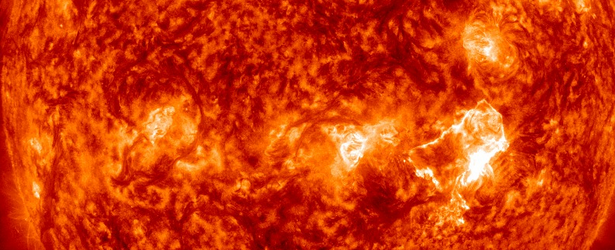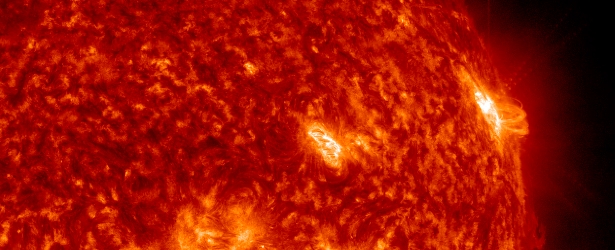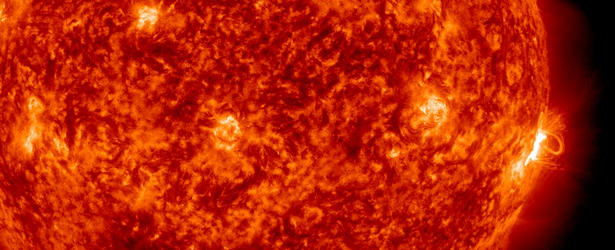
• Long duration M6.5 solar flare erupted from Region 2027

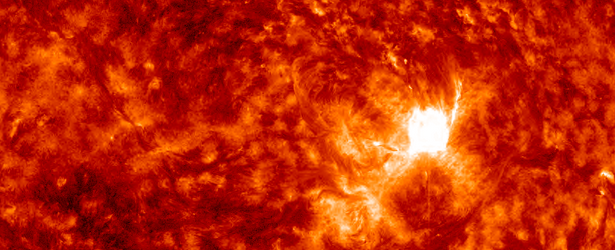
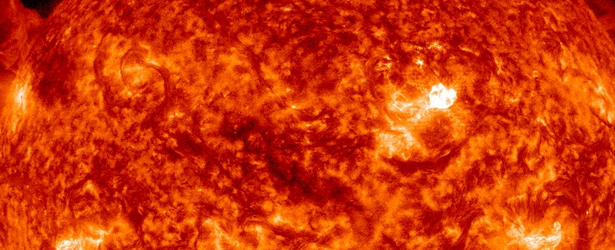
    Strong, long duration, solar flare measuring M6.5 erupted from Region 2027 on April 2, 2014. The event started at 13:18, peaked at 14:05 and ended at 14:28 UTC.

    A Type II and IV Radio Emission with estimated velocity of 903 km/h were observed

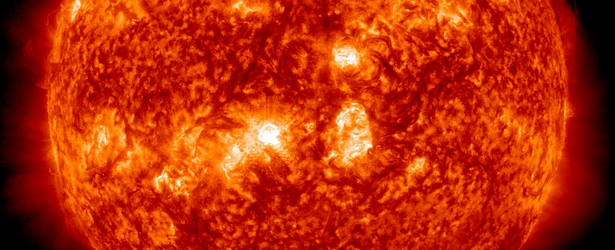
  • Region 2017 unleashed moderately strong M2.6 solar flare

    Region 2017 unleashed a second moderately strong solar flare on March 28, 2014. This event peaked as M2.6 solar flare at 23:51 UTC, and like the previous one (M2.0), it was associated with Type II radiation sweep. Estimated speed of this event was 857

  • Moderately strong M2.0 solar flare erupted from Region 2017

    A moderately strong solar flare reaching M2.0 erupted from Region 2017 on March 28, 2014 at 19:18 UTC. A Type II radiation sweep with estimated velocity of 528 km/s was registered at 19:18 UTC. Type II emissions typically indicate a Coronal Mass Ejection is

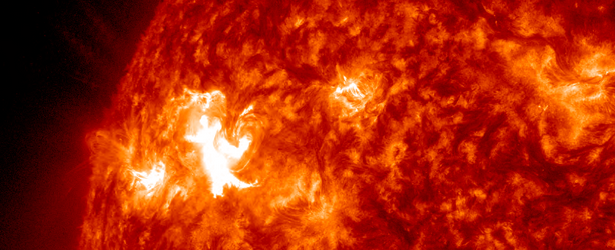
  • Near X-class solar flare and geomagnetic storm – M9.3

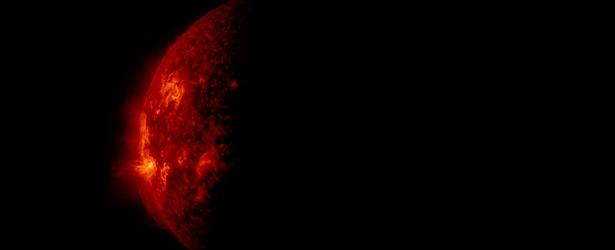
    Near X-class solar flare reaching M9.3 erupted from departing Sunspot 1996 on March 12, 2013 at 22:34 UTC.

    This decaying sunspot is located near eastern limb and generated CME was not geoeffective, however, it produced a R2 (Moderate) Solar Flare Radio Blackout

  • Solar activity back to moderate levels, M2.5 from Region 1996

    After major X4.9 solar flare that erupted on February 25 from Region 1990 [during its 3 rotation on the Earth side of the Sun] we almost had no day without a moderate eruption. Since then, solar observatories recorded 16 M-class solar flares ranging from M1.0 to M3.5. S

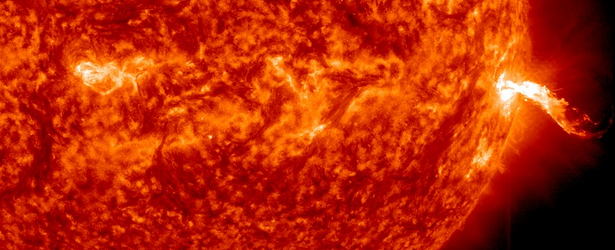
  • Sunspot 1996 produced M3.5 solar flare

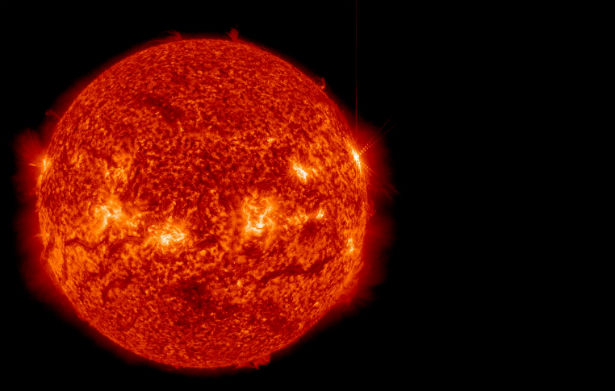
    Active Region 1996, located in the northern hemisphere, produced moderate  M3.5 solar flare at 03:50 UTC on March 11, 2014. This active region continues to rotate closer towards the northwestwern limb.  

    SDO's AIA 304 and EVE with GOES X-ray flux