• Weak CME impact sparks some auroras around Arctic circle

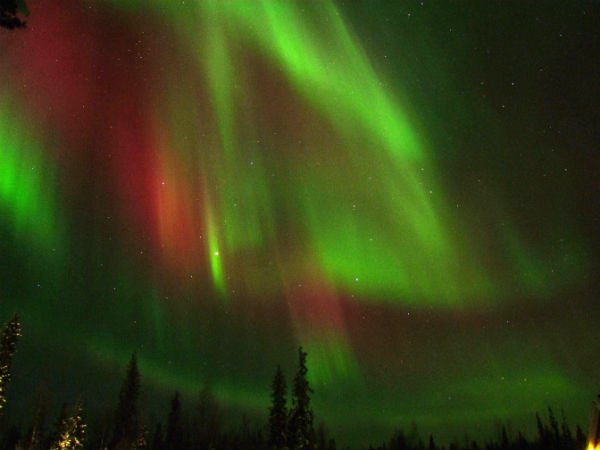
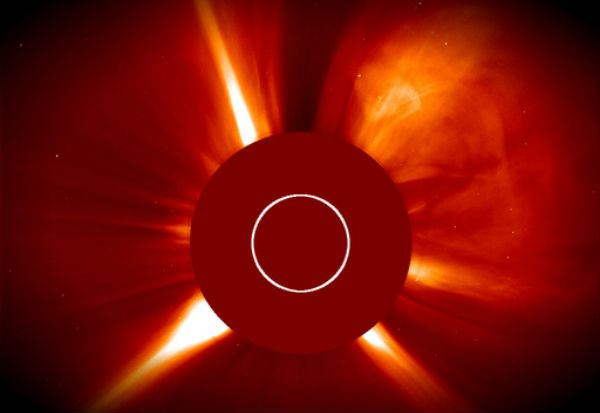
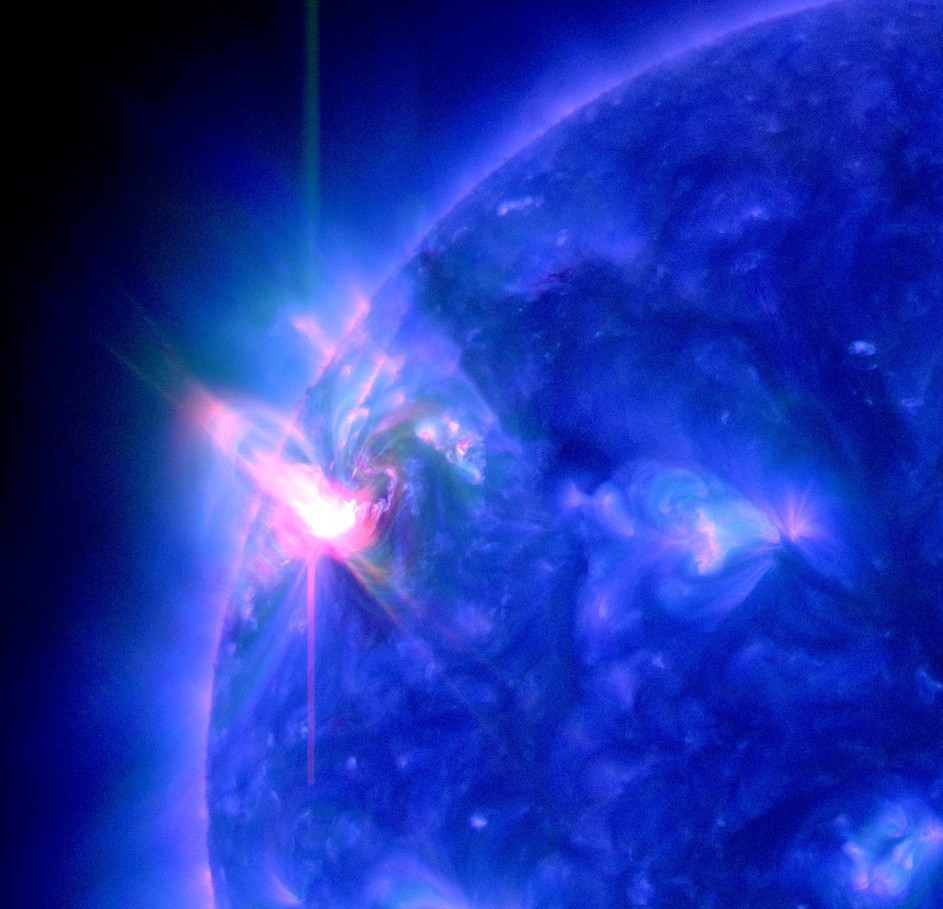
    A CME hit Earth’s magnetic field on Feb. 26th at 21:00 UTC. Brief outburst subsided before it reached geomagnetic storm levels. A geomagnetic sudden impulse was detected by the Boulder station at 21:41 UTC. Maximum levels of planetary Kp index was listed as 4, just

  • The weak CME impact, auroras still possible

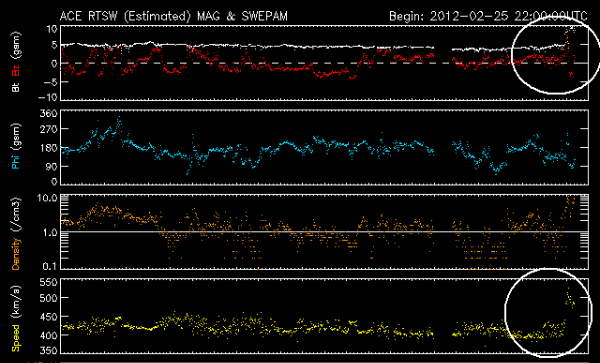
    A CME hit Earth’s magnetic field on Feb. 26th at ~2100 UTC. The impact was weak and does not appear set to cause a strong geomagnetic storm according to SpaceWeather. A solar wind increase to near 550 km/s was detected by the ACE Spacecraft around 20:50 UTC. A

  • “Canyon of Fire” on Sun

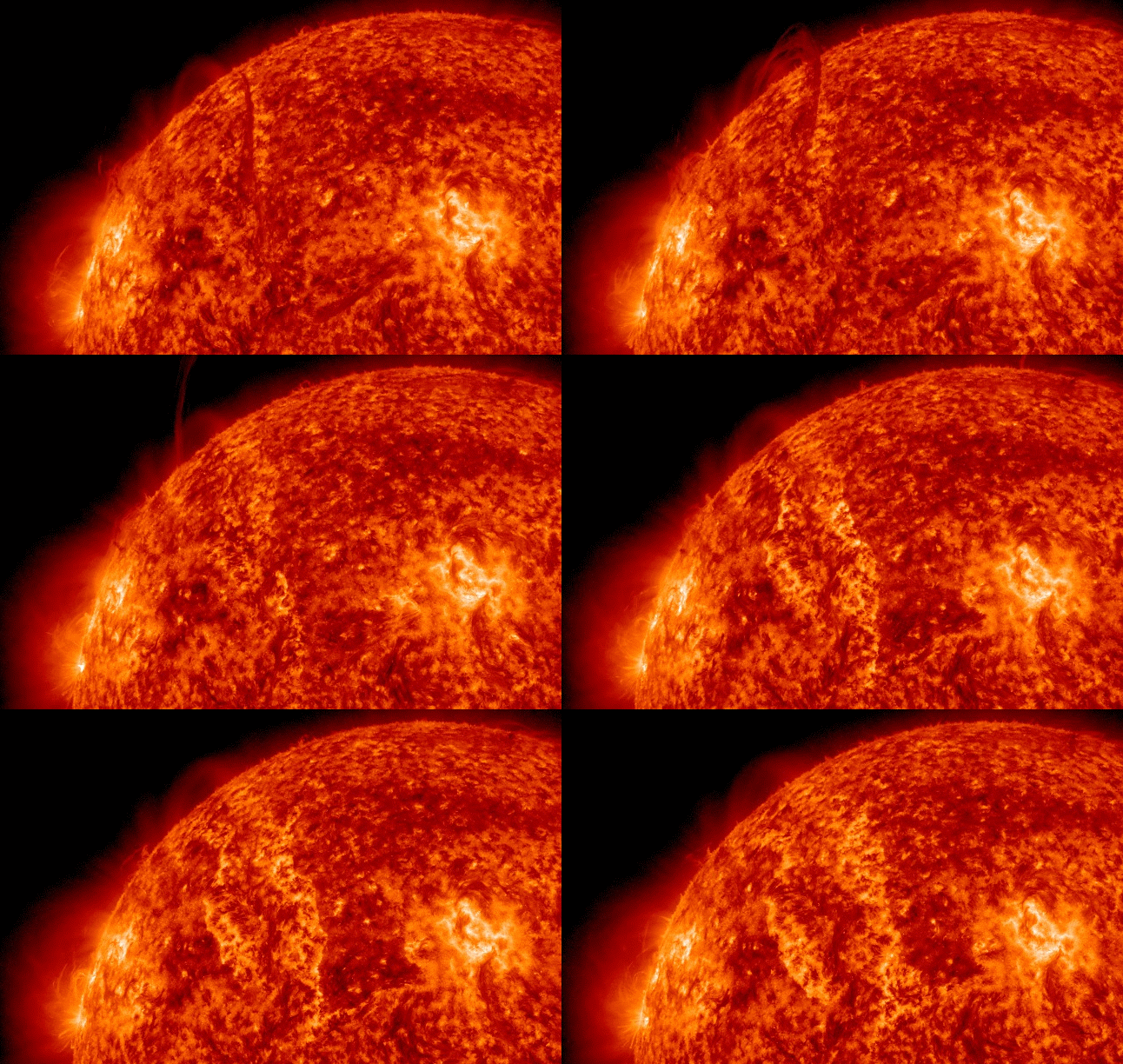
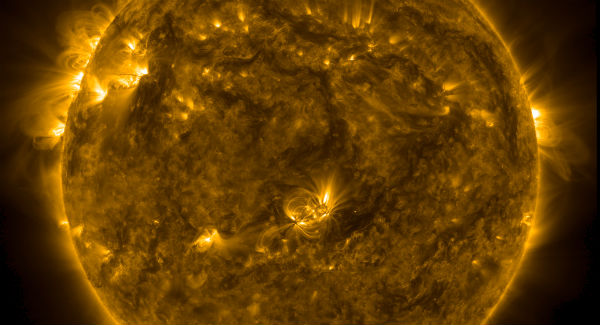
    The eruption of a magnetic filament at the sun’s northeastern limb split the sun’s atmosphere during the early hours of February 24th, creating a “canyon of fire”. The glowing walls of the canyon are formed in a process closely related to that of arcade loops, which

  • Solar filament channel eruption and aurora forecast

    A Coronal Mass Ejection (CME) is seen in the latest STEREO Ahead COR2 images on Thursday morning, and the source appears to be a filament channel eruption near region 1419 in the northwest quadrant. After a close look, the expanding cloud appears to be directed mostly

  • Subsiding geomagnetic storm with beautifull auroras

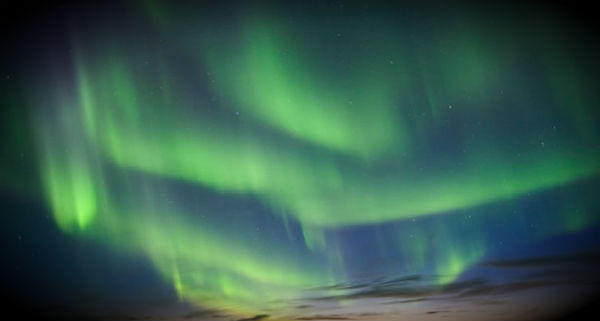
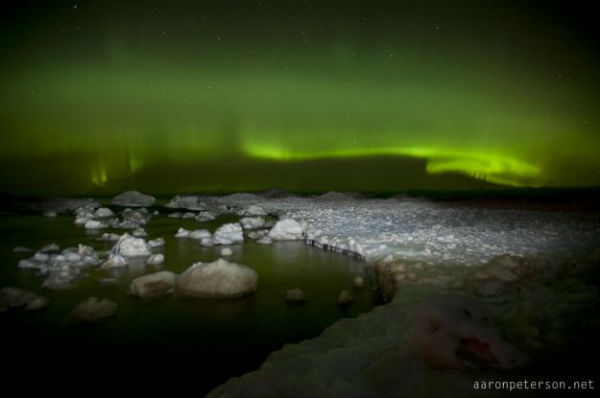
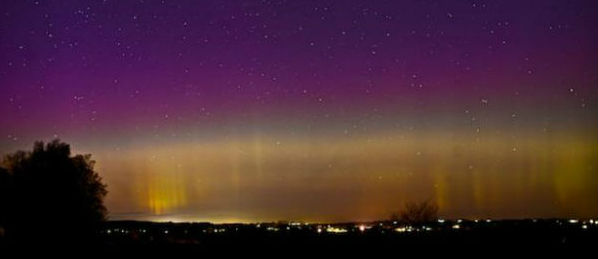
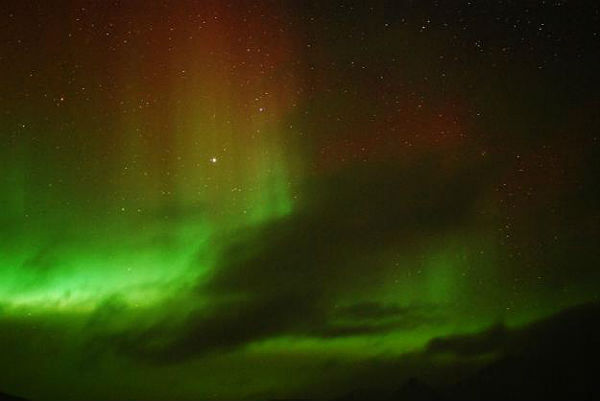
    The expected CME impact sparked aurora lights around the Arctic Circle on Feb. 14th. The display was probably caused by a CME, launched from the sun on Feb. 10th. Solar wind poured in and fueled a G1-class geomagnetic storm (Kp index was at level 5). Our

  • Coronal mass ejection to reach planet on February 14

    Coronal mass ejection (CME) is seen in the latest images, as the result of a filament lifting off in the northern hemisphere. Geomagnetic field activity is expected to increase to unsettled to active levels, with high latitude minor storm intervals. It could produce