
Severe Thunderstorm Watch vs. Warning
Confused about the difference between a Severe Thunderstorm Watch and a Warning? Learn how these weather alerts help you prepare for dangerous storms, the damage they can cause, and why understanding the difference could be crucial for your safety.
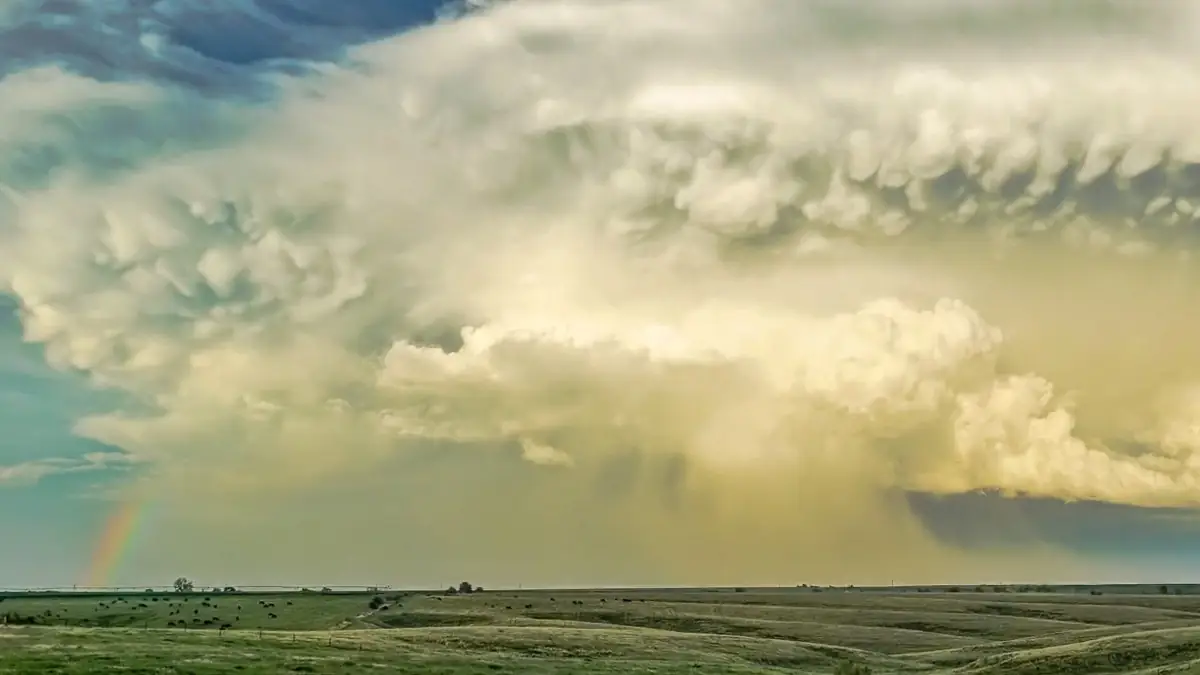
Image credit: National Weather Service
You’re sitting at home when your phone buzzes with a weather alert that says “Severe Thunderstorm Watch.” A few hours later, another ping says “Severe Thunderstorm Warning.”
The terms are often used interchangeably, but they mean very different things. One tells you to stay alert, while the other tells you to take cover. Understanding the difference isn’t about weather trivia, it’s about knowing when to stay alert and when to move fast.
What is a thunderstorm?
A thunderstorm is a type of weather event characterized by the simultaneous occurrence of rain, lightning, and thunder. Thunderstorms develop in cumulonimbus clouds—large, vertically developed cloud systems capable of producing strong updrafts and intense atmospheric instability.
They can form as isolated cells, in organized clusters, or as part of squall lines extending over large areas. Most thunderstorms are short-lived, typically lasting about 30 minutes.
But when one stalls over the same area, that’s when problems start. Flooding, strong winds, and lightning risks can all spike fast. They’re most likely to form on warm, sticky days when the air feels heavy and full of moisture.
How common are thunderstorms, and where do they hit hardest?
Thunderstorms are a common atmospheric phenomenon, occurring continuously around the globe. At any given moment, an estimated 2 000 thunderstorms are active worldwide. Annually, the planet experiences nearly 16 million thunderstorms.
In the United States, approximately 100 000 thunderstorms are recorded each year, and about 10 percent of them are classified as severe.
While thunderstorms can occur in all regions of the U.S., the area from Texas to southern Minnesota—commonly referred to as the Central Plains—experiences the highest frequency due to favorable thermodynamic and moisture conditions.
Thunderstorm timing and seasonal patterns
Thunderstorms are most likely to occur in the spring and summer months, especially during the afternoon and evening.
In regions such as the Gulf Coast, southeastern, and western United States, convective storms commonly develop during the early to mid-afternoon. In contrast, the Central Plains often see thunderstorm activity peak in the late afternoon or evening, driven by diurnal heating and frontal boundaries.
While these seasonal and regional patterns are well-established, thunderstorms can occur during any time of year when atmospheric conditions are favorable.
What is a Severe Thunderstorm Watch?
A Severe Thunderstorm Watch is issued when atmospheric conditions are favorable for the development of severe thunderstorms, but no hazardous weather is currently occurring. It serves as an early alert indicating the potential for storms capable of producing damaging winds exceeding 93 km/h (58 mph), hail at least 2.5 cm (1 inch) in diameter, or heavy rainfall.
The purpose of the watch is to provide advance notice so that individuals can prepare, such as securing property, reviewing safety plans, or staying near the shelter. Watch areas are broad, often covering multiple counties or states, to encompass the full region where severe weather may develop.
What is a Severe Thunderstorm Warning?
A Severe Thunderstorm Warning is issued when a severe thunderstorm has been observed by trained spotters or detected on radar.
It signals that dangerous weather, such as damaging winds exceeding 93 km/h (58 mph), hail larger than 2.5 cm (1 inch), or both, is occurring or imminent.
A warning requires immediate protective action. It is not the time for travel or outdoor activities—sheltering in a secure location is advised. Unlike watches, warning areas are much smaller and more focused, targeting specific counties, cities, or towns where severe weather has been confirmed.
Severe Thunderstorm Watch | Severe Thunderstorm Warning |
|---|---|
Issued when conditions are favorable for severe thunderstorms. | Issued when severe thunderstorms are occurring or imminent. |
Typically covers a large area (multiple counties or states). | Affects a smaller, more specific area (e.g., a city or county). |
Alerts people to stay alert and prepared. | Urges immediate action to take shelter and stay safe. |
Issued by the Storm Prediction Center (SPC). | Issued by the nearest National Weather Service (NWS) office. |
A watch does not guarantee a storm will occur, just that conditions are right for one. | A warning means severe weather is confirmed and happening. |
“Watch” is like a chef laying out ingredients for a meal. | “Warning” is the meal already cooking and smoke rising from the pan. |
What damage can thunderstorms bring?
Thunderstorms can produce a range of hazardous impacts, including damaging winds, flash flooding, large hail, lightning, and tornadoes.
Severe winds associated with thunderstorms can uproot trees, down power lines, and cause widespread structural damage, often resulting in power outages. Intense rainfall over a short period can trigger flash floods, posing significant risks to life and property. Hail can damage vehicles, rooftops, and agricultural crops.
Lightning remains a major threat, capable of igniting fires, causing electrical failures, and leading to serious injuries or fatalities.
In some cases, thunderstorms—particularly supercell thunderstorms—can also generate tornadoes when strong updrafts interact with wind shear, creating rotating columns of air that can extend to the ground and cause extreme localized destruction.
Who decides? The role of meteorological agencies
Meteorological agencies, primarily the Storm Prediction Center (SPC) and the National Weather Service (NWS), are responsible for issuing thunderstorm alerts in the United States.
The SPC, a division of the National Oceanic and Atmospheric Administration (NOAA), monitors large-scale atmospheric conditions and issues Severe Thunderstorm Watches when the environment becomes favorable for the development of severe storms, often several hours in advance.
The watches are intended to alert the public to the potential for hazardous weather. When severe weather is detected or reported, responsibility shifts to the nearest NWS forecast office, which issues Severe Thunderstorm Warnings based on radar observations or ground reports from trained spotters.
In addition to real-time alerts, the SPC also provides extended outlooks, forecasting the potential for severe thunderstorms up to eight days ahead to assist with public preparedness.

My passions include trying my best to save a dying planet, be it through carpooling or by spreading awareness about it. Research comes naturally to me, complemented by a keen interest in writing and journalism. Guided by a curious mind and a drive to look beyond the surface, I strive to bring thoughtful attention and clarity to subjects across Earth, sciences, environment, and everything in between.

Commenting rules and guidelines
We value the thoughts and opinions of our readers and welcome healthy discussions on our website. In order to maintain a respectful and positive community, we ask that all commenters follow these rules.