• Unusual red arcs spotted on the surface of Saturn’s icy moon Tethys

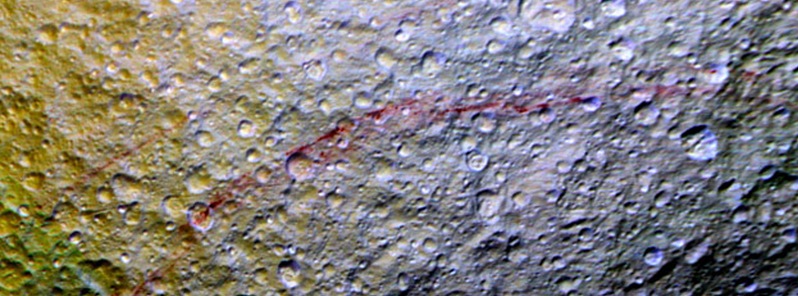
    New enhanced-color images from NASA's Cassini spacecradr revealed unexplained arc-shaped, reddish streaks on the surface of Saturn's icy moon Tethys. The red arcs are narrow, curved lines on the moon's surface, and are among the most unusual color features o

  • NASA’s Kepler mission discovers closest Earth twin yet

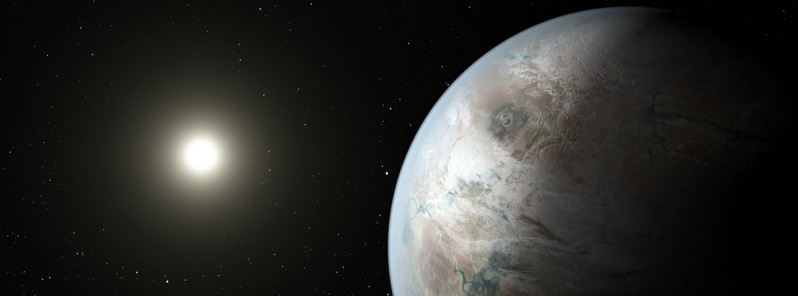
    NASA made an announcement on July 23, 2015 of it's Kepler space telescope spotting the most Earth-like alien planet yet discovered – a world called Kepler-452b that's just slightly bigger than our own and orbits a sun-like star named Kepler-452 at about the same

  • Mystery of equatorial noise solved

    A team from MIT, the University of California at Los Angeles, the University of Sheffield, and elsewhere has detected a remarkably orderly pattern amid the "equatorial noise." The discovery may help scientists to more accurately model the space environment an

  • New Horizons accomplished the historic first-ever flyby of Pluto

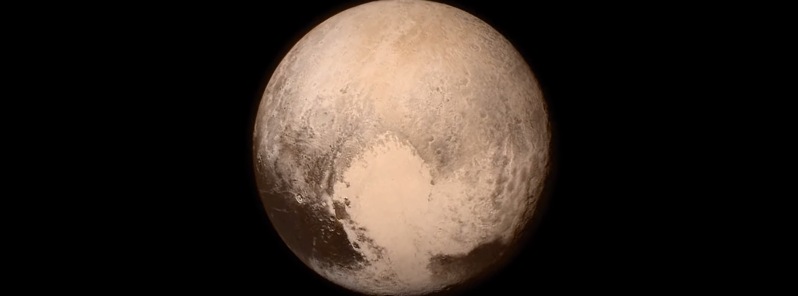
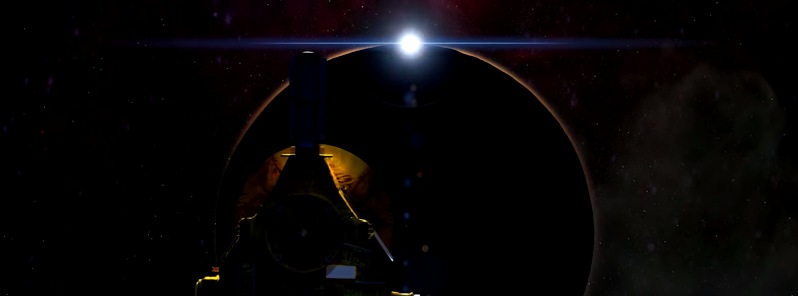
    New Horizons spacecraft phoned home around 01:00 UTC on July 15, 2015 telling the mission control and the world it had accomplished the historic first-ever flyby of Pluto.The flyby began at 11:49 UTC on July 14 and the spacecraft has been instructed to spend the day gat

  • Tracking space weather for New Horizons

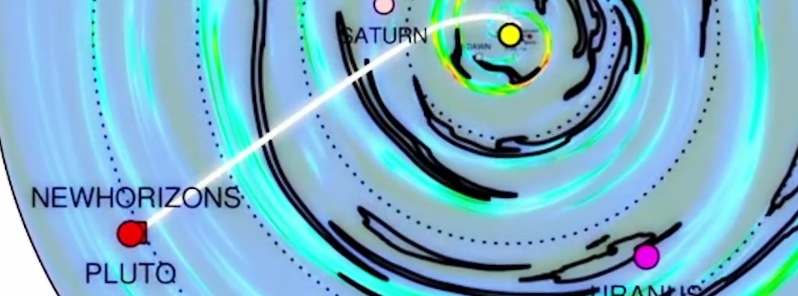
    A few months before New Horizons was due to reach Pluto, a community of scientists came together to determine just what kind of a environment the mission would experience during its historic flyby.While the simulations aren't 100% conclusive, this first ever attempt

  • Neptune’s badly behaved magnetic field modelled in detail

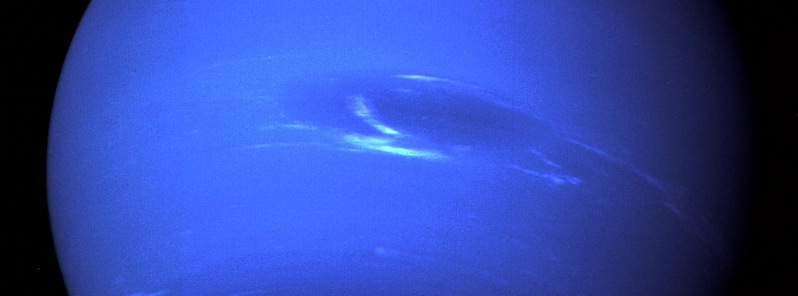
    A team of scientists at the Imperial College London have combined 26-year old data with supercomputer simulations and for the first time modelled Neptune's magnetic field in detail. The researchers find that the furthest planet from the Sun has a badly behaved

  • Final ‘all clear’ for historic July 14 Pluto flyby

    Having found no potential threats on the way, NASA's New Horizons spacecraft stays course to Pluto, as it speeds closer to it's historic July 14, 2015 flyby of Pluto and it's five moons. Launched from Cape Canaveral on January 19, 2006, New Horizons woke up

  • Watching meteors from space: Meteor investigation camera destroyed, again

    Eight months after a catastrophic failure of Orbital Cygnus mission to the International Space Station, in which supplies for the Meteor mission were lost, a new special camera was built and is now ready for lift off.Currently scheduled to launch on June 28, 2015, the