• CME cloud is about to affect Venus, Earth and Mars

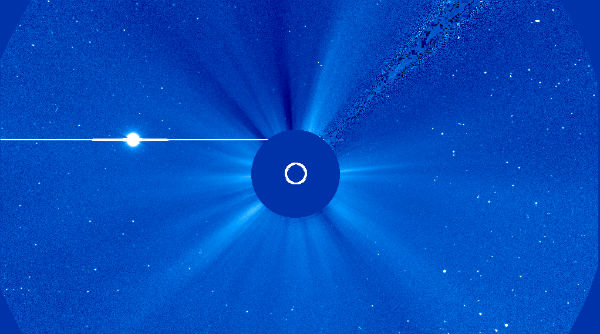
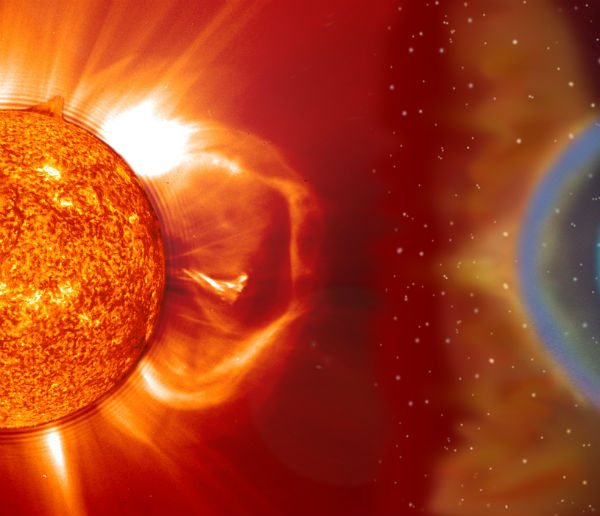
    Sunspot 1504 poses a growing threat for Earth-directed M-class solar flares and continues to expand into a large-sized sunspot cluster. Now spans the size of at least 4 planet Earths.It erupted in southern hemisphere on June 13th at 13:19 UTC, producing a
  • Transit of Venus from Space

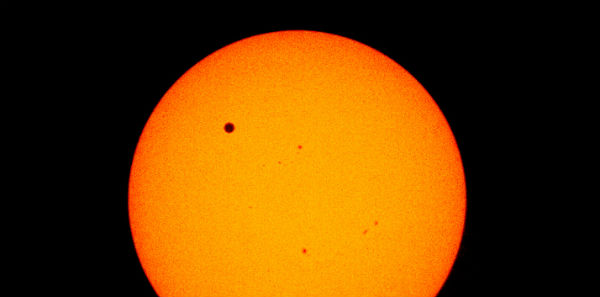
    The Transit of Venus is over. It was the most spectacular event for all skywatchers as well for the whole astrophysics science community. Technology in 2012 allowed us to observe the Transit from mighty Earth’s telescopes as well as from solar-observing space fleet and

  • 2012 Transit of Venus: Quick guide for skywatchers

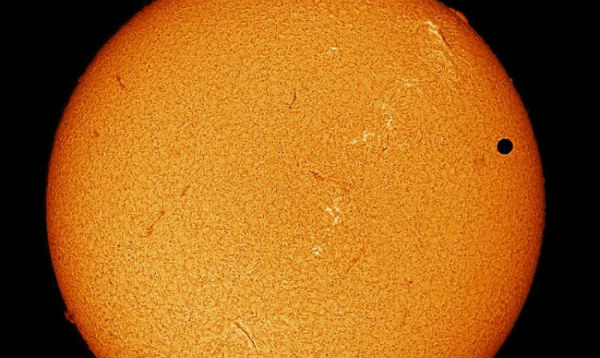
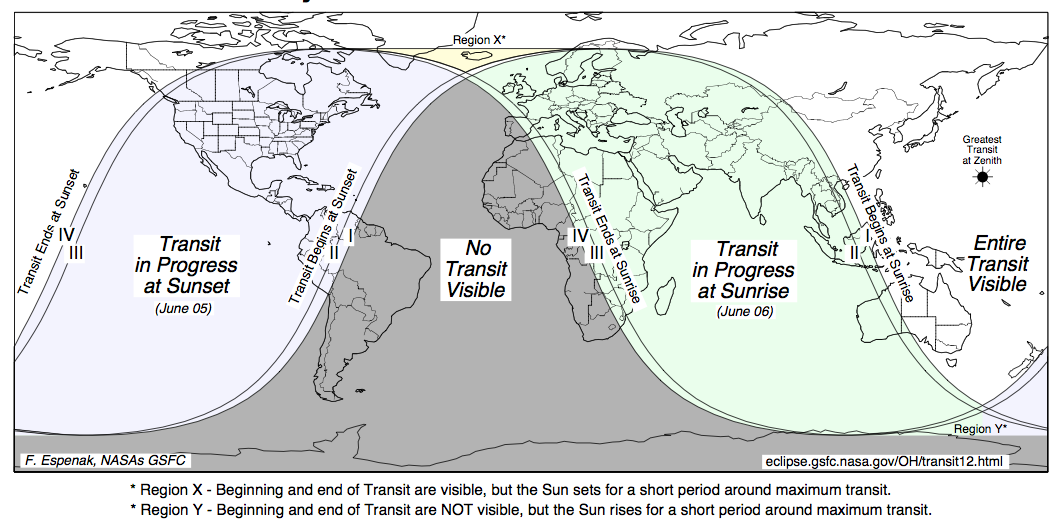
    A transit like this occurs when Venus passes directly between Earth and the Sun. Viewers will see Venus as a small dot gliding slowly across a portion of the Sun. The last time the event occurred was on June 8, 2004, and was viewed by millions worldwide. This year,

  • Venus is approaching the sun in advance of the June 5th Transit

    On June 5th, 2012, Venus will transit the face of the sun in an event of both historical and observational importance. Amateur astronomers who manage to locate Venus in broad daylight will find that the planet has turned into a delightfully slender crescent. This

  • Hubble will use Moon as the mirror to watch Venus transit

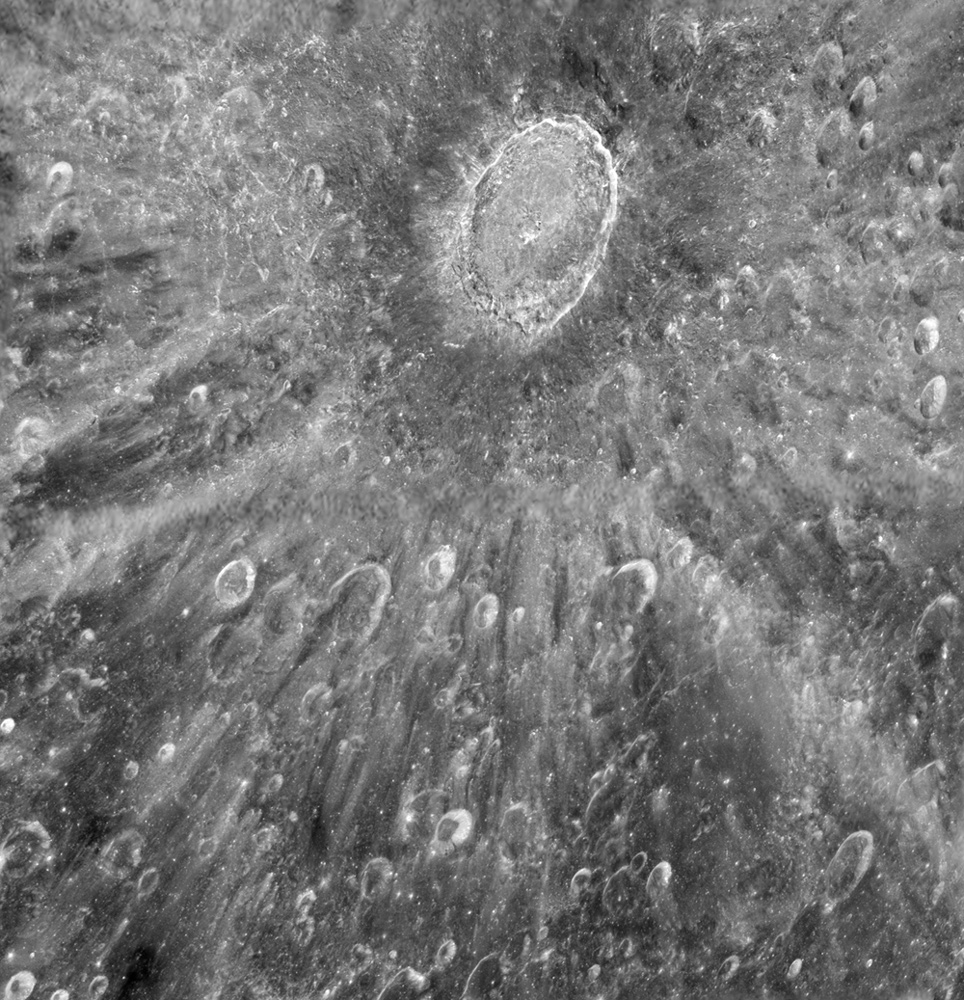
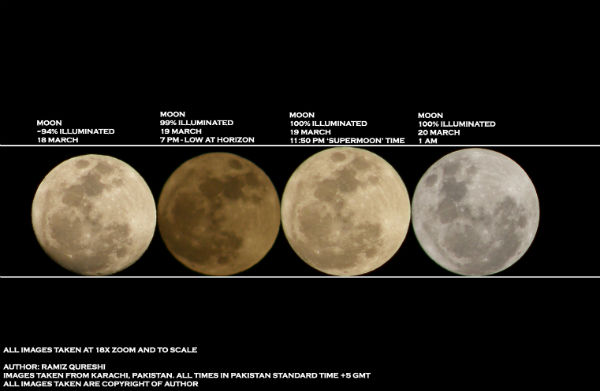
    Scientists plan to use the moon as a mirror to watch this year’s June 5-6 transit of Venus with the Hubble Space Telescope. That’s because Hubble can’t look at the sun directly – the bright light could damage the telescope’s super-sensitive instruments.This

  • Mars Reconnaissance Orbiter detects changes in Martian sand dunes

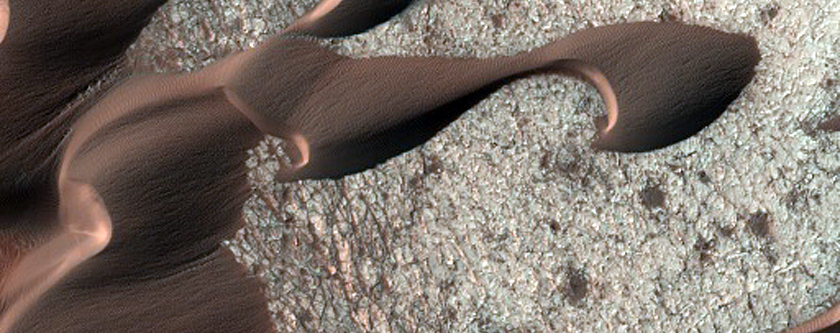
    NASA’s Mars Reconnaissance Orbiter has revealed that movement in sand dune fields on the Red Planet occurs on a surprisingly large scale, about the same as in dune fields on Earth.This is unexpected because Mars has a much thinner atmosphere than Earth, is only about

  • Venus transit of 2012 will not be seen again until 2117

    A transit of Venus is the observed passage of the planet across the disk of the Sun. The planet Venus, orbiting the Sun “on the inside track,” catches up to and passes the slower Earth.  Venus, appearing as a small dot in the foreground, will move from left to