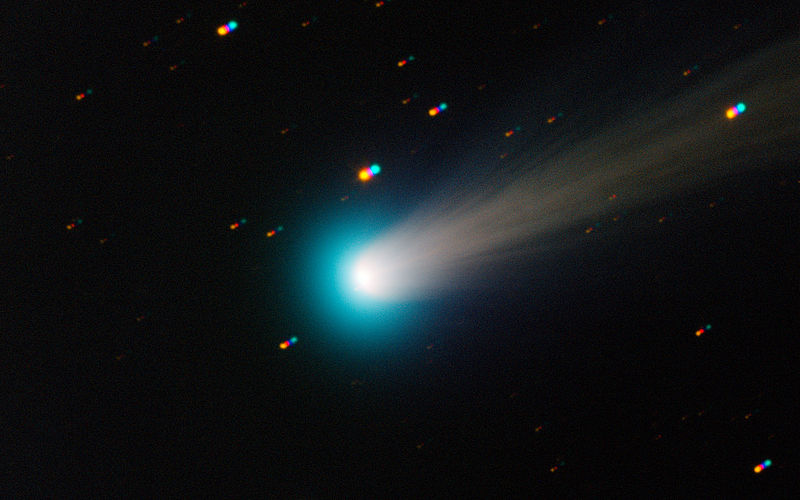
• The electrochemistry of Comets with Dr. Franklin Anariba

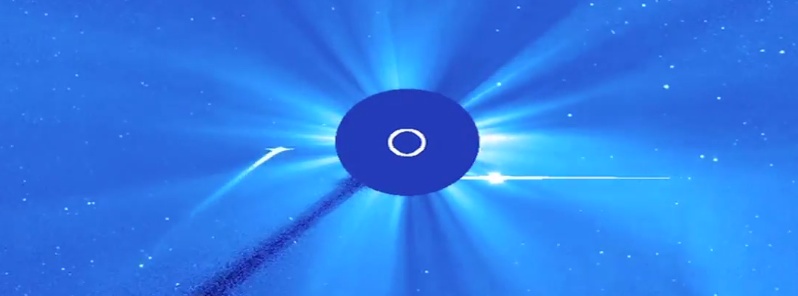
    It is a great paradox in comet science: We are told that a comet nucleus is a ball of ice, or dirty snowball, or icy fluff ball that accreted billions of year ago in the solar system’s infancy. Comets are said to sublimate ices as they move toward the sun, and

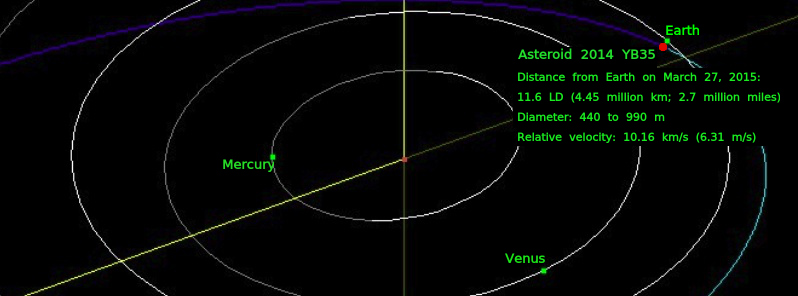
  • Asteroid 2014 YB35 to safely flyby Earth on Friday, March 27, 2015

    A large asteroid named 2014 YB35 will flyby Earth at a safe distance of 11.6 LD (lunar distances) or about 4.45 million km (2.7 million miles) at 06:20 UTC on Friday, March 27, 2015. This asteroid is approximately 440 – 990 meters in diameter and is traveling at a relat

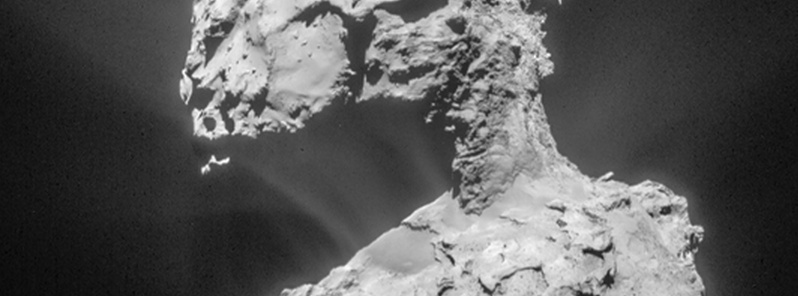
  • Rosetta makes first detection of molecular nitrogen at a comet

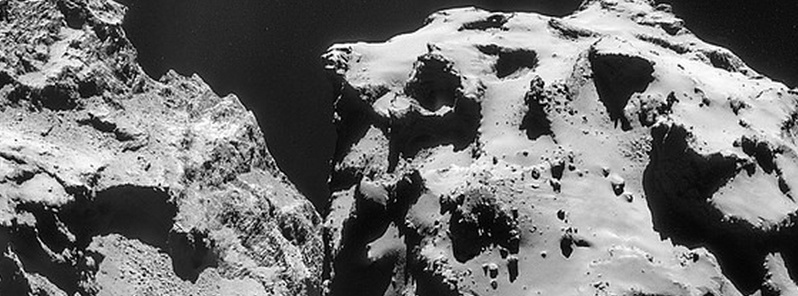
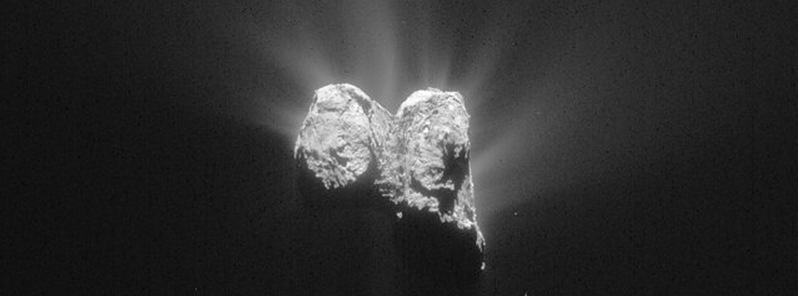
    ESA's Rosetta spacecraft has made the first measurement of molecular nitrogen at a comet, providing clues about the temperature environment in which Comet 67P/Churyumov-Gerasimenko formed, the agency reports.The in situ detection of molecular nitrogen has long been

  • Why don’t comets melt in the Sun?

    Sungrazer comets that survive perihelion extremely close to the Sun is a longstanding puzzle for comet science. In reality, observations going back centuries reveals that a comet’s activity has little or nothing to do with solar warming.Comets sometimes flare or e

  • Unusual comet skirting past the Sun

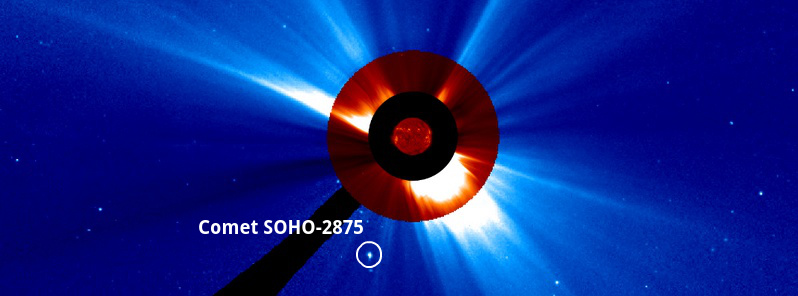
    An unusual comet named SOHO-2875 is skirting past the Sun since February 18, 2015 and is still visible on LASCO C3 imagery. At first it appeared to be a small object about to be disintegrated by the Sun's heat, but surprisingly it emerged intact and is now brighteni

  • Crystal comets

    The “dusty snowball” theory of comets needs attention, since there are crystals that need high temperatures to form in the matrix of at least two.Recently, the composition of comet 67P/Churyumov-Gerasimenko (67P/C-G) was discussed in the scientific press. It

  • 67P – The violent birth of a comet

    The electric comet idea forces us to consult the astronomical testimony of our earlier forebears, where independent accounts, told with different words and different symbols in different parts of the world, convey a story of planetary catastrophe. Watch Update #1: The R

  • Asteroid 2004 BL86 to safely flyby Earth on January 26

    Asteroid 2004 BL86 will flyby our planet at a safe distance of approximately 1.2 million km (745 000 miles) at 16:20 UTC on January 26, 2015. This is about three times the distance of Earth to the Moon. Based on its reflected brightness, astronomers estimate that this a